
Bicycle Accident Connecticut: Your Rights, Key Laws, and Steps to Protect Your Claim
Estimated reading time: 8 minutes

Key Takeaways
- Cyclists have clear rights under Connecticut law and specific duties apply to drivers after a crash.
- Immediate actions — safety, medical evaluation, and documentation — can make or break a future claim.
- Preserve evidence: photos, witness info, medical records, and any camera footage are crucial.
- Insurance companies often use tactics to minimize payouts; keep records and avoid quick settlements.
- Speak with a local attorney when injuries are serious, fault is disputed, or a hit-and-run occurs.
Table of contents
- Title & Overview
- Key Takeaways
- What to Do Immediately After a Bicycle Accident in Connecticut
- Get Safe and Get Checked
- What to Do at the Scene
- Connecticut-Specific Guidance
- Key Bike Accident Laws Connecticut Cyclists Should Know
- Drivers’ Legal Duties After a Crash
- Your Rights After a Bicycle Accident in Connecticut
- Evidence That Strengthens a Claim
- How a Cyclist Injury Claim CT Typically Works
- Reporting and Information Exchange Requirements
- Mistakes That Can Hurt Your Claim
- When It Makes Sense to Talk to a Bicycle Crash Lawyer Waterbury
- Frequently Asked Questions
- Conclusion
What to Do Immediately After a Bicycle Accident in Connecticut
The moments after a crash are disorienting. Your priority is safety and medical care—everything else comes second.
Get Safe and Get Checked
If you can move without making injuries worse, get yourself out of the roadway and to a safe spot. Call 911 if anyone is hurt, including you.
Here’s something important: adrenaline masks pain. Many cyclists feel “fine” at the scene, only to discover serious injuries hours or days later. Soft tissue damage, concussions, and internal injuries don’t always announce themselves immediately. Even if you think you’re okay, get checked by a medical professional. This protects your health and creates documentation that matters later.
What to Do at the Scene
Once you’re safe, focus on gathering information. Think of this as building a record of what happened.
- Call police and request an official crash report.
- Exchange information with the driver. Get their name, address, driver’s license number, vehicle registration, and insurance information.
- Identify witnesses. If anyone saw what happened, get their name and phone number.
- Take photographs. Capture the vehicle’s license plate, damage to the car and your bike, road conditions, skid marks, traffic signals, your injuries, and the overall scene. More photos are better than fewer.
- Keep your statements factual. Don’t argue about who was at fault. Stick to what happened.
Connecticut-Specific Guidance
The Connecticut State Police advise that after a crash, drivers should move out of the travel lane if safe, check on and assist injured persons, notify police immediately, and exchange license, registration, and insurance details with other parties. This guidance applies whether you’re in a car or on a bike—the principle is the same. Connecticut State Police guidance.
These steps aren’t just good practice. They help protect your ability to pursue a cyclist injury claim CT if you need to file one later. Documentation created at the scene is often the strongest evidence available.
Key Bike Accident Laws Connecticut Cyclists Should Know
Understanding your legal rights starts with knowing what the law actually requires. This section provides a plain-English overview of relevant Connecticut statutes. Keep in mind that laws can be fact-specific, and consulting with an attorney about your particular situation is always wise.
Drivers’ Legal Duties After a Crash
Connecticut law is clear about what drivers must do after a collision. Under Conn. Gen. Stat. § 14-224, a driver involved in a crash causing injury, death, or property damage must:
- Stop immediately at the scene
- Render reasonable assistance to anyone injured (this typically means calling 911 and helping injured people get medical attention)
- Provide identifying information including name, address, driver’s license number, and vehicle registration
In practice, insurance information is also routinely exchanged and expected. A Connecticut legislative summary confirms that drivers in injury collisions must provide their insurance information to other drivers and police.
Why These Rules Matter to Cyclists
These duties exist to protect crash victims. When a driver stops, identifies themselves, and provides insurance information, you have what you need to:
- Know who caused the crash
- Document the event officially
- Start the insurance process
When drivers violate these duties and leave the scene, it creates serious problems. If you’re involved in a hit-and-run:
- Call 911 immediately
- Write down everything you remember about the vehicle (plate number, make, model, color, damage)
- Get contact information from any witnesses
- Ask nearby businesses if they have security camera footage—and do this quickly, because footage often gets overwritten
A Note on Connecticut’s Approach to “Stop and Report”
Connecticut takes stop-and-report duties seriously across the board. As one example, the state even requires drivers to stop, render aid, and report their information if they injure a dog. This isn’t directly relevant to bicycle crashes, but it illustrates how seriously Connecticut treats the obligation to stop and take responsibility after any collision.
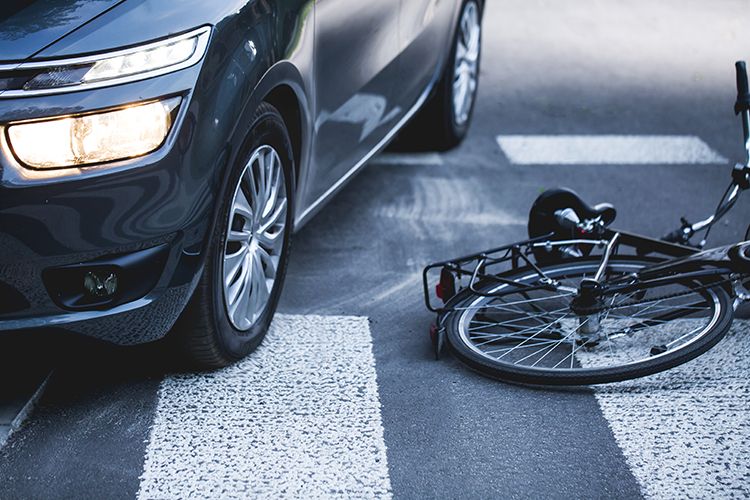
Your Rights After a Bicycle Accident in Connecticut
After a crash, you have specific rights under Connecticut law. Understanding these rights helps you make informed decisions about what to do next.
What “Your Rights” Actually Means
As an injured cyclist, you have the right to:
- Seek medical care and have your injuries properly documented
- Make an insurance claim against the at-fault driver’s policy
- Pursue a personal injury claim if another party’s negligence caused your injuries
- Request and obtain the police crash report to use as evidence (though it’s worth noting that the report isn’t always conclusive on the question of fault) police crash report
Understanding Negligence
Most bicycle accident claims are based on negligence. In simple terms, negligence means someone failed to use reasonable care, and that failure caused your injuries.
Common examples of driver negligence in bicycle crashes include:
- Passing too close to a cyclist
- Failing to yield while turning
- Opening a car door into a cyclist’s path (known as “dooring”)
- Distracted driving (texting, phone use)
- Speeding
- Driving under the influence
- Running stop signs or red lights
To succeed in a negligence claim, you generally need to show that the driver had a duty to act safely, they breached that duty, and their breach caused your injuries.
Evidence That Strengthens a Claim
Strong cases are built on strong evidence. The types of documentation that typically help a cyclist injury claim CT include:
- Medical records and EMS reports
- Photographs from the scene
- Witness statements
- Repair estimates for your bicycle
- Damaged equipment (especially your helmet)
- GPS or cycling app data showing your route and speed
- Dashcam, doorbell camera, or security footage
- The official police report
The more evidence you preserve, the better positioned you are if disputes arise about what happened.
How a Cyclist Injury Claim CT Typically Works
A cyclist injury claim CT is essentially a request for compensation—through insurance or legal action—when you’re injured while cycling due to another party’s fault. Here’s how the process generally unfolds.
The Claim Roadmap
Step 1: Medical evaluation and treatment. Your health comes first, but consistent medical care also creates the documentation that supports your claim. Gaps in treatment can be used against you later.
Step 2: Report the crash and obtain documentation. File a police report and get the report number. Official documentation establishes that the crash happened and records key details.
Step 3: Notify insurance carriers. This typically means the at-fault driver’s auto insurer. Depending on on your own auto policy, you may also have coverage that applies—this varies by policy, so review your coverage or ask an attorney. See uninsured motorist coverage information.
Step 4: Gather your proof. Compile medical bills, documentation of lost wages, photographs, witness contact information, and any other relevant evidence.
Step 5: Demand and negotiation. You or your attorney will present a demand to the insurance company, and negotiations follow.
Step 6: Settlement or lawsuit. Most claims settle without going to court. If negotiations fail, filing a lawsuit may be necessary.
Types of Compensation
Injured cyclists may be entitled to compensation for:
- Medical costs: Emergency room visits, imaging, surgery, physical therapy, follow-up appointments, medications, and future medical care
- Lost income: Wages lost due to missed work, reduced hours, or inability to work during recovery
- Loss of earning capacity: For serious injuries that affect your long-term ability to work
- Pain and suffering
- Property damage: Repair or replacement of your bicycle, helmet, clothing, phone, and other damaged items
- Out-of-pocket expenses: Transportation to medical appointments, home assistance during recovery, and similar costs
Common Insurance Tactics
Insurance companies are businesses. Their goal is to resolve claims for as little as possible. Tactics you may encounter include:
- Quick, low settlement offers before you understand the full extent of your injuries
- Requests for recorded statements (which can be used against you)
- Arguments that you were partially or fully at fault
- Minimizing the severity of your injuries
- Delays designed to pressure you into accepting less
Practical advice: keep notes of all communications, don’t guess or speculate when answering questions, and get everything in writing.
Reporting and Information Exchange Requirements
Proper documentation starts with the information exchanged at the scene. This section explains what should be collected and why it matters.
Information to Exchange
Under Connecticut law and standard practice, the following information should be exchanged after a crash:
- Name and address of the driver
- Driver’s license number
- Vehicle registration
- Insurance information (company and policy number)
This information is essential for filing an insurance claim and identifying the responsible party if legal action becomes necessary.
Why This Matters in Hit-and-Run Situations
When a driver leaves the scene, the stop-and-identify requirements under Conn. Gen. Stat. § 14-224 have been violated. This complicates your ability to pursue a claim because you may not know who hit you.
If you’re the victim of a hit-and-run, act fast:
- Call 911 immediately
- Provide whatever vehicle description you can
- Talk to witnesses before they leave
- Check for nearby security cameras — check for nearby security cameras
Time matters. Footage gets deleted, witnesses forget details, and physical evidence disappears.
Mistakes That Can Hurt Your Bicycle Accident Connecticut Claim
Even strong cases can be weakened by avoidable mistakes. Here are the most common ones to watch for:
- Not calling police or getting an official report. Without a police report, you’re relying entirely on your word against the driver’s. An official report creates independent documentation.
- Delaying medical care. If you wait days or weeks to see a doctor, insurance companies will argue your injuries weren’t serious—or weren’t caused by the crash.
- Throwing away damaged gear. Your cracked helmet, bent wheel, or torn clothing can be evidence. Don’t discard it until your claim is resolved.
- Posting on social media. Insurance adjusters routinely review claimants’ social media. Photos of you hiking a week after the crash—even if you were in pain—can be used to minimize your injuries. How social media can impact your case
- Accepting a quick settlement. Early offers often come before you know the full extent of your injuries. Once you settle, you typically can’t go back for more.
- Missing deadlines. Connecticut law has time limits for filing claims. These deadlines vary depending on the circumstances, so confirm them with an attorney promptly.
When It Makes Sense to Talk to a Bicycle Crash Lawyer Waterbury
Not every bicycle accident requires a lawyer. But in certain situations, legal help is especially valuable.
When Legal Help Matters Most
Consider speaking with an attorney if:
- You have serious injuries (fractures, head trauma, injuries requiring surgery, extended rehabilitation)
- The driver fled the scene and their identity is unknown or uncertain
- Fault is disputed, or the driver claims you caused the crash
- Multiple vehicles, commercial drivers, or government entities are involved
- The insurance company has denied your claim or made a lowball offer
What a Lawyer Typically Does
An experienced attorney can help with:
- Collecting and preserving evidence, including requesting camera footage and taking witness statements
- Handling communications with insurance companies so you don’t have to
- Estimating the full value of your damages, including future medical needs
- Negotiating a fair settlement
- Filing a lawsuit if negotiations don’t produce a reasonable result
The Local Angle
If you’re in the Waterbury area, working with a local attorney has practical benefits. Familiarity with local roads, intersections, and traffic patterns can be relevant to understanding how a crash happened. Knowledge of local court procedures also helps if your case goes to litigation.
About the Author
Ron Etemi is a Connecticut trial lawyer and co-founder of Etemi Law who represents individuals and families in serious personal injury, wrongful death, and catastrophic motor-vehicle cases. With more than 15 years of experience in Connecticut state and federal courts, Ron has litigated hundreds of cases and recovered millions of dollars in settlements and verdicts. A former insurance-defense attorney and appellate law clerk to a Connecticut Supreme Court Chief Justice, Ron brings a trial-first mindset, deep medical-legal analysis, and an insider understanding of insurance tactics to every case.
Frequently Asked Questions
Do I have to call the police after a bicycle accident?
It’s strongly recommended. The Connecticut State Police advise notifying police immediately after any crash. An official report creates documentation that can be critical to your claim.
What if the driver leaves the scene?
Under Connecticut law, drivers who leave the scene of an injury crash violate their legal duty to stop and identify themselves. If this happens to you, call 911 immediately, note whatever you can about the vehicle, talk to witnesses, and check for nearby cameras as quickly as possible. Hit-and-run investigation Connecticut
What information should I collect from the driver?
You should exchange name, address, driver’s license number, vehicle registration, and insurance information. This information is necessary to file an insurance claim and identify the responsible party.
Conclusion
After a bicycle accident in Connecticut, your focus should be on three things: safety and medical care, documentation and reporting, and understanding your legal rights.
Know the key bike accident laws Connecticut requires drivers to follow. Take the steps that protect your ability to pursue a cyclist injury claim CT. And if your injuries are serious or fault is being disputed, don’t wait too long to get professional guidance.
If you’re in the Waterbury area and need help understanding your options, consider speaking with a bicycle crash lawyer Waterbury residents can turn to for straightforward advice about next steps.
This article is provided for informational purposes only and does not constitute legal advice. Every case is different, and the information here may not apply to your specific situation. If you have questions about a bicycle accident or potential claim, consult with a qualified attorney.