
What is Etemi Law’s success rate for injury cases?
Answer: Etemi Law has a 99% success rate for personal injury cases. We’ve successfully handled thousands of claims, securing top settlements for our clients since 2014.
How much experience do the lawyers at Etemi Law have?
Answer: Our firm has 30+ years of combined institutional knowledge. Founders Lou and Ron Etemi have been recognized as Super Lawyers and “Best Lawyers: Ones to Watch” for their litigation results.
Do I even have a case?
Answer: You may have a case if you were injured because someone else was careless—like a driver, property owner, employer, or business. In a consultation, we usually look at fault (liability), injuries, medical treatment, and insurance coverage to tell you what’s realistic.
How much does it cost to hire Etemi Law?
Answer: You pay nothing upfront. Etemi Law handles injury cases on a contingency fee, meaning we only get paid if we recover compensation for you. If there’s no recovery, there’s no attorney’s fee.
What kinds of cases do you handle?
Answer: We handle personal injury cases, including:
Car accidents
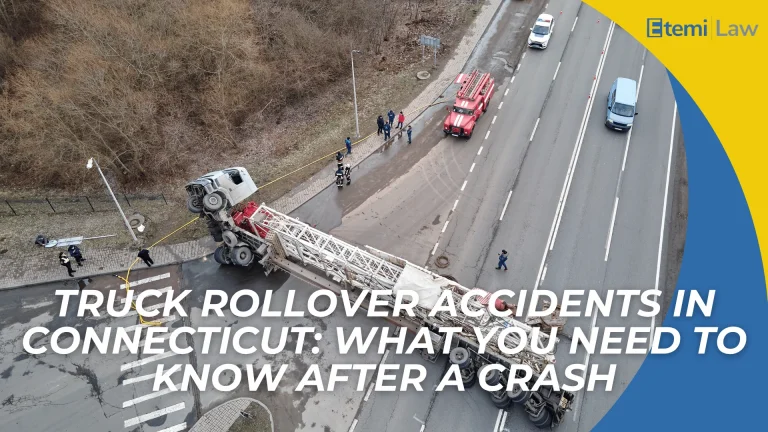
Truck and commercial vehicle accidents
Motorcycle accidents
Slip and fall injuries
Premises liability
Wrongful death
If you’re not sure whether your situation fits, just ask—we’ll tell you straight.
The insurance company called me—what should I say?
Answer: If you have an attorney, you should defer all calls to your attorney. Insurance adjusters are trained to minimize payouts, and early recorded statements can be used against you later. Once you hire us, we handle communications so you can focus on recovery.
How long do I have to file a personal injury claim in Connecticut?
Answer: Many Connecticut injury cases have a filing deadline of about two years from the date of the injury (with some exceptions depending on the facts and case type). Because deadlines can change based on details, it’s smart to talk to a Connecticut personal injury attorney early so you don’t lose your rights.
How long will my case take?
Answer: It depends on your injuries, your treatment timeline, and how reasonable the insurance company is willing to be. Some cases resolve in months, others take longer. What we won’t do is rush your case just to close it. We focus on getting it handled the right way.
Will my Connecticut personal injury case go to court?
Answer: Most cases settle without a trial, but strong settlements usually come from strong preparation. We build your case as if it could go to court so the other side knows we’re not relying on “hope” to get a fair result.
What if I was partially at fault?
Answer: You may still have a case. Fault is often more complex than it first appears, and insurance companies love to exaggerate it. Let us look at the details before you assume you’re disqualified.
What should I bring to my consultation?
Answer: If you have them, bring:
Accident or police reports
Photos or videos
Medical records or bills
Insurance information
If you don’t have everything, don’t worry—we can help gather what’s needed.
How do I get started?
Answer: It’s simple. All you need to do is reach out for a consultation. We’ll listen, explain your options in plain language, and help you decide what makes the most sense—no pressure.
About the Author
Ron Etemi is a Connecticut trial lawyer and co-founder of Etemi Law who represents individuals and families in serious personal injury, wrongful death, and catastrophic motor-vehicle cases. With more than 15 years of experience in Connecticut state and federal courts, Ron has litigated hundreds of cases and recovered millions of dollars in settlements and verdicts. A former insurance-defense attorney and appellate law clerk to a Connecticut Supreme Court Chief Justice, Ron brings a trial-first mindset, deep medical-legal analysis, and an insider understanding of insurance tactics to every case.