Pain and Suffering Calculator — How Connecticut Car Accident Claims Are Actually Valued
What Is a Pain and Suffering Calculator, and Can You Actually Use One?
A pain and suffering calculator is a tool that tries to put a dollar figure on the physical and emotional harm caused by a car accident — the kind of harm that doesn’t come with a receipt. If you searched this term, you’re probably trying to estimate what your non-economic damages might be worth. Maybe you’re preparing for a negotiation with an insurance company, or maybe you want to know whether a number you’ve already been given is reasonable.
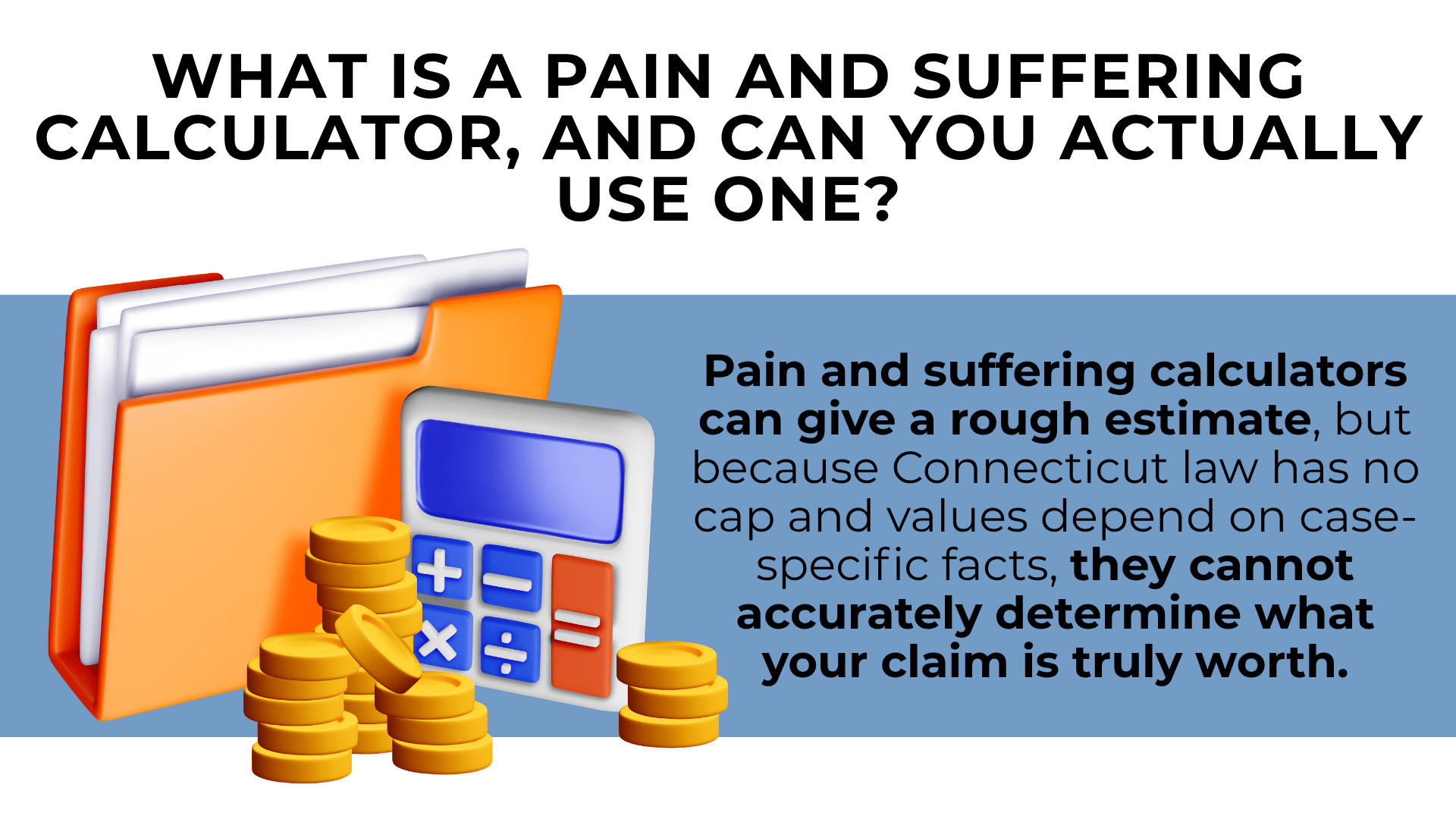
Here’s what you need to know upfront: online calculators can give you a rough starting range, but they can’t give you an accurate number. The reason is built in, not just a matter of precision. Under Connecticut law, non-economic damages are defined as “all nonpecuniary losses including physical pain and suffering and mental and emotional suffering” under Conn. Gen. Stat. § 52-572h(a). That’s a broad category, and Connecticut imposes no statutory cap on what a jury can award for these damages. There is no ceiling built into the law. That means the real value of a pain and suffering claim depends entirely on the specific facts of the case, not on a formula.
That gap between what a calculator produces and what a claim is actually worth is what this article covers. Below is how pain and suffering is calculated in Connecticut, what factors move the number up or down, and why accepting an insurance company’s number without understanding these variables can leave significant money on the table.
How Is Pain and Suffering Calculated After a Car Accident in Connecticut?
There is no single statutory formula for calculating pain and suffering in Connecticut. Instead, two approaches are commonly used in practice to arrive at a number.
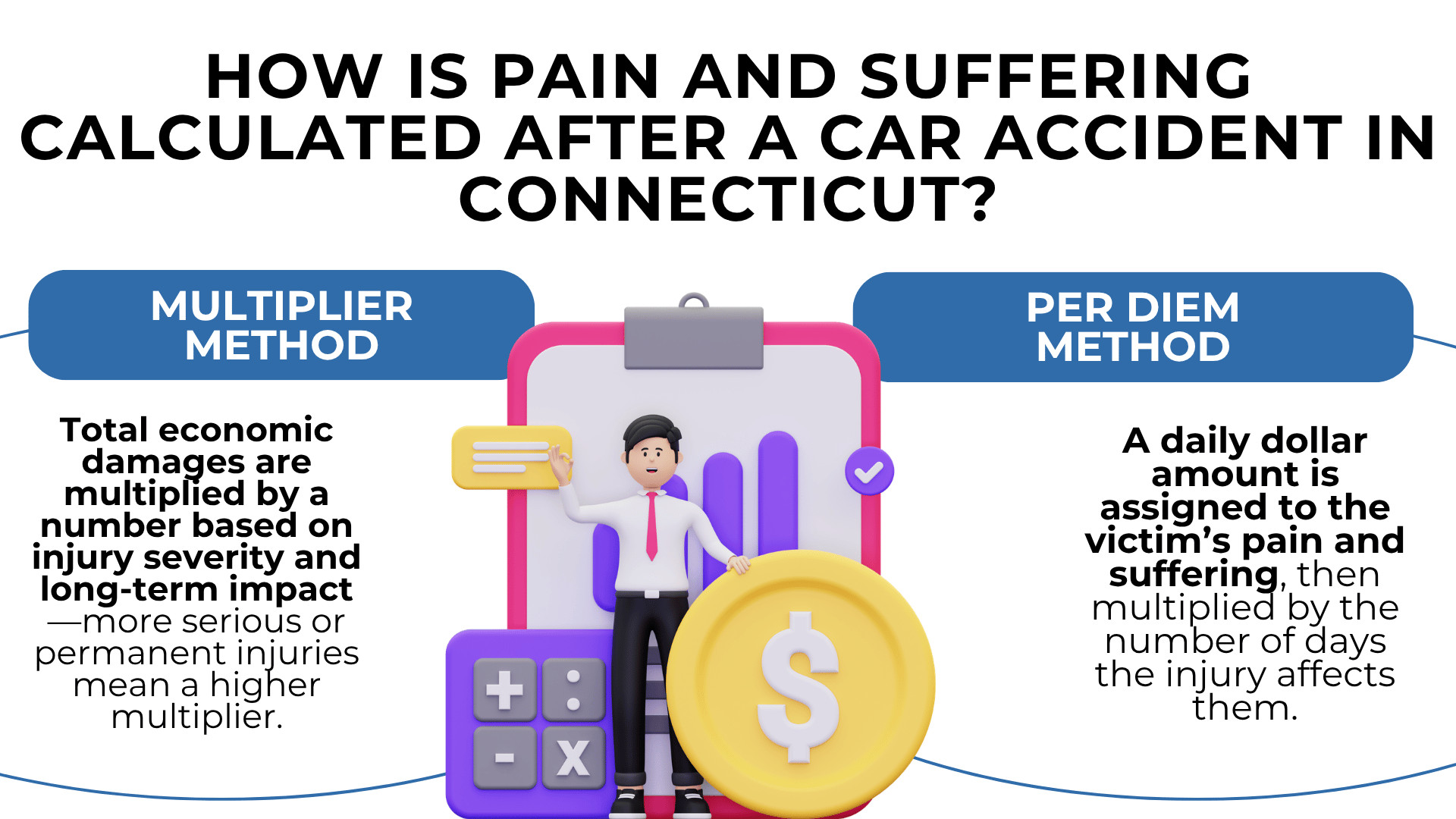
The first is a multiplier approach. It starts with the total economic damages in a case — medical bills, lost wages, lost earning capacity, rehabilitation costs — and multiplies that figure by a number that reflects the severity and duration of the injury. A soft tissue injury with a full recovery calls for a lower multiplier. A permanent injury that fundamentally changes how someone lives and works pushes the multiplier higher. The logic is straightforward: the more severe and lasting the physical harm, the greater the non-economic toll that comes with it.
The second is a per diem approach. This assigns a daily dollar amount to your pain and suffering and multiplies it by the number of days you are expected to be affected. That timeframe runs from the date of injury through recovery, or indefinitely if the injury is permanent.
Both approaches start from the same foundation: a clear record of economic damages. Connecticut law defines these as pecuniary losses “including, but not limited to, reasonable and necessary medical care, rehabilitative services, custodial care, loss of earnings and earning capacity” under Conn. Gen. Stat. § 52-572h(a). The stronger and more thoroughly documented those economic losses are, the more credible the pain and suffering estimate built on top of them becomes.
Neither approach is written into law. Neither is mandatory. But both are widely used because they translate subjective suffering into a number that can be argued, challenged, and ultimately decided by a jury. And in Connecticut, that jury faces no damage cap limiting what it can award.
[ct_pain_suffering_calc]
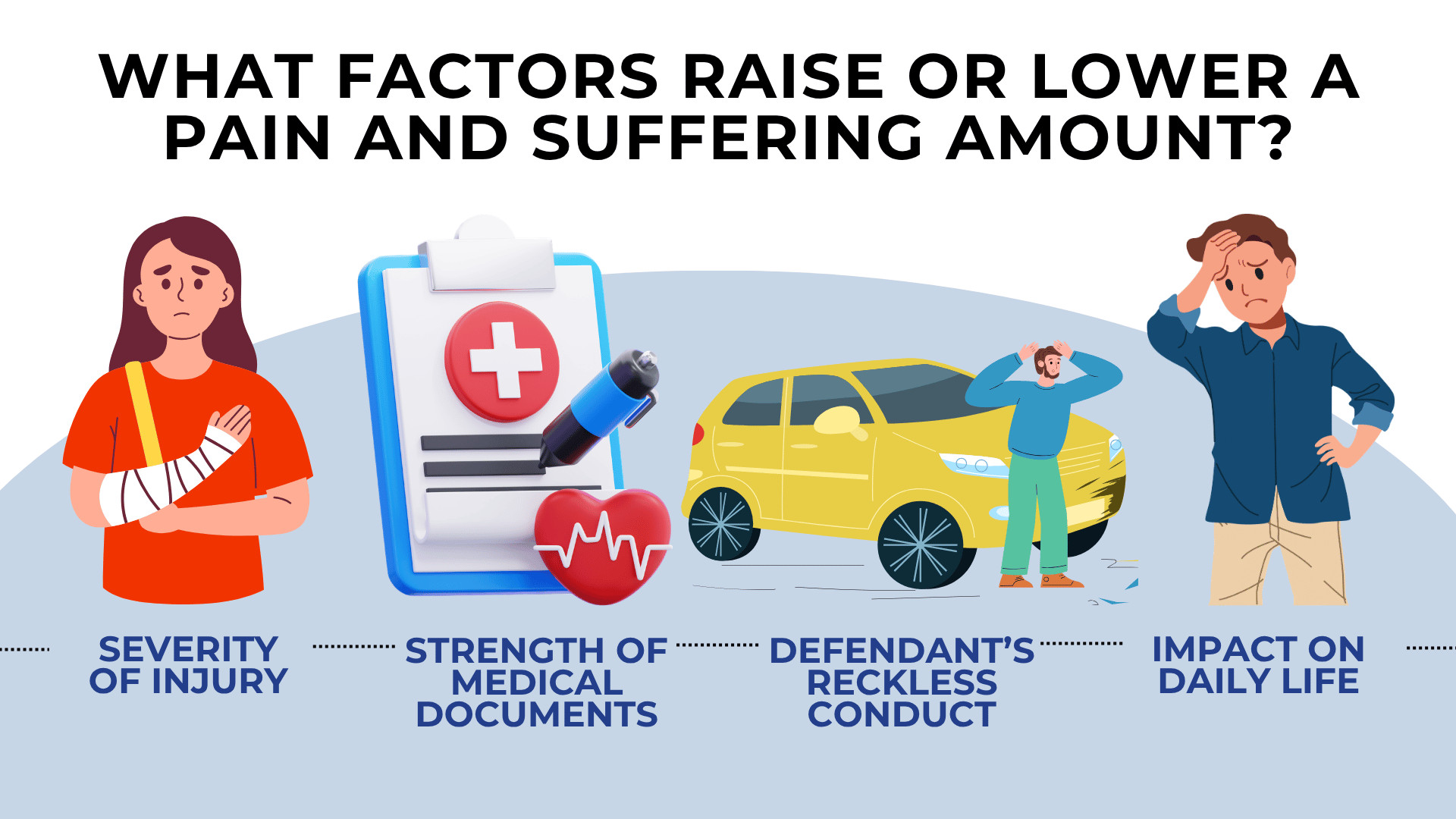
What Factors Raise or Lower a Pain and Suffering Amount?
A calculator treats every case with the same inputs the same way. The real process doesn’t work like that. Several factors carry the most weight in determining where a pain and suffering number actually lands.
How Much Does the Severity of Your Injury Matter?
An injury that resolves in weeks is valued fundamentally differently than one that doesn’t resolve at all. Motor vehicle crashes are the leading cause of traumatic spinal cord injury nationally, accounting for 37.3% of all new cases. Life expectancy for spinal cord injury patients has not improved since the early 1980s after the first year post-injury. Motor vehicle crashes also account for 20.4% of all TBI-related hospitalizations nationally. Injuries like these — ones that permanently alter a person’s capacity to work, move, or live independently — drive non-economic damages significantly higher because the suffering isn’t temporary.
How Does Your Medical Record Affect the Value?
Pain and suffering awards are built on documentation. Consistent medical treatment, specialist referrals, imaging, and detailed physician notes about functional limitations create the evidence that supports your claim. Gaps in treatment, delayed care, or incomplete records give insurers grounds to argue the injury wasn’t as serious as claimed.
Whether the defendant’s conduct was reckless.
This is the factor most people searching for a calculator don’t know about, and it can multiply the entire value of a claim. Under Conn. Gen. Stat. § 14-295, if the person who caused the accident was operating their vehicle with deliberate or reckless disregard and violated specific traffic statutes — including reckless driving under § 14-222 or operating under the influence under § 14-227a — the court can award double or triple the total compensatory damages. That means both economic and non-economic damages can be multiplied by two or three.
In Connecticut, 37% of all traffic fatalities involve alcohol-impaired drivers, significantly above the national average of 30%. The recklessness multiplier is not a rare edge case. It is a realistic factor in a meaningful number of Connecticut motor vehicle claims.
How Has the Accident Changed Your Daily Life?
Connecticut’s definition of non-economic damages covers more than physical pain. It includes mental and emotional suffering. If you can no longer pick up your child, sleep through the night, drive without anxiety, or perform the basic activities that defined your life before the accident, your claim is fundamentally different from one where the pain is real but daily life has returned to normal.
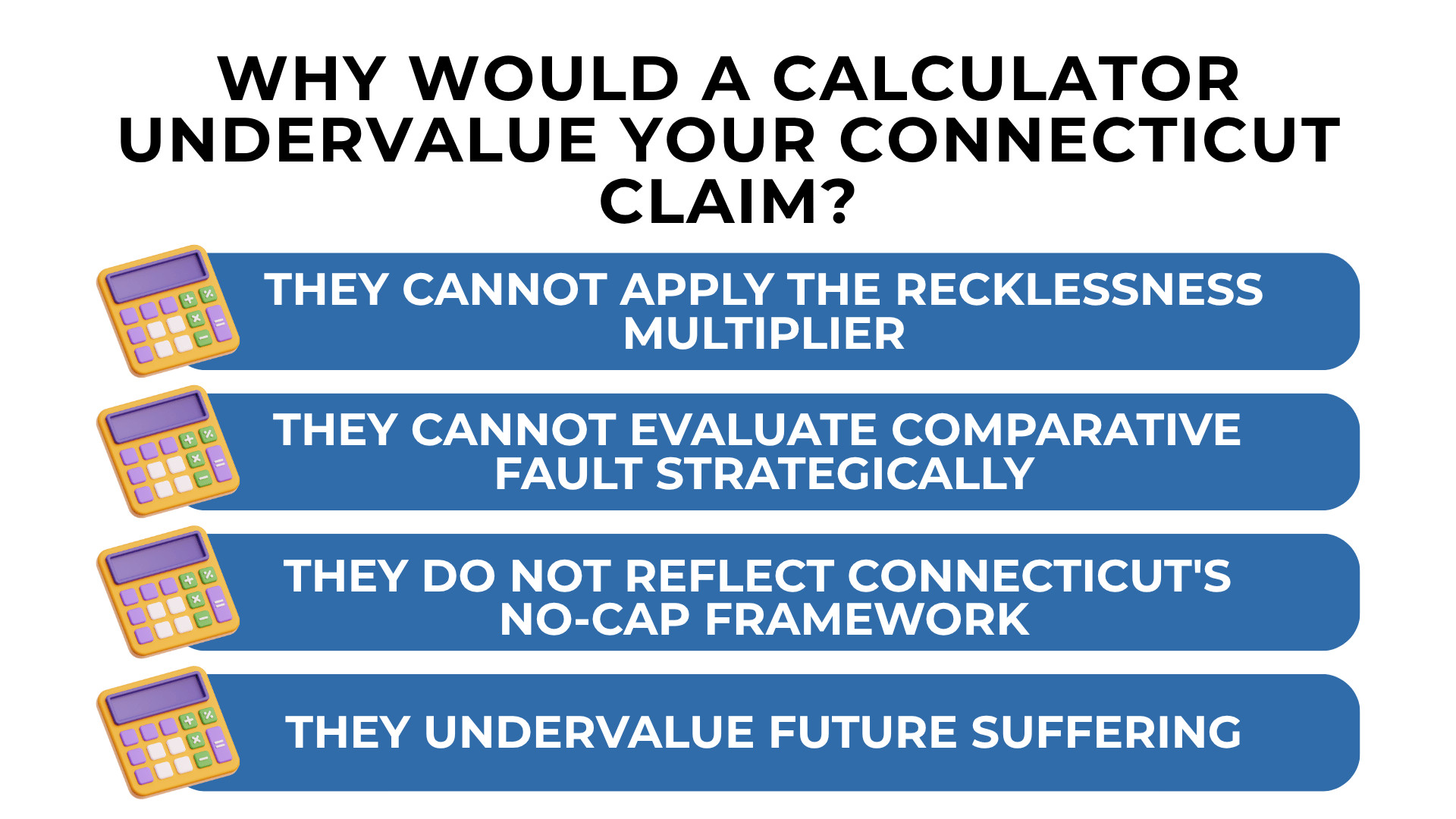
Why Would a Calculator Undervalue Your Connecticut Claim?
Any pain and suffering estimate generated by a formula — whether an online calculator or a number presented by an insurer — is limited by design in what it can account for. There are specific reasons these estimates understate the value of Connecticut claims.
They cannot apply the recklessness multiplier. Conn. Gen. Stat. § 14-295 allows courts to double or triple compensatory damages when the defendant violated specific traffic statutes with deliberate or reckless disregard. A formula-based estimate is not built to identify when this applies, and an insurer has no incentive to flag it.
They cannot evaluate comparative fault strategically. A formula may assign a fault percentage based on a police report narrative. But it cannot weigh whether that percentage would hold up under the evidence — or whether it could be reduced. Every point of fault attributed to you directly lowers the estimate.
They do not reflect Connecticut’s no-cap framework. The national average bodily injury liability claim payout is approximately $28,278. That average is pulled from every state, including those with statutory damage caps that limit non-economic recovery. Connecticut has no such cap. A serious Connecticut claim — involving permanent injury, strong medical documentation, and clear liability — can recover well beyond that national average because the law does not cap it.
They undervalue future suffering. An estimate based on current medical bills will not adequately account for injuries with long recovery timelines or permanent consequences. Connecticut hospitals billed nearly $1.7 billion for crash-related treatment in 2023. The average workers’ compensation claim from a motor vehicle crash costs $91,433 — nearly double the average across all claim types. These figures reflect the reality that motor vehicle injuries are far more expensive and longer-lasting than average. A pain and suffering estimate needs to account for that long-term picture, not just the current snapshot.
What Should You Do Before Accepting a Settlement Based on a Calculator?
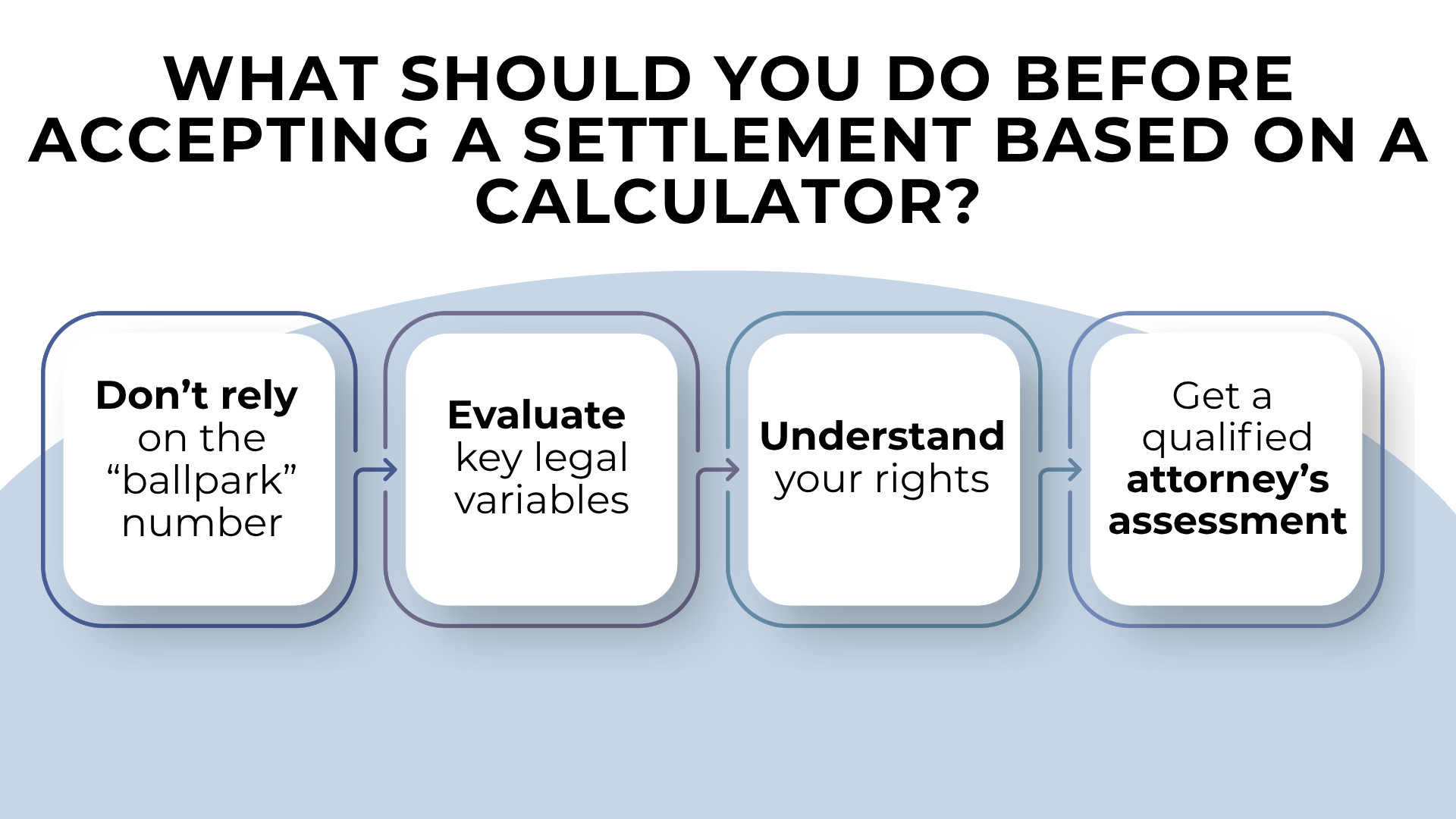
If you’ve used an online calculator or received a number from an insurance adjuster, the question isn’t whether that number is in the right ballpark. The question is whether it accounts for the factors that actually determine what your claim is worth under Connecticut law.
The variables that most affect a pain and suffering value are not things a formula can resolve. Whether the § 14-295 recklessness multiplier applies, how comparative fault will realistically be assigned, whether your medical documentation supports the full scope of your injuries, whether your damages have a permanent component — these require someone who evaluates them against Connecticut’s specific laws, including the rules that work in your favor, like the fact that there is no damage cap on non-economic recovery.
Etemi Law handles motor vehicle accident claims out of Waterbury, Connecticut. The firm’s attorneys — including Ron Etemi, who has tried over 100 cases to verdict and received the Top Verdict Award, and Peter Brown, whose first 15 years in practice were spent trying cases as a defense lawyer and who was one of the most respected civil defense trial lawyers in the state of Connecticut — evaluate pain and suffering claims against the full scope of what Connecticut law allows, not against what a formula suggests. A conversation about what your claim is actually worth costs nothing, and it should happen before you accept a number generated by a tool that wasn’t built to serve your interests.