Should I Get a Lawyer for a Car Accident That Wasn’t My Fault?
Most of the time, yes. The reason has less to do with the law than with how insurance companies operate after a crash you didn’t cause. Being not at fault means the other driver’s insurer owes you compensation. But that insurer’s goal is to close your claim as quickly and cheaply as possible. The process is designed to work in their favor when you’re navigating it alone.
That doesn’t mean every accident requires an attorney. Some don’t. But the line between “I can handle this myself” and “I’m about to leave money on the table” is not where most people think it is. In many cases, the deciding factor is something you may not have considered yet: whether the other driver’s insurance can actually cover your losses.
What if the Other Driver Doesn’t Have Enough Insurance — or Doesn’t Have Any?
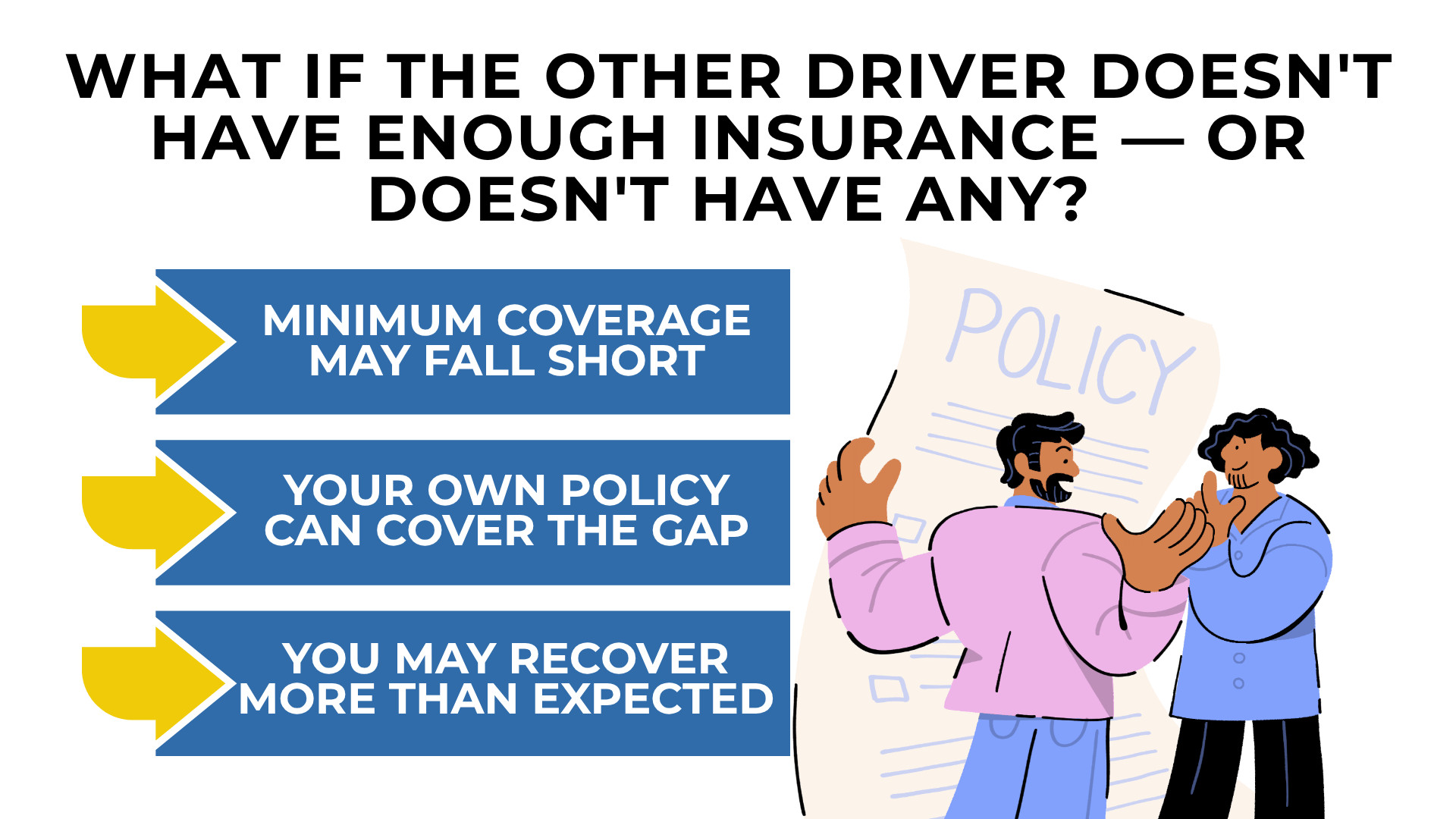
Even when fault is completely clear, there’s a practical problem that can limit your recovery: the other driver’s insurance may not cover your losses. Connecticut requires all drivers to carry minimum liability coverage of $25,000 per person and $50,000 per accident for bodily injury under Conn. Gen. Stat. § 14-112. With any serious injury — a fracture, a surgery, a few months of physical therapy — those minimums can be used up quickly.
And roughly 11.8% of Connecticut drivers are estimated to be uninsured entirely. That’s below the national average of 15.4%, but it still means you have a meaningful chance of being hit by someone with no coverage at all.
This is where your own insurance policy becomes important in a way most people don’t expect. Under Conn. Gen. Stat. § 38a-336, every auto insurance policy issued in Connecticut is required to include uninsured and underinsured motorist (UM/UIM) coverage. If the at-fault driver has no insurance, or doesn’t carry enough to cover your losses, your own UM/UIM coverage can fill the gap. If you purchased underinsured motorist conversion coverage under Conn. Gen. Stat. § 38a-336a, the at-fault driver’s payment doesn’t even reduce your UIM benefits — you can collect from both.
Most people don’t know they have this coverage, don’t understand how it works, and don’t realize they may be able to recover from their own policy on top of what the other driver’s insurer pays. Identifying every available source of recovery — and knowing how Connecticut’s stacking and exhaustion rules apply — is one of the most concrete ways a lawyer adds value in a not-at-fault accident.
Are There Cases Where I Probably Don’t Need a Lawyer?
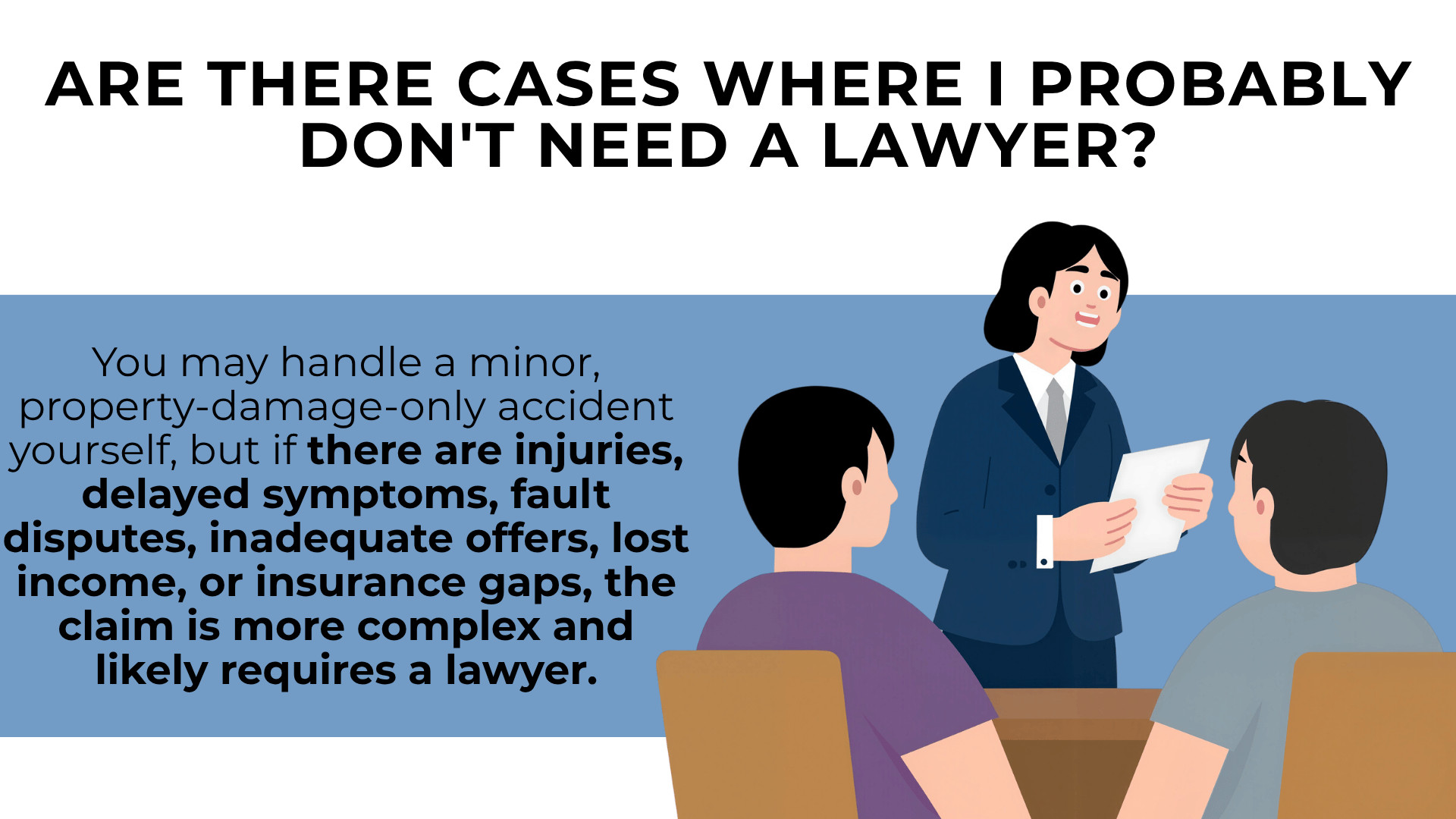
Yes, and being straightforward about that matters. If the accident was minor — no injuries, no ongoing symptoms, property damage only, and the other driver’s insurer is offering a fair amount to cover your actual repair costs — you may be able to handle the claim yourself. Not every fender bender requires a lawyer, and a good attorney will tell you that.
The threshold shifts the moment any of the following are true: you went to the emergency room or sought any medical treatment. You’re experiencing symptoms that started days or weeks after the crash. There’s any dispute about who was at fault. The insurer’s offer doesn’t cover your actual expenses. You’ve missed work or expect to. Or the other driver was uninsured or underinsured.
Once any of those factors are present, the claim has moved beyond what most people can accurately value on their own. And an insurer who knows you don’t have a lawyer will price their offer lower.
What Should I Look for in a Car Accident Lawyer?
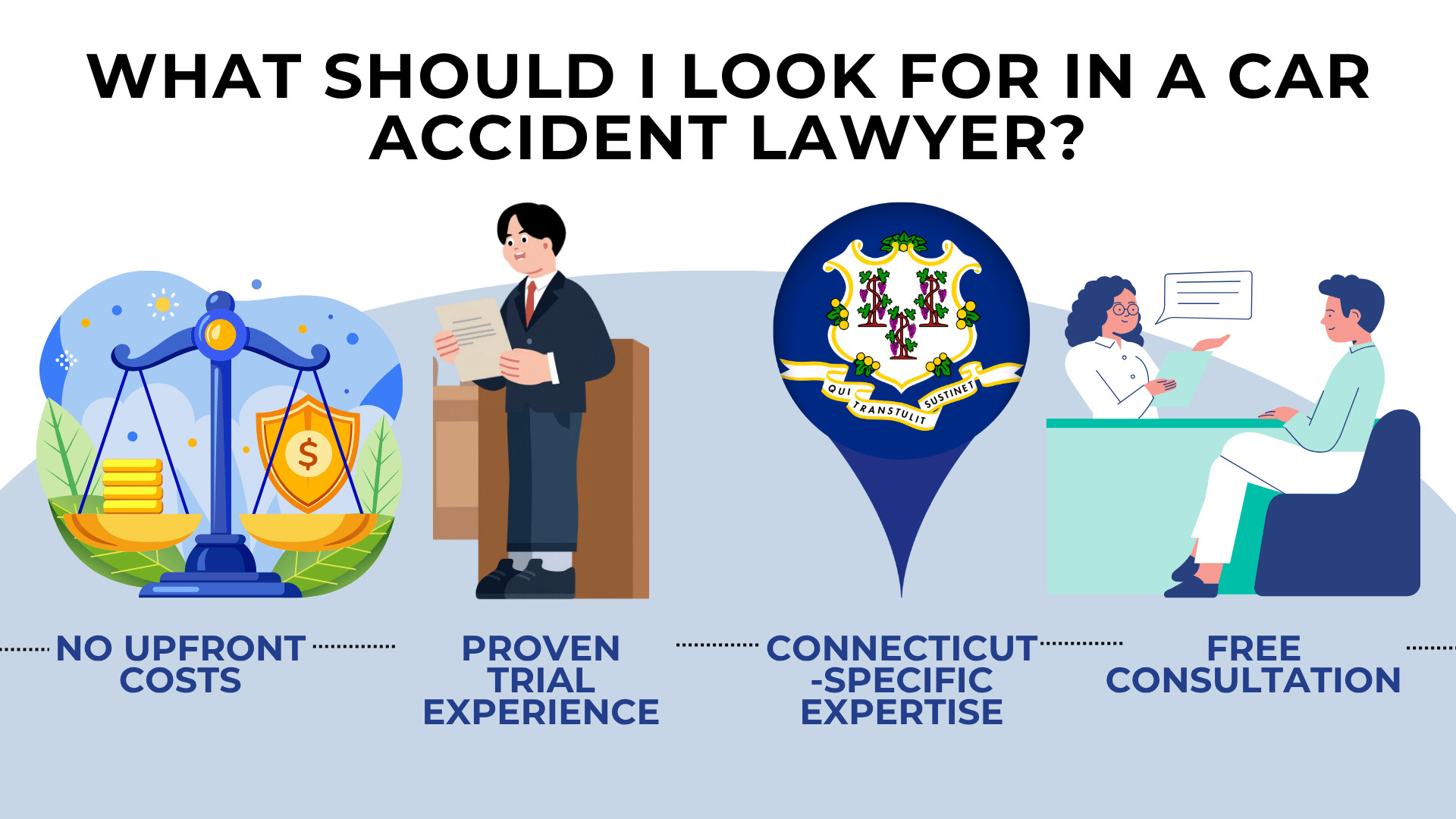
Start with how they get paid. Most personal injury attorneys in Connecticut work on a contingency fee basis — meaning you pay nothing upfront and the attorney’s fee comes out of the recovery. If there’s no recovery, there’s no fee. This is relevant to the cost concern that keeps many people from calling a lawyer in the first place.
Beyond fees, look for trial experience. The value of a lawyer in a car accident case isn’t just in negotiating with the insurer — it’s in the insurer’s knowledge that your attorney will take the case to trial if the offer isn’t fair. A firm that has tried cases to verdict in Connecticut courtrooms carries more leverage in every negotiation than one that settles everything before going to court. Ask how many cases the attorney has tried. Ask what happens if the insurance company won’t make a reasonable offer.
Look for Connecticut-specific knowledge. An attorney who practices personal injury in this state should be able to explain how the rules around coverage gaps, underinsured motorist claims, and all available sources of recovery apply to your situation. That explanation should happen in a free consultation. Etemi Law in Waterbury focuses its practice on motor vehicle accident cases in Connecticut. A consultation is a reasonable place to start getting answers specific to your situation.
That consultation is worth making the call for. You’ll learn whether your case needs a lawyer, what your claim may be worth, and what the process looks like from where you are right now. If the answer is that you don’t need a lawyer, a good firm will tell you that too.