
Who Can You Sue After a Construction Accident in Connecticut? A Guide to All Potentially Liable Parties
Estimated reading time: 8 minutes

Key Takeaways
- Workers’ compensation is often available, but it is a no-fault system that usually bars suits against your direct employer.
- Third-party claims — against contractors, owners, manufacturers, or drivers — can recover damages workers’ comp cannot.
- Many construction accidents involve multiple potentially liable parties; identifying them quickly is critical.
- Preserve evidence: photos, equipment, witness names, rental and maintenance records, and incident reports.
- Special rules apply when a government entity is involved or when the incident is a hit-and-run.
Table of contents
- Who Can You Sue After a Construction Accident in Connecticut?
- The Two Main Paths After a CT Construction Injury: Workers’ Comp vs. Lawsuit
- Quick Liability Map
- Deep Dive: Each Potentially Liable Party
- Premises Owner Negligence in Waterbury and Across Connecticut
- How Liability Is Determined in CT Construction Cases
- What to Do Immediately After a Construction Accident
- Damages You May Be Able to Recover
- Frequently Asked Questions
- Conclusion
The Two Main Paths After a CT Construction Injury: Workers’ Comp vs. Lawsuit
After a construction injury, there are generally two paths for compensation. Understanding the difference helps clarify why identifying all liable parties matters.
Workers’ Compensation
Workers’ compensation is a no-fault insurance system. If you’re injured during the course of your employment, it typically covers your medical treatment and a portion of your lost wages. You don’t need to prove anyone was negligent to receive benefits.
However, workers’ comp comes with a significant trade-off. In most situations, you cannot sue your direct employer for negligence. This is called the “exclusive remedy” rule. Most of the time, if workers’ comp applies, your employer is protected from a lawsuit—even if they were careless.
For a deeper breakdown of what Connecticut benefits can include, see what Connecticut benefits can include (medical care, disability payments, and more) and types of workers’ comp benefits in CT.
Third-Party Lawsuits
Here’s where things open up. If someone other than your employer caused or contributed to your accident, you may be able to sue that party directly. This is called a third-party claim.
Unlike workers’ comp, a lawsuit can recover full damages: complete wage loss, pain and suffering, future medical expenses, and more. These are categories workers’ comp doesn’t fully address.
So the key question becomes identifying liable parties in your construction accident in CT—which may include contractors, property owners, equipment manufacturers, and others.
Quick Liability Map: Who You Can Potentially Sue After a Construction Accident in Connecticut
Before diving into details, here’s a quick overview of the parties who may bear responsibility for your injuries. Each situation is different, but these are the categories worth investigating:
- General contractor or construction manager
- Subcontractors and their employees — for a focused discussion of GC vs. subcontractor responsibility, see subcontractor injury liability in CT
- Premises or property owner (commercial owner, landlord, developer)
- Equipment or tool manufacturers
- Equipment rental companies
- Architects or engineers (design professionals)
- Third-party drivers (delivery trucks, passing motorists, site vehicles)
- Security companies or maintenance vendors
- Government entities (when they own or control the site—special rules apply)
In many real cases, more than one party shares fault. For example, a property owner might have failed to fix a known hazard, while a subcontractor created it, and the general contractor failed to supervise. All three could potentially be defendants.
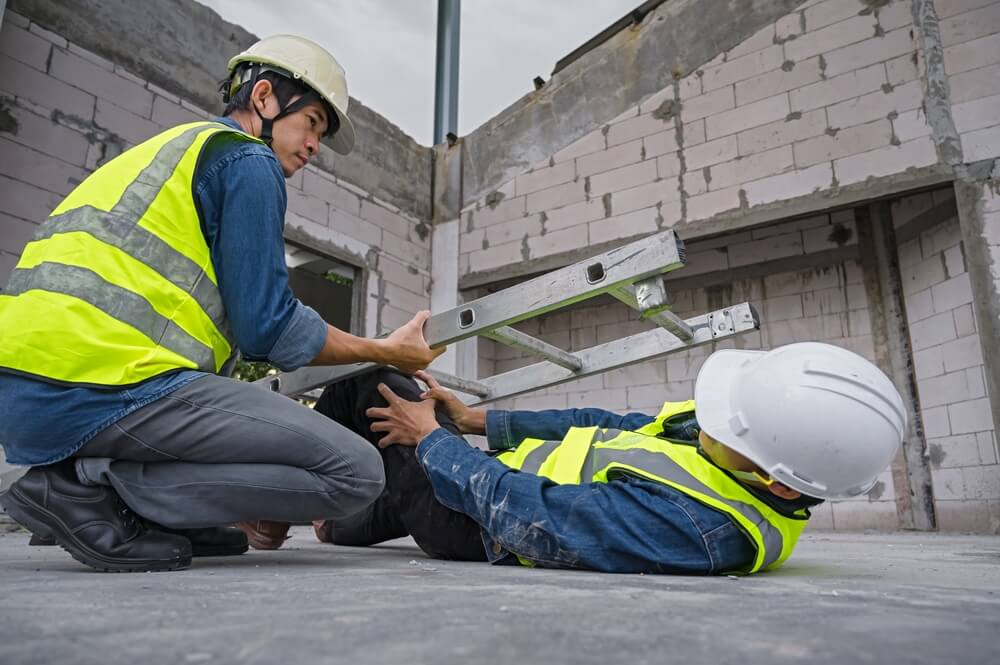
Deep Dive: Each Potentially Liable Party
Let’s look more closely at each category—what they do, how they can be liable, and what evidence supports a claim against them.
General Contractor or Construction Manager
The general contractor (GC) typically runs the site. They coordinate trades, set the project schedule, control access, and often establish safety protocols. When a GC fails at these responsibilities, injuries can follow.
A general contractor may be liable for:
- Failing to enforce safety rules across the site
- Allowing unsafe sequencing (for example, one trade working directly below another without protection)
- Not correcting known hazards
- Negligent supervision or coordination of subcontractors
Example scenarios: Missing guardrails on elevated surfaces, unsafe scaffolding the GC knew about but didn’t address, or failure to enforce fall protection requirements.
Evidence to look for: Daily logs, safety meeting minutes, subcontractor agreements, and incident reports.
Subcontractors and Other On-Site Companies
Subcontractors are specialized trades—electrical, framing, roofing, demolition, concrete, and so on. They’re hired by the GC or owner to perform specific work.
Subcontractors can be liable when they:
- Create a hazard (such as leaving floor openings unprotected)
- Fail to warn other workers about dangers
- Use unsafe methods or build defective temporary structures
Example scenarios: Debris left in walkways, unsecured loads that fall, or an energized electrical area that wasn’t properly marked.
Evidence: Jobsite photos, witness statements, and documents showing the subcontractor’s scope of work. If you’re specifically trying to understand who pays when a subcontractor (or someone hurt by subcontractor work) is involved, see subcontractor injury liability in CT.
Premises or Property Owner
The property owner—whether a commercial landlord, developer, or business—can sometimes be held responsible for construction site injuries. This is true when the owner:
- Controlled the site or retained control over how work was performed
- Knew or should have known about a dangerous condition and didn’t fix it or warn about it
- Created the hazardous condition themselves
We’ll discuss premises owner negligence in more detail below. For additional context on how Connecticut premises-liability duties work, see what is premises liability in CT and the difference between premises and personal liability in CT.
Equipment Manufacturers (Product Liability)
Sometimes the equipment itself is the problem. If a tool, machine, scaffold, or safety device was defectively designed, defectively manufactured, or lacked adequate warnings, the manufacturer (and sometimes the distributor) may be liable.
This falls under product liability law. You don’t necessarily need to prove the manufacturer was negligent—just that the product was defective and caused your injury.
Common products involved in construction injury claims: Ladders, scaffolding systems, aerial lifts, nail guns, power saws, harnesses, lanyards, and hard hats.
Evidence: Preserve the actual equipment. Document the model number, serial number, and any manuals or warning labels. Gather maintenance records if available.
Equipment Rental Companies and Maintenance Providers
Companies that rent construction equipment have duties too. They may be liable for negligent maintenance or inspection before renting, renting out equipment with known defects, or failing to provide required safety instructions.
Evidence: Rental contracts, inspection tags, and service or repair logs.
Architects and Engineers (Design Professionals)
Design professionals can be sued when their plans or specifications create an unreasonably dangerous condition. This might include negligent design of temporary or permanent structures, failure to address known hazards in the design, or errors in specifications that lead to unsafe construction methods.
Evidence: Plan sets, RFIs (requests for information), submittals, change orders, and relevant emails.
Third-Party Drivers and Vehicle-Related Injuries
Not every construction accident involves a fall. Some involve vehicles—delivery trucks backing up, motorists entering a work zone, dump trucks, forklifts, or site pickups.
If a driver caused your injury, that driver and their employer may be liable. This is true whether the driver works for a delivery company, a subcontractor, or is simply a motorist who entered the work zone. For related liability questions in construction-zone roadway crashes, see construction-zone roadway crash liability.
What if the driver left the scene?
Connecticut law requires any driver involved in a crash causing injury, death, or property damage to immediately stop, render assistance, and provide their name, address, license number, and registration to the injured person, property owner, witnesses, or law enforcement. Failing to do so is a crime. You can review the statutory requirements under Conn. Gen. Stat. § 14-224, and a summary of penalties is available from the Connecticut General Assembly here.
Practical steps: If a vehicle was involved, get the plate number, company markings, and witness information. Request a police report. This information is critical for pursuing a claim.
Government Entities
When a government entity—city, state, or agency—owns or controls the construction site, you may be able to bring a claim against them. However, special rules and shorter deadlines often apply to claims against government defendants.
If your injury occurred on a public project or government-owned property, speak with an attorney promptly. The procedures are different, and missing a deadline can bar your claim entirely.
Premises Owner Negligence in Waterbury and Across Connecticut
Premises owner negligence is a concept that comes up often in construction injury cases. Let’s break it down.
What Does It Mean?
Premises owner negligence means a property owner (or party controlling the property) failed to use reasonable care to keep the site reasonably safe—or failed to warn about dangers they knew or should have known about.
What Does “Control” Mean in Practice?
Courts look at who had the authority to address the hazard:
- Who could fix the dangerous condition?
- Who controlled access, maintenance, lighting, or safety policies?
- Who hired and managed the contractors?
Control doesn’t require owning the property outright. A tenant, property manager, or developer may have enough control to be held responsible.
Common Examples in Waterbury and Connecticut
- Unsafe stairwells or poor lighting in commercial buildings undergoing renovation
- Unmarked floor openings or wet, slippery surfaces
- Ice and snow hazards near entrances that weren’t addressed
- Known structural defects—loose railings, collapsing surfaces—not fixed before work began
- Failure to coordinate multiple trades, creating dangerous overlap
Evidence Checklist for Premises Owner Negligence
If you’re building a claim against a property owner, gather:
- Prior complaints or emails to the owner or property manager
- Maintenance records and inspection reports
- Surveillance footage
- Incident reports
- Photos or videos showing the condition and any lack of warning signs
Keep in mind that premises liability can overlap with contractor liability. It’s common for multiple defendants to share responsibility. If you’re trying to understand how courts distinguish premises liability from other types of liability theories, see difference between premises and personal liability in CT.
How Liability Is Determined in CT Construction Cases
To hold someone liable in a negligence case, you generally need to establish four things:
- Duty: The defendant had a responsibility to act safely toward you.
- Breach: They failed to meet that responsibility.
- Causation: Their failure contributed to your injury.
- Damages: You suffered real harm—medical bills, lost income, pain and suffering.
The Role of Safety Standards
OSHA (Occupational Safety and Health Administration) sets federal safety standards for construction sites. If a defendant violated OSHA rules, that violation can be strong evidence of unsafe conditions.
However, an OSHA citation doesn’t automatically win a case. It supports a negligence argument, but you still need to connect the violation to your injury.
Comparative Negligence
Defendants often argue that the injured worker shares some fault. Connecticut uses a comparative negligence system, meaning your recovery can be reduced if you were partially responsible—but you’re not automatically barred from recovery.
This is why documentation and witness accounts matter. Strong evidence about what actually happened protects your claim.
What to Do Immediately After a Construction Accident
The steps you take right after an injury can make or break a lawsuit. Here’s a practical checklist:
Medical and Reporting Steps
- Get medical treatment immediately—and follow up as directed. This creates a documented record.
- Report the incident to the site foreman or general contractor. Request a copy of the incident report if one is prepared.
Evidence Preservation
- Photograph and video the scene, the hazard, any equipment involved, and warning signage (or the lack of it).
- Identify all companies working on site. Look at hard hats, truck logos, badges, and signage.
- Get the names and phone numbers of witnesses as quickly as possible.
- If defective equipment was involved, preserve it. Don’t repair or alter it—store it safely. If you want a practical framework for locking down evidence early, see preservation of evidence in CT.
Vehicle-Related Incidents
- If a driver was involved, remember that Connecticut law requires the driver to stop and provide identifying information. If they didn’t, involve the police immediately.
- Note the license plate, vehicle description, and any company markings.
- Request a police report.
Insurance Reporting
Connecticut does not impose a statutory duty to report a crash to your auto insurer—that obligation typically comes from your policy contract. Even so, most policies require prompt notice. Review your policy or ask an attorney if you’re unsure. Additional background on this point is available from the Connecticut General Assembly: report on insurance notice obligations.
Damages You May Be Able to Recover in a Third-Party Lawsuit
A third-party lawsuit can recover damages that workers’ compensation doesn’t fully cover:
- Full lost wages and loss of earning capacity (not just the partial wage replacement from workers’ comp)
- Pain and suffering
- Future medical costs
- Permanent disability or disfigurement
- Loss of enjoyment of life
This is why identifying all liable parties matters. Pursuing every responsible party can increase available insurance coverage and overall recovery potential.
About the Author
Lou Etemi is a Connecticut personal injury lawyer and co-founder of Etemi Law who represents individuals and families injured by negligence. He has helped hundreds of clients resolve serious injury claims by combining disciplined case preparation, medical understanding, and persistent negotiation with insurance companies. Lou is known for his hands-on advocacy, strong client relationships, and client-first approach to accountability and fair compensation.
Frequently Asked Questions
Who can you sue after a construction accident in Connecticut if you already received workers’ comp?
You may still sue third parties who are not your direct employer. This includes general contractors, subcontractors, premises owners, equipment manufacturers, and drivers whose negligence contributed to your injury. Workers’ comp and third-party claims serve different purposes and can proceed at the same time. If you need a refresher on who typically qualifies for CT workers’ comp, see workers’ comp eligibility in Connecticut.
Can I sue the property owner for a jobsite injury in Waterbury?
Yes, when the owner controlled the premises, created the hazard, or knew (or should have known) about a dangerous condition and failed to fix it or warn about it. The specific facts determine liability. For more detail on property owner negligence concepts, see what is premises liability in CT.
What if the driver who hit me in a work zone left the scene?
Connecticut law requires drivers involved in crashes causing injury to stop, render assistance, and provide identification. If a driver left the scene, involve the police immediately. An attorney can help identify the driver and the company they work for. The statutory requirements are outlined in Conn. Gen. Stat. § 14-224 and the CGA’s penalty summary is available here. You can also read more about potential recovery in hit-and-run cases at can you receive anything for a hit and run.
Do I have to report a crash to my insurer in Connecticut?
There’s no state law requiring you to report a crash to your auto insurer. However, most insurance policies include a contractual requirement for prompt notice. Check your policy terms or consult an attorney to understand your obligations. Background on this issue is available here.
Conclusion: Mapping Every Defendant Matters
Determining liable parties in a Connecticut construction accident requires investigating everyone who owned, controlled, created, supplied, or operated something that caused your injury. Often, that means more than one defendant.
If you’re still asking who can you sue after a construction accident in Connecticut, an attorney can map every potential defendant and help preserve evidence before it disappears. Time limits apply, and early action protects your options.
If you’ve been injured on a construction site in Waterbury or anywhere in Connecticut, consider scheduling a consultation. Bring your incident report, photos, medical records, the names of all companies on site, and any vehicle or driver information you have.
The more documentation you can provide, the better positioned you’ll be to pursue full compensation.
Disclaimer: This article provides general information about construction accident claims in Connecticut. It is not legal advice and does not create an attorney-client relationship. Every case depends on its specific facts. If you’ve been injured, consult with a qualified attorney to discuss your situation.