Car Accident Concussion: What to Know About Your Injury and Your Rights

A car accident can absolutely cause a concussion — and if you’re searching this, there’s a good chance you or someone close to you is dealing with one right now. A concussion is a traumatic brain injury caused by the sudden acceleration and deceleration forces that happen in a collision. It can occur even if you never hit your head on anything. What follows is everything you need to understand about how this injury works, why it’s more serious than you may have been told, and what it means for your legal rights in Connecticut.
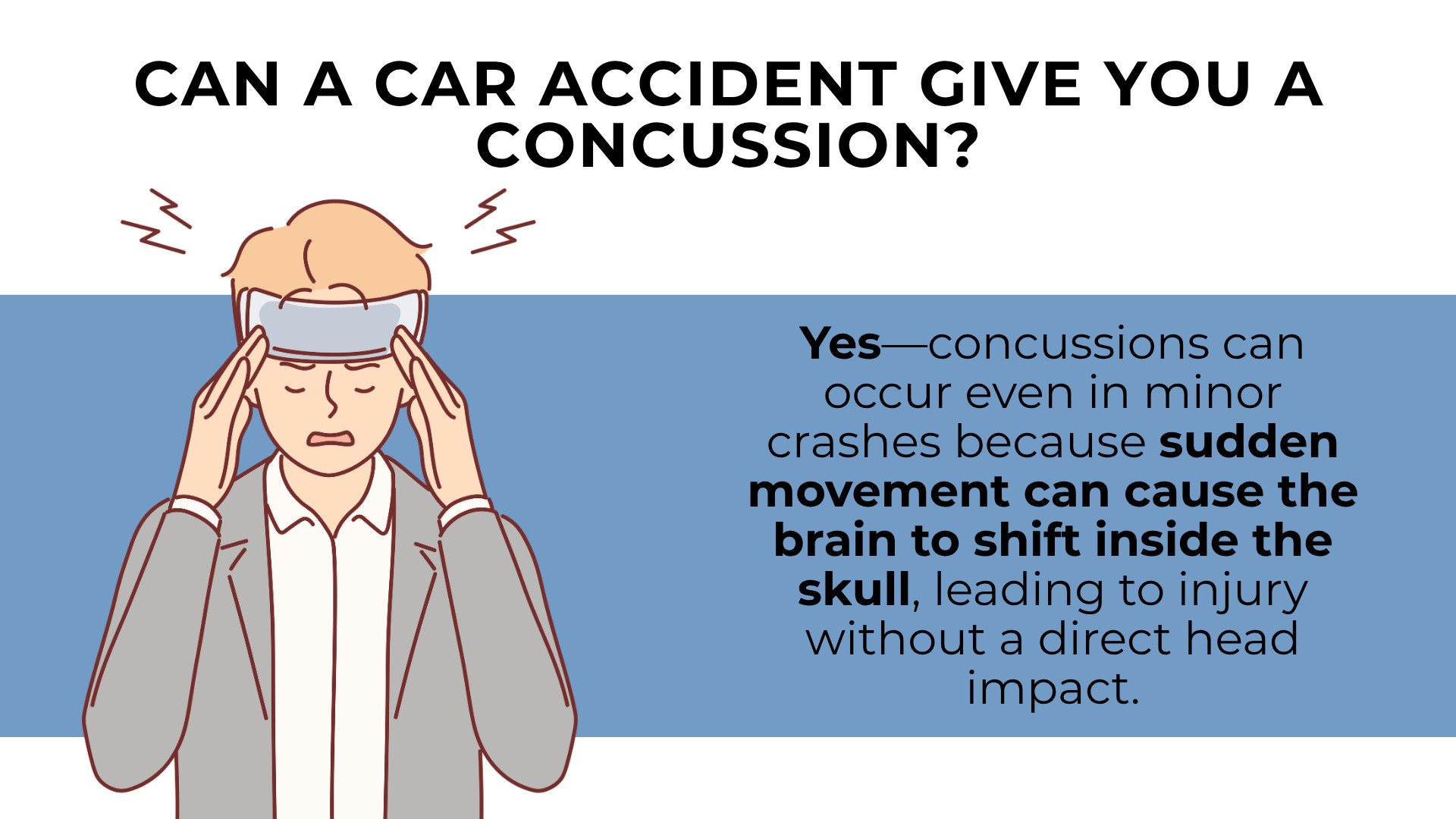
Can a Car Accident Give You a Concussion?
Yes. And you don’t need a violent, high-speed crash for it to happen.
A concussion occurs when a sudden force causes your brain to move rapidly inside your skull. In a car accident, the abrupt stop or change in direction whips your head forward, backward, or sideways. Your brain, which is suspended in cerebrospinal fluid inside the rigid bone of your skull, shifts and compresses against the interior walls. That movement creates chemical changes in the brain and can stretch and damage brain cells.
This is why rear-end collisions, sideswipes, and even lower-speed crashes can produce concussions. What matters isn’t how hard you hit your head — it’s how fast your brain moved. A direct blow to the head is the most commonly recognized cause, but indirect forces applied to the body can also produce enough acceleration to injure the brain.
Motor vehicle crashes are one of the leading causes of traumatic brain injury in the United States. According to the CDC, there are approximately 190 TBI-related deaths every day in this country. There were roughly 214,110 TBI-related hospitalizations in 2020 alone. Those numbers don’t include the millions of concussions treated in emergency rooms, urgent care clinics, or never treated at all. The CDC estimates the true annual number of cases may range from 1.4 to 3.8 million concussions when unreported cases are included.
If you were in a car accident and something doesn’t feel right — even if the crash seemed minor — take it seriously.
What Does a Concussion From a Car Accident Feel Like?
This is where most people get tripped up. They expect a concussion to look like what they’ve seen in movies: someone gets knocked unconscious, wakes up dazed, and the severity is obvious. The reality is very different.
You can walk away from the accident, talk to the police, exchange insurance information, and drive yourself home — all while your brain is injured.
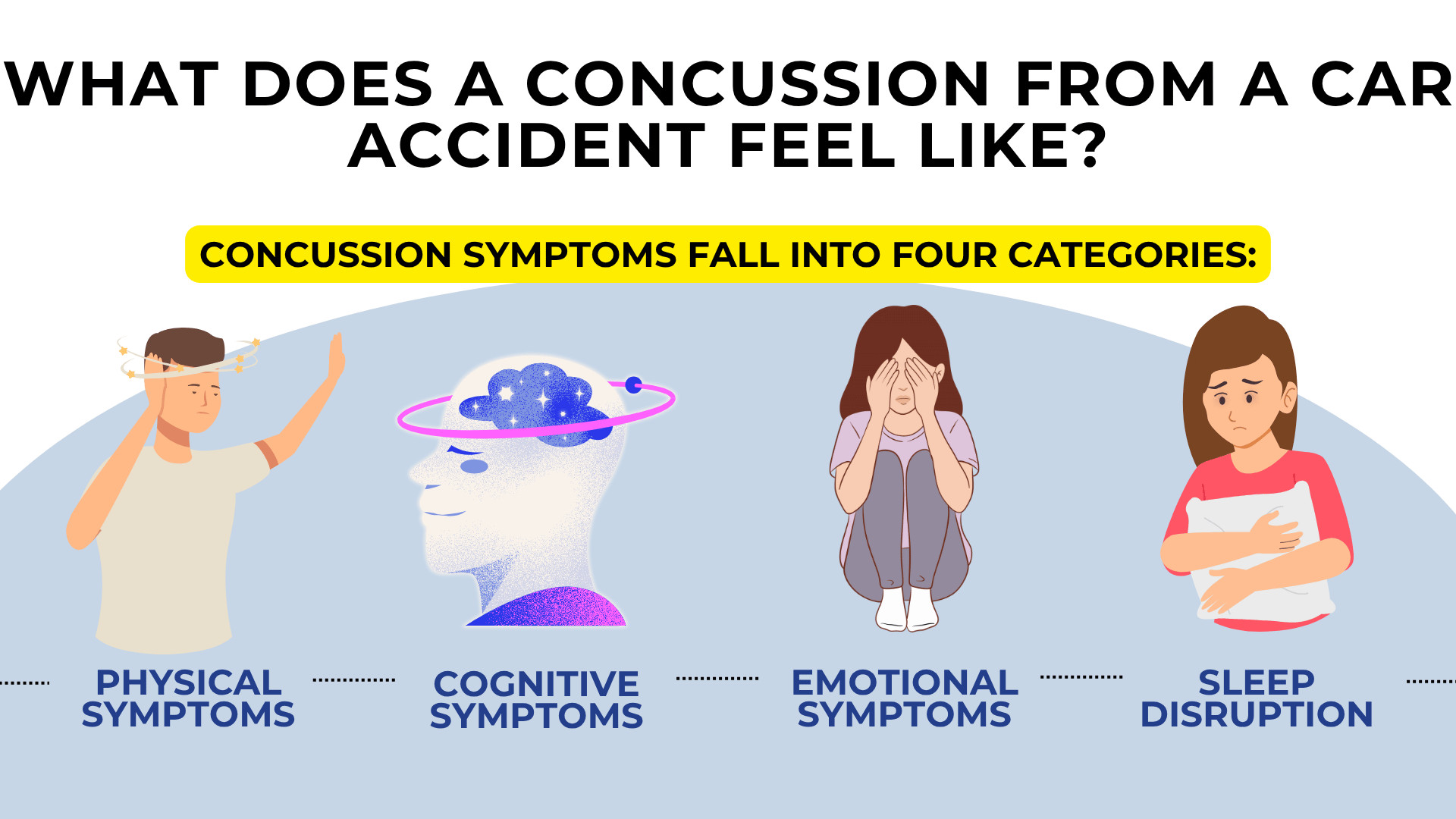
Concussion symptoms fall across four categories, and you may experience some from each:
Physical symptoms are usually the first ones people notice. Headache is the most common, followed by dizziness, nausea, balance problems, blurred or double vision, sensitivity to light and noise, and a fatigue that sleep doesn’t seem to fix.
Cognitive symptoms are what make daily life feel suddenly difficult. You may feel mentally foggy, have trouble concentrating or remembering things, notice your thinking feels slower than usual, or struggle to find the right words in conversation. Many people describe it as feeling “not right” without being able to explain exactly what’s wrong.
Emotional symptoms can catch you off guard. Irritability, sadness, anxiety, mood swings, and a sense of being emotionally raw or reactive are all common. People around you may notice personality changes before you do.
Sleep disruption rounds out the picture. You may find yourself sleeping far more than usual or unable to fall asleep at all. The quality of your sleep may also feel off regardless of how many hours you spend in bed.
These symptoms can appear immediately after the crash or develop over hours to days. That delay is one reason many people don’t connect what they’re feeling to the accident. It’s also one reason insurance companies are able to argue the injury isn’t real.
Go to the emergency room immediately if you experience any of the following: a headache that keeps getting worse, repeated vomiting, seizures, slurred speech, one pupil larger than the other, increasing confusion or agitation, weakness or numbness, or loss of consciousness. These are signs of a potentially more serious brain injury that requires urgent evaluation.
What Should I Do After a Car Accident if I Think I Have a Concussion?
The decisions you make in the first 48 hours after a car accident concussion matter — both for your health and for any future legal claim.
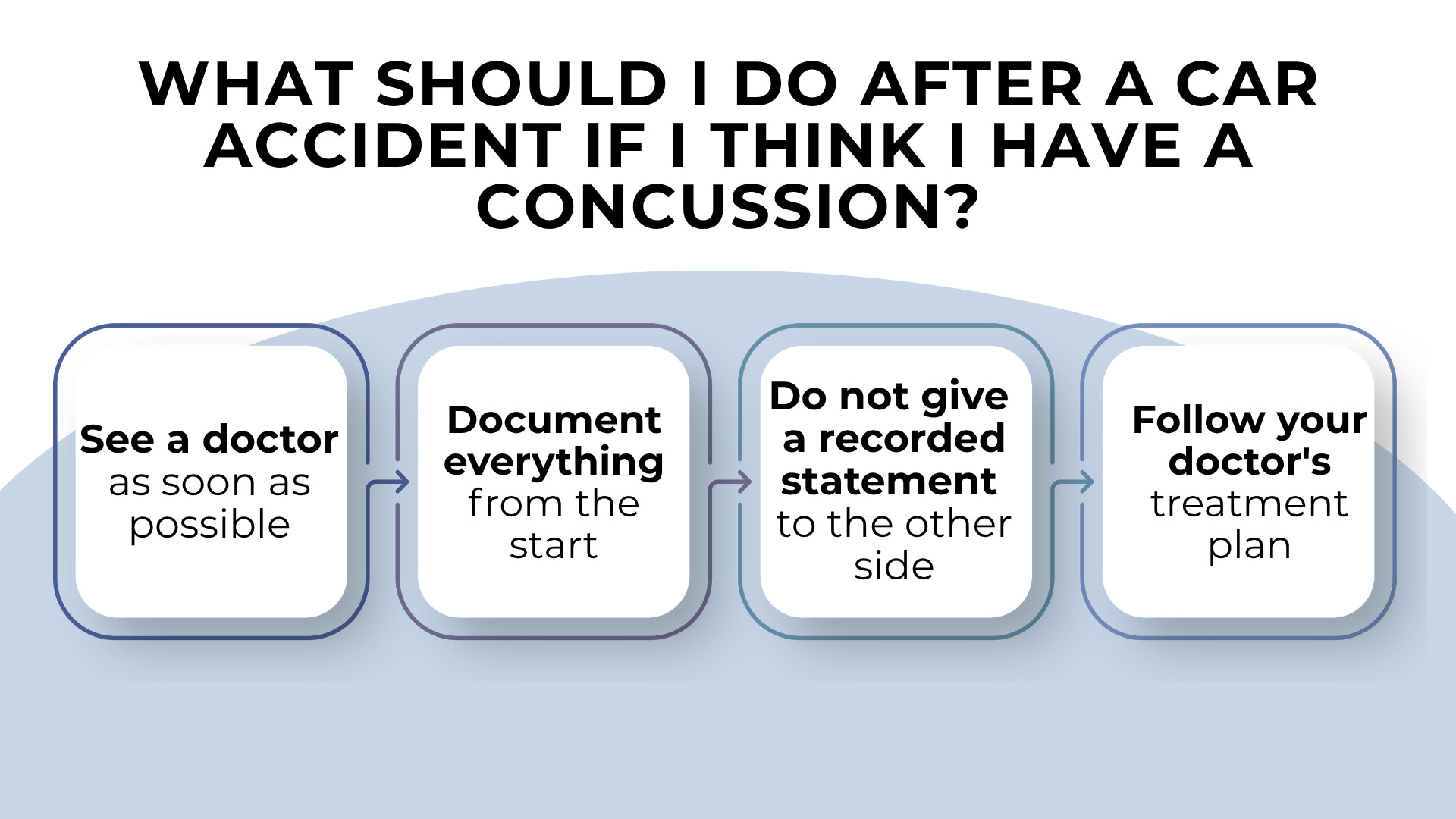
See a doctor as soon as possible. Even if you went to the emergency room at the scene, follow up with your primary care physician or a specialist. Tell them exactly what happened in the crash and describe every symptom you’re experiencing, even the ones that seem minor. Be specific. “I have headaches, I can’t concentrate at work, and I’ve been more irritable than usual” creates a medical record. “I feel fine” when you don’t closes a door you may not be able to reopen.
Document everything from the start. Keep a written log of your symptoms — what you’re feeling, when it started, how it changes day to day, and how it affects your ability to work, care for your family, and handle routine tasks. This kind of record made at the time is powerful evidence if your claim is disputed later.
Do not give a recorded statement to the other driver’s insurance company. You’re under no obligation to do this. What you say in the early days — when you may not yet understand the full extent of your injury — can be used to minimize your claim.
Follow your doctor’s treatment plan. During the first 24 to 48 hours, relative rest is recommended while symptoms are most severe. After that, a gradual return to activity is appropriate. The key principle is that if an activity makes your symptoms worse, you should pull back. Your doctor may recommend limiting screen time, taking breaks during tasks that require concentration, and maintaining regular sleep schedules. Over-the-counter pain relief (acetaminophen is generally preferred) may help with headaches.
The medical care you receive creates the foundation of evidence for any injury claim. Gaps in treatment, delayed visits, and vague symptom descriptions give insurance adjusters the openings they need to argue you weren’t really hurt.
Why Does My CT Scan Say “Normal” if I Have a Concussion?
This may be the single most important thing to understand about your injury.
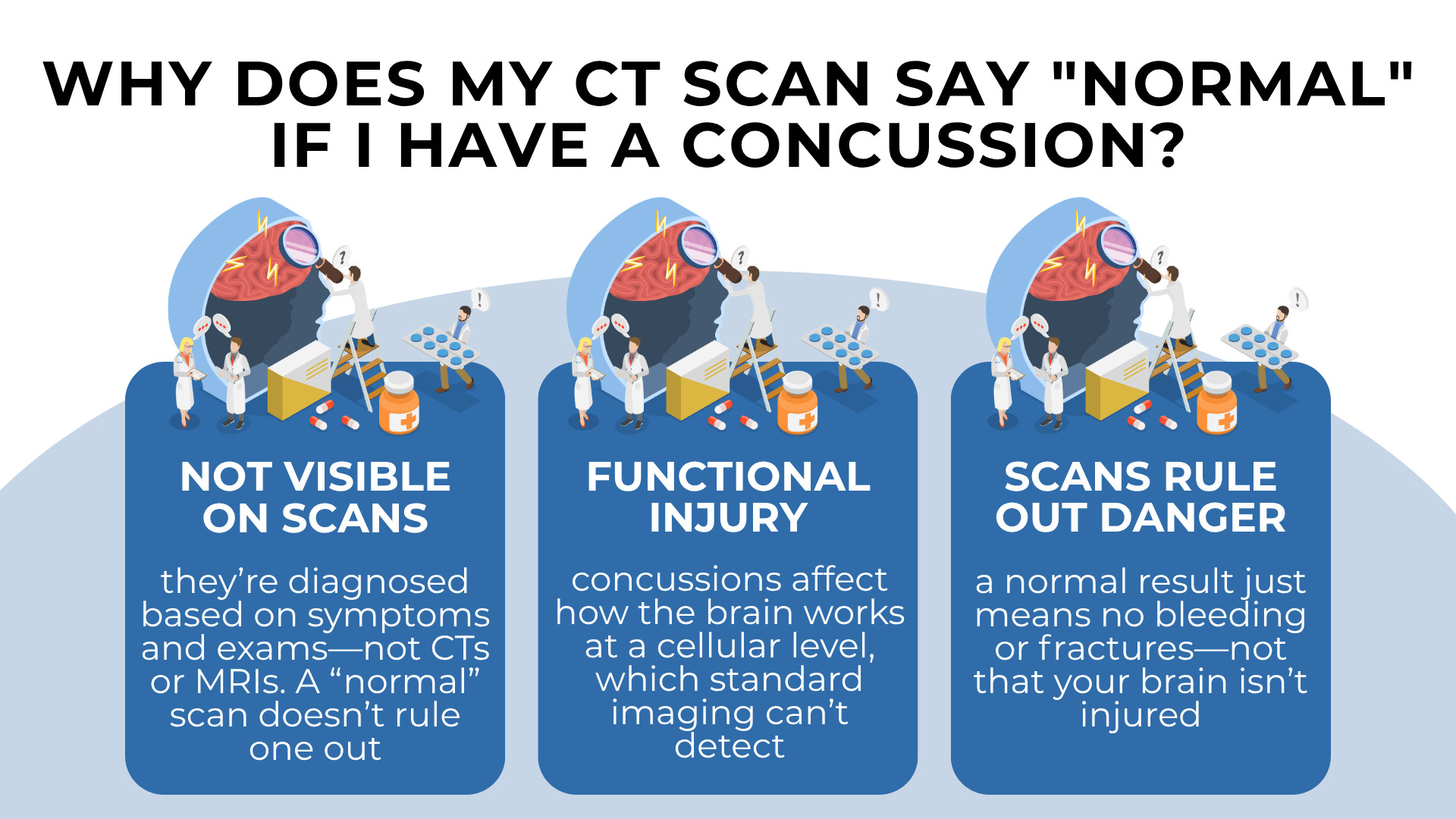
A concussion is a clinical diagnosis, meaning it is identified based on your symptoms and a doctor’s examination — not by scans. There is no blood test, CT scan, or MRI that can confirm or rule out a concussion for certain. A normal scan does not mean you don’t have a brain injury. It means you don’t have bleeding, a fracture, or another structural emergency that requires surgery.
Here’s why: a concussion is a problem with how your brain works, not a problem with its structure. The injury happens at the cellular level. When your brain is subjected to traumatic force, it triggers what researchers call a neurometabolic cascade — a chain reaction involving disrupted ion channels, a massive release of brain chemicals, an energy crisis inside your cells, and an inflammatory response. Your brain is not working the way it should. But none of that shows up on a standard CT or MRI because the damage isn’t to the structure of the brain. It’s to the way the brain functions.
This is critical to understand because it’s the number one weapon insurance companies use against people filing concussion claims. They’ll point to your normal scans and tell you — or tell a jury — that nothing is wrong with you. That argument is medically inaccurate, but it’s effective against people who don’t know better.
If you’re diagnosed with a concussion, you most likely won’t need brain scans at all. When a CT scan is ordered, it’s to rule out more serious injuries like bleeding inside the skull or skull fracture, not to confirm the concussion. An MRI may be considered if symptoms persist beyond seven days, but even a normal MRI doesn’t mean you’re uninjured.
The takeaway: your concussion is real whether or not a scan shows it. Don’t let anyone — an adjuster, a friend, or even a well-meaning family member — use a normal scan to tell you otherwise.
How Long Does It Take to Recover From a Concussion After a Car Accident?
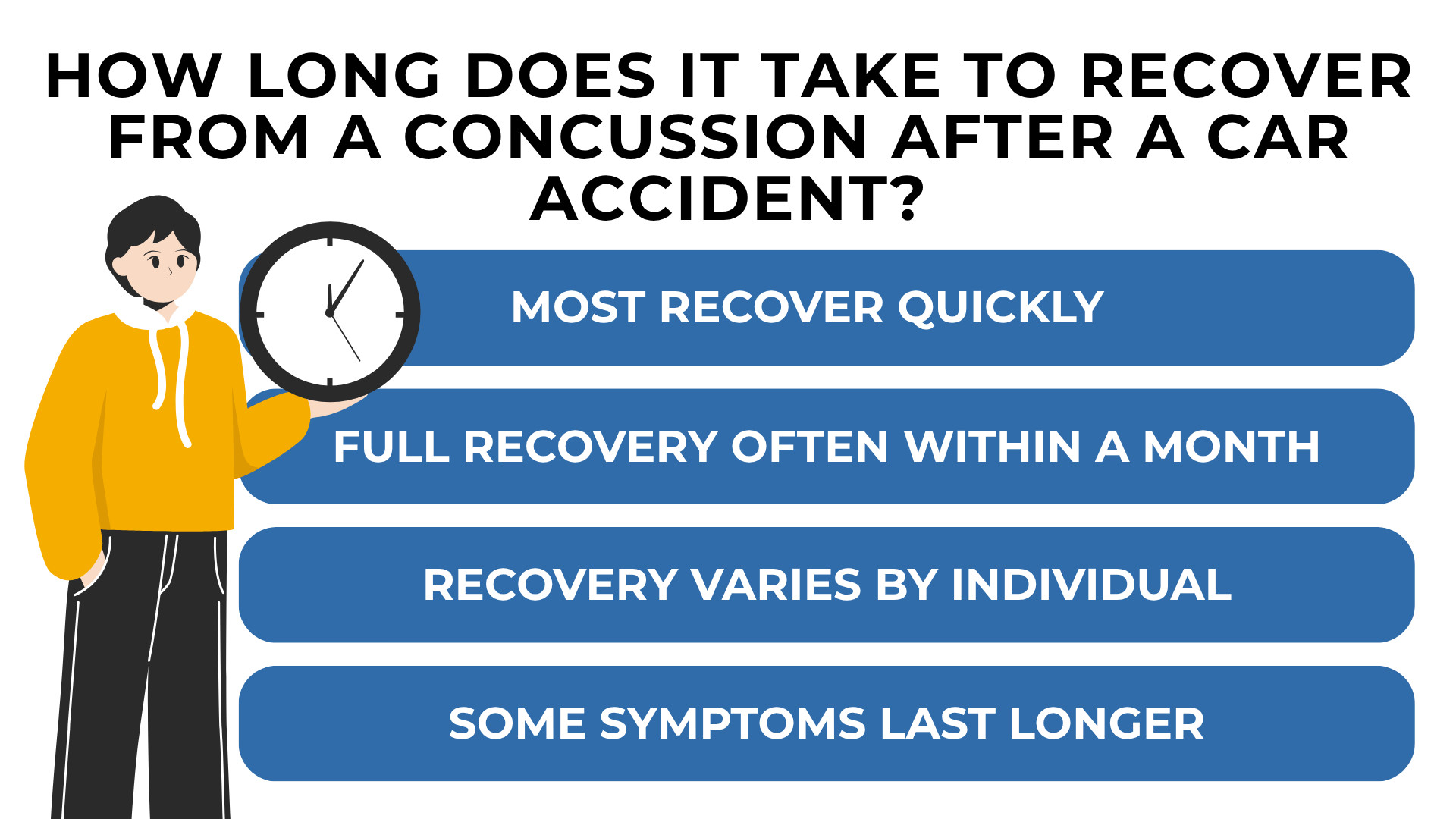
Most people with concussions improve within the first one to two weeks. With proper care, most can return to work, school, and other activities within a few days to weeks. In athletic populations specifically, the 5th International Conference on Concussion in Sport found that most injured athletes fully recover within one month. That’s the good news.
The harder truth is that recovery timelines vary significantly, and several factors can slow yours down. The severity of your symptoms in the first few days after the injury is the most consistent predictor of how long recovery will take. Beyond that, recovery may be slower if you’ve had prior concussions, if you’re older, or if you have pre-existing conditions like migraines, mood disorders, or sleep disturbances.
Some research suggests that roughly half of people with a concussion history still experience some level of symptoms at three months. By one year, that number drops to approximately one in ten.
For many people, recovery follows a step-by-step process. You may return to work within a few days, but with modifications — reduced hours, lighter duties, or a schedule that allows for rest breaks. Workers in safety-sensitive jobs that involve operating machinery, driving, or working at heights need particular caution before resuming full duties. Students may need academic accommodations like extended deadlines, reduced workloads, and quiet testing environments.
The point here isn’t to alarm you. It’s to give you a realistic picture so you don’t accept a quick settlement based on the assumption you’ll be fine in a week. Some people are. Some people aren’t. You shouldn’t have to make that bet before you know which group you’re in.
What if My Concussion Symptoms Won’t Go Away?
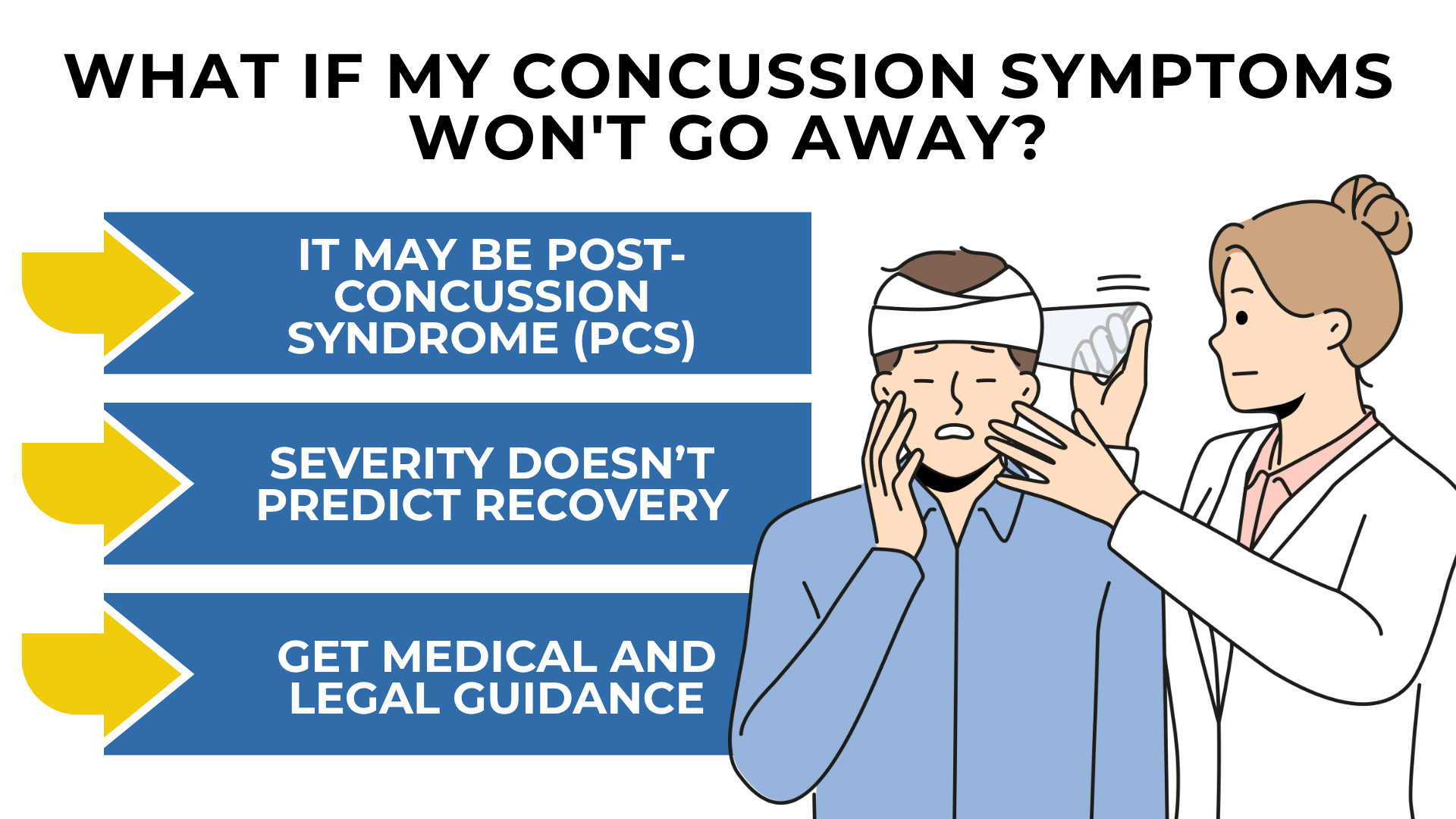
When concussion symptoms persist for weeks or months beyond the expected recovery window, the condition is known as post-concussion syndrome. It’s the most common complication following a concussion, and it changes the entire picture of your injury.
Post-concussion syndrome can involve any combination of the symptoms described earlier — headaches, cognitive difficulty, emotional instability, sleep disruption, dizziness, fatigue — but they don’t resolve on the typical timeline. One study found the typical length of post-concussion syndrome symptoms was seven months. Any of the initial concussion symptoms can persist. The condition also typically involves multiple symptoms across the physical, emotional, and cognitive categories at once.
What makes post-concussion syndrome particularly difficult is that the severity of the initial injury doesn’t appear to predict who develops it. Someone with what seemed like a “mild” concussion can end up dealing with debilitating symptoms for the better part of a year. A history of prior concussions does appear to increase the risk, as do pre-existing mental health conditions and other health factors that affect recovery.
The impact on daily life can be profound. If you develop post-concussion syndrome, you may struggle to perform your job, care for your children, maintain relationships, or enjoy the activities you used to. When your injury was supposed to be “minor” and you’re still struggling months later, the disconnect between what others expect and what you’re living through can be isolating.
If your symptoms aren’t improving — or are getting worse — consult your healthcare provider. And understand that a lingering injury has very different legal implications than one that resolves in two weeks.
What Will the Insurance Company Do About My Concussion Claim?
Not work in your favor.
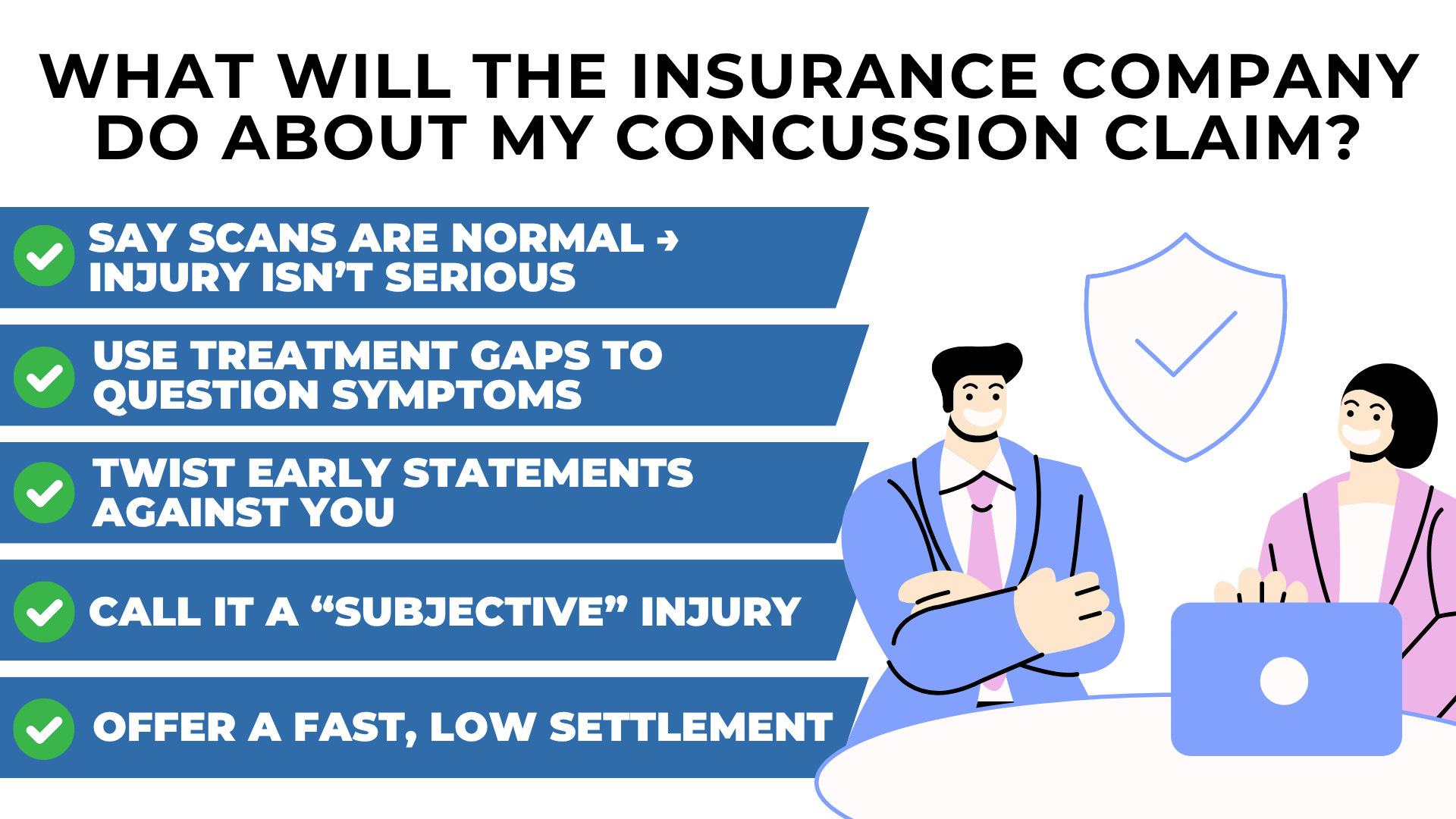
Concussions are what the insurance industry would call a “subjective injury.” There’s no broken bone on an X-ray, no surgical scar, no cast for people to see. The symptoms are reported by you and observed by your doctors, and that subjectivity gives adjusters room to push back.
Here’s what that looks like in practice. The adjuster may point to your normal CT scan as evidence you weren’t really injured. They may seize on gaps in your medical treatment — even a gap of a week or two — to argue your symptoms aren’t serious enough to require consistent care. They may take something you said in a recorded statement early on, before you understood the full scope of your injury, and use it to argue you felt fine after the accident. They may offer a quick settlement that covers your ER visit and a few days of missed work. They’re banking on the hope that you’ll take it before your post-concussion symptoms fully develop.
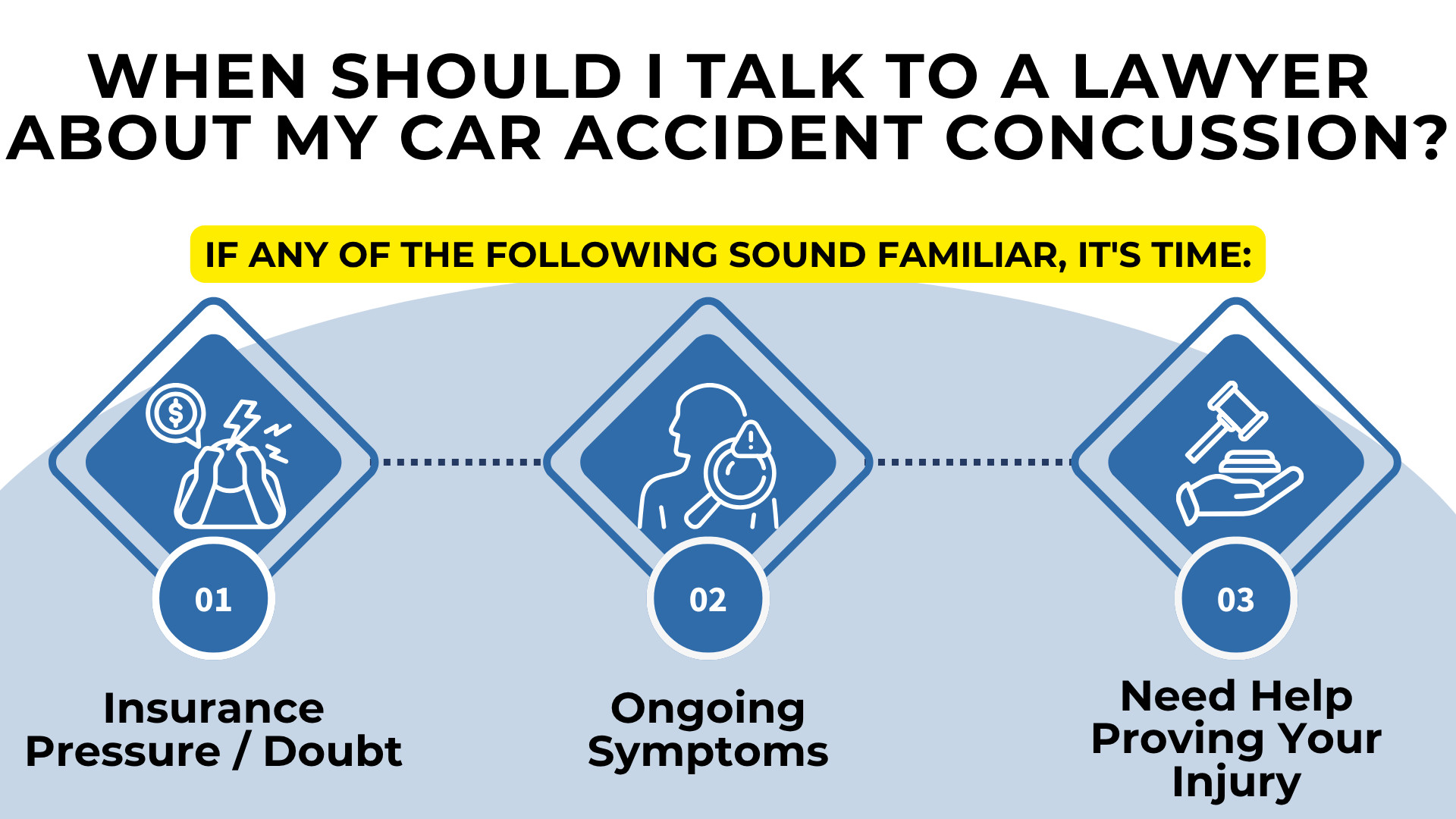
When Should I Talk to a Lawyer About My Car Accident Concussion?
If any of the following sound familiar, it’s time:
The insurance company is already calling you and pushing for a recorded statement or a quick settlement. Your CT scan was normal and someone is using that to question whether you’re really injured. You’re still dealing with symptoms weeks after the accident and you’re not sure when — or whether — they’ll fully resolve. You’ve missed work or you’re struggling to do your job at the level you could before.
A concussion from a car accident is a brain injury. It may be classified as “mild” in medical terminology, but its effects on your life can be anything but. The insurance company knows that concussions are hard to see on scans and easy to downplay — and they use that to their advantage. An attorney who understands how these injuries actually work can make sure the invisible parts of what you’re going through aren’t treated as if they don’t exist.
At Etemi Law in Waterbury, Connecticut, we handle motor vehicle accident personal injury cases, including those involving concussions and other brain injuries. If you’re not sure what your next step should be, we can help you understand your options. The consultation is free, and there’s no obligation.