Shoulder Pain After a Car Accident: What Compensation Looks Like in Connecticut

Shoulder pain caused by a car accident is a compensable injury in Connecticut. In many cases, it’s worth significantly more than the insurance company’s first offer suggests. Connecticut is a fault-based state with no legal caps on compensatory damages. That means the person who caused the accident is liable for the full scope of what your shoulder injury has cost and will continue to cost, with no arbitrary ceiling on recovery.
This page covers the types of shoulder injuries that commonly result from car accidents, how claim value is determined, and the factors that separate a lowball offer from full compensation.
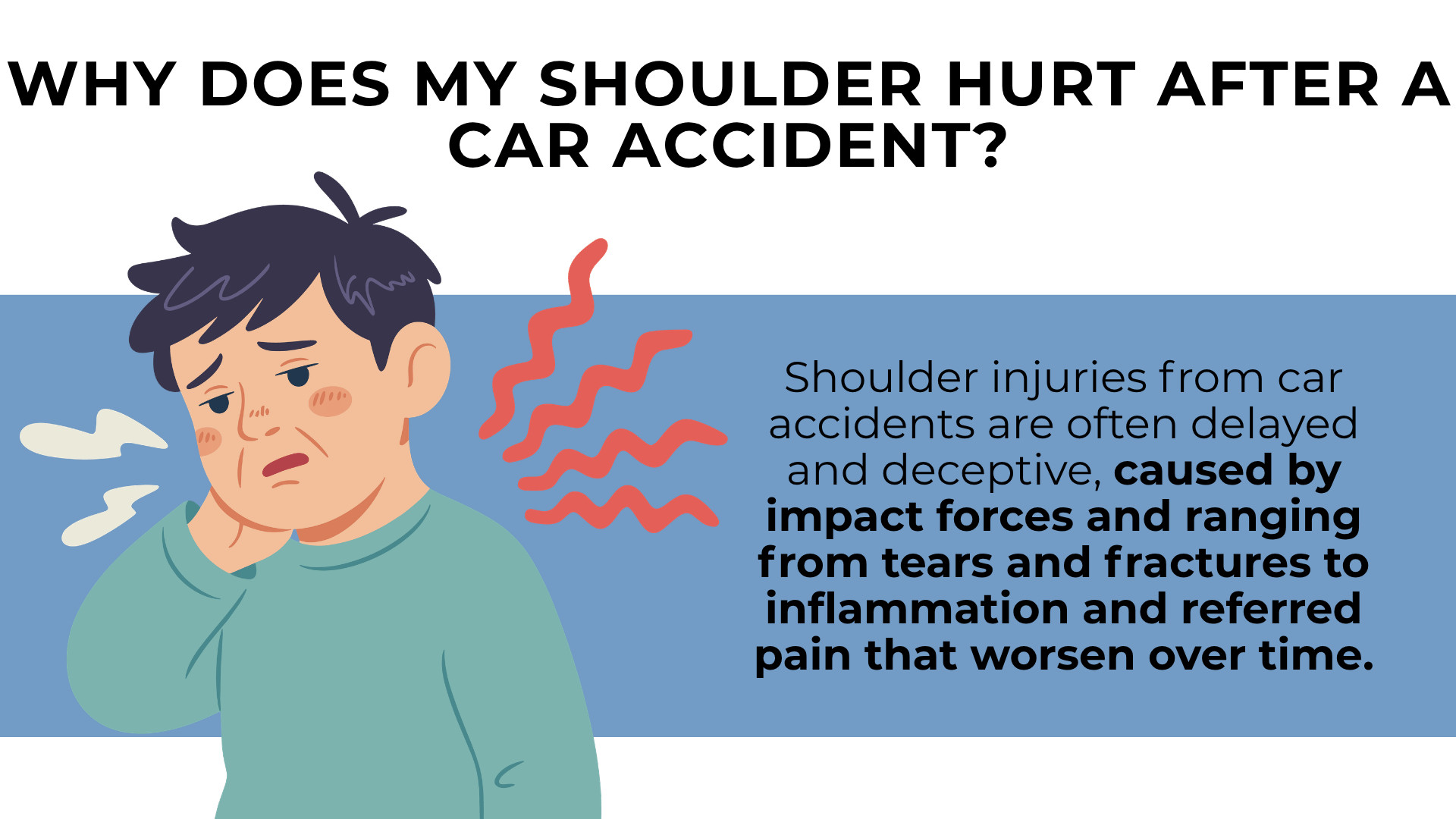
Why Does My Shoulder Hurt After a Car Accident?
The shoulder is one of the most vulnerable joints in the body during a collision. The forces involved — sudden deceleration, bracing against the steering wheel, seatbelt force across the chest and shoulder, or direct impact with the door or window — can damage the joint in ways that don’t always show up immediately.
The shoulder injuries most commonly caused by car accidents include rotator cuff tears (partial or full-thickness), labrum tears, shoulder dislocations and separations, clavicle and upper arm fractures, bursitis and impingement caused by trauma, and frozen shoulder that develops in the weeks following the accident. Referred pain from cervical spine strain can also show up as shoulder pain, which is why a thorough medical evaluation matters.
What makes shoulder injuries deceptive is their timeline. A rotator cuff tear may feel like soreness for the first week or two, then progressively worsen as inflammation builds and the ways your body compensates start to break down. The fact that pain escalates after the accident — rather than appearing all at once — doesn’t make it less real or less connected to the crash. It’s a well-documented pattern with these injuries.
What Is My Shoulder Injury Claim Actually Worth?
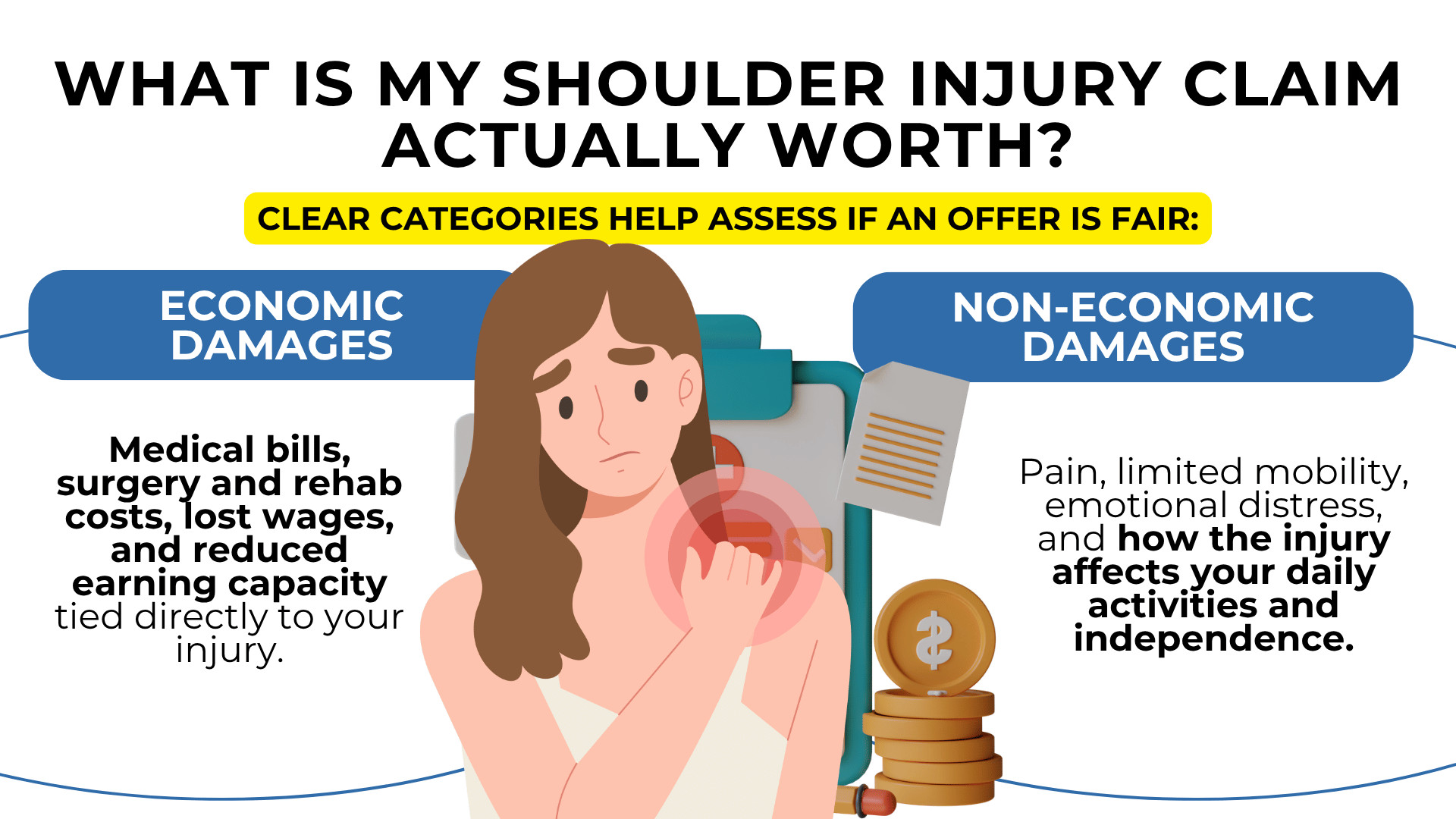
There’s no formula that produces a single number. The value of a shoulder injury claim depends on the specific medical reality and its real-world effects. But the categories of compensation are well-defined, and understanding them makes it possible to evaluate whether an offer is reasonable.
Economic damages in a shoulder injury claim commonly include emergency room visits and diagnostic imaging after the accident, orthopedic visits and follow-up care, physical therapy (often months of it for rotator cuff and labrum injuries), surgical costs if the injury requires arthroscopic repair or shoulder replacement, prescription medications and post-surgical rehabilitation, lost wages during treatment and recovery, and diminished earning capacity if the injury limits the kind of work you can do long-term. The National Safety Council estimates each nonfatal disabling injury from a motor vehicle crash carries an economic cost of $174,000. That figure reflects how expensive even a single serious muscle and joint injury can become when surgery and extended rehabilitation are involved.
Non-economic damages account for what the injury has taken from your daily life beyond dollars spent: chronic pain, sleep disruption, inability to exercise or play with your children, anxiety about re-injury, and the loss of independence that comes with not being able to reach overhead, drive comfortably, or carry groceries without pain. Connecticut law recognizes all of this as compensable non-economic damages, covering physical pain and suffering and mental and emotional suffering.
Workers’ compensation data shows the average lost-time claim from a motor vehicle crash was $91,433 — but even that figure blends minor injuries with catastrophic ones. Shoulder injuries requiring surgery, extended physical therapy, or resulting in permanent limitation routinely exceed that figure by a wide margin. The value of any individual claim depends on the severity of the tear or fracture, whether surgery was or will be necessary, the length of recovery, the degree of permanent impairment, the impact on your specific occupation, and the quality of the medical documentation connecting the injury to the accident.
What If the Insurance Company Says My Shoulder Was Already Injured?
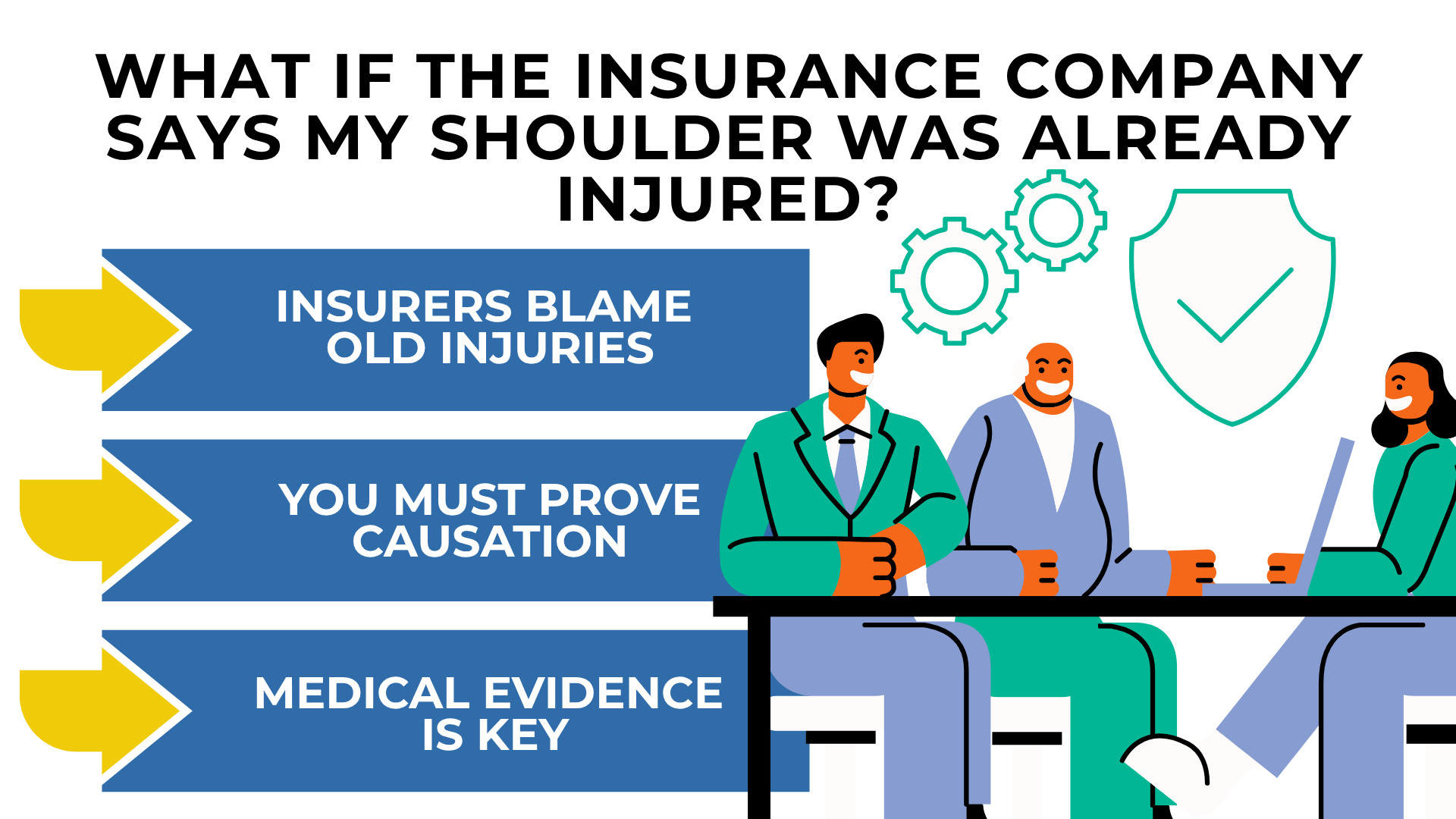
This is one of the most common tactics in shoulder injury claims. An insurance adjuster reviews your medical records, finds a note about shoulder stiffness from three years ago or an old rotator cuff issue, and argues the accident didn’t cause your current condition.
That’s the causation element the insurance company is attacking when it raises a pre-existing condition — they’re trying to break the link between the crash and the shoulder damage. Under Connecticut negligence law, you must establish that the defendant’s breach was both the cause-in-fact and the proximate cause of your injuries. An experienced attorney can help frame that distinction and identify the medical documentation needed to counter the insurer’s argument.
What matters most in countering this tactic is clear medical evidence. That means consistent treatment records showing when symptoms started or worsened after the accident, imaging that shows new or worsened structural damage, and a treating physician who can connect the current condition to the way the crash happened. The earlier this documentation begins, the harder it is for the insurance company to argue the pain was unrelated.
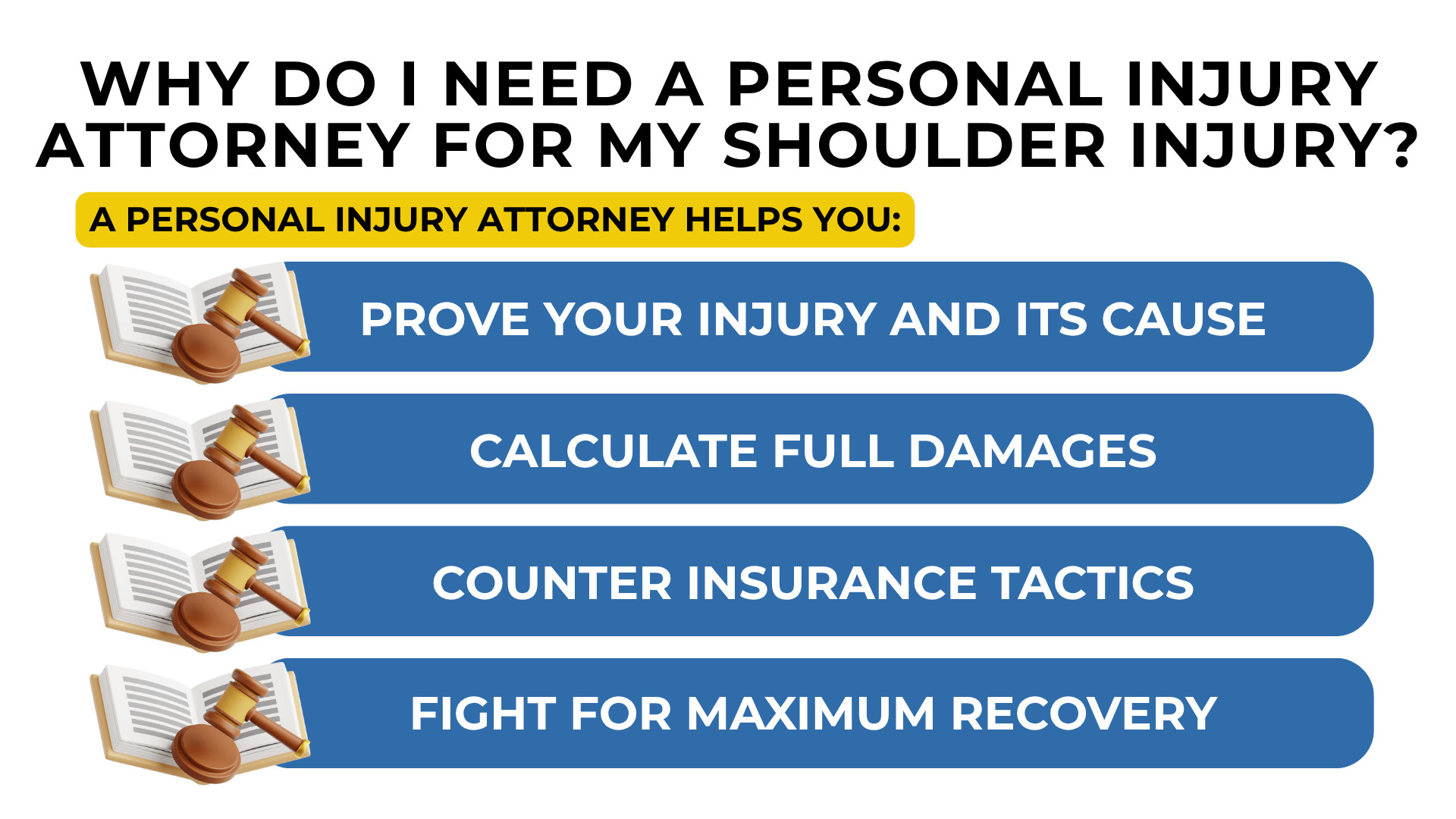
Why Do I Need a Personal Injury Attorney for My Shoulder Injury?
A shoulder injury claim depends on medical causation and damages calculation. How is the injury documented? How is its long-term cost calculated? Is the evidence strong enough to withstand the insurance company’s challenge to the connection between the crash and the damage? Each of these is a pressure point the insurer will use to reduce or deny payment.
At Etemi Law in Waterbury, Connecticut, this is the work we do every day. Our attorneys — including Ron Etemi, who has tried over 100 cases to verdict, and Peter Brown, who spent his first 15 years practicing as one of Connecticut’s most respected civil defense trial lawyers — understand how insurers evaluate shoulder injury claims because we’ve seen it from both sides. We know what documentation builds value, what arguments adjusters rely on to suppress it, and when a case needs to be positioned for trial rather than settled short.
Connecticut recorded 308 traffic fatalities and 1,285 serious injuries from motor vehicle crashes in 2023. Behind every one of those numbers is a person trying to figure out what comes next. If what comes next for you involves a shoulder injury that isn’t getting better and bills that keep arriving, talking to an attorney isn’t premature. It’s the step that determines whether you recover what the law says you’re owed.
Contact Etemi Law to discuss your shoulder injury claim.