How Long Does a Personal Injury Case Take in Connecticut?
Most personal injury cases from motor vehicle accidents in Connecticut resolve somewhere between a few months and two years. Some take longer. That range isn’t vague for the sake of being vague — it reflects real differences in how cases move through medical treatment, insurance negotiation, and, when necessary, litigation. This page breaks down what determines where a specific case falls in that range and what actually controls the pace.
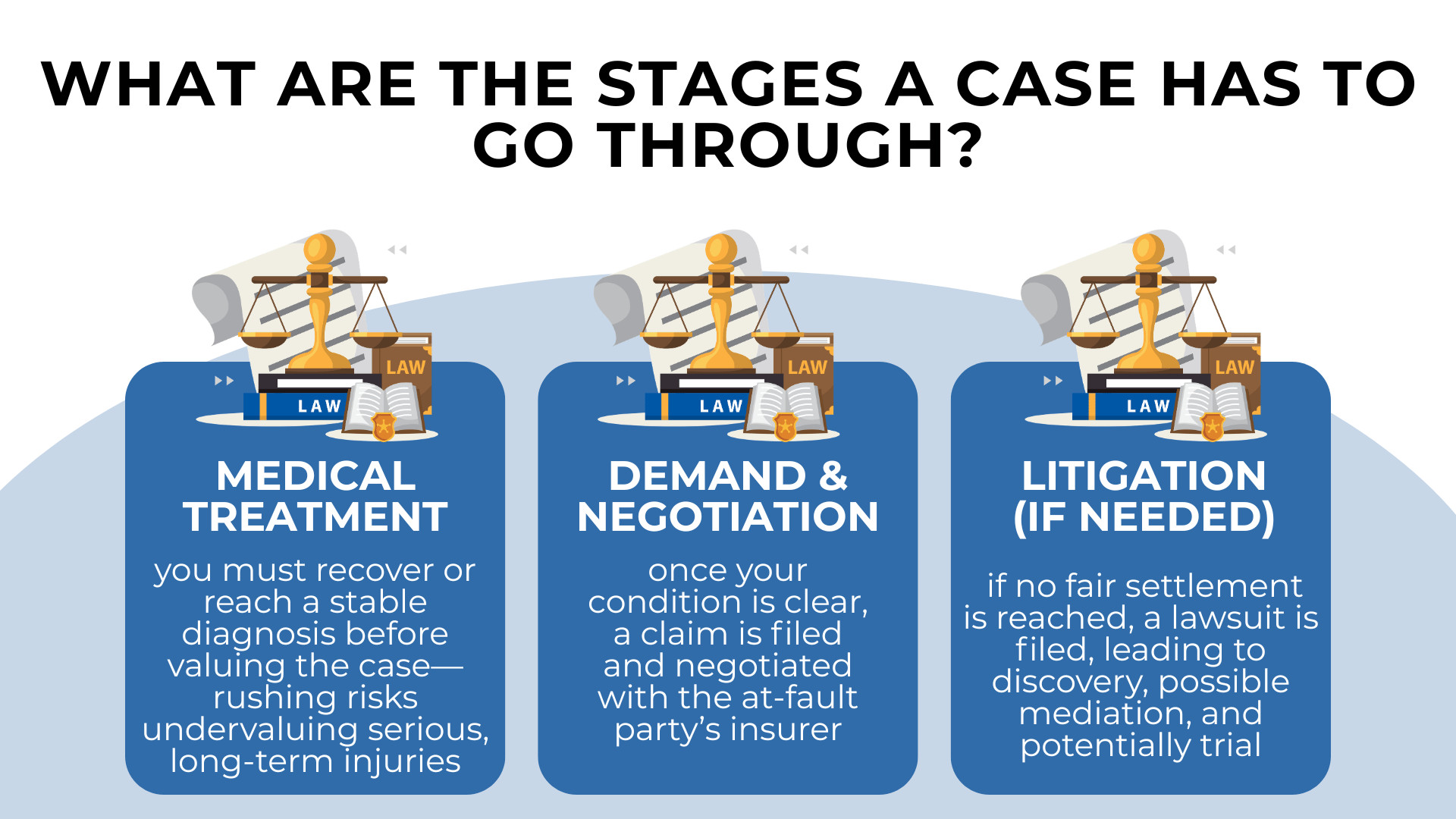
What Are the Stages a Case Has to Go Through?
A personal injury timeline in Connecticut isn’t one long wait. It’s a sequence of phases, each with its own clock.
Medical treatment comes first. No case can be accurately valued until you have either fully recovered or reached a point where your doctors can describe the long-term picture. Rushing this step to get a faster settlement means accepting a number before anyone — including you — knows the full extent of what happened. For soft tissue injuries that heal in weeks, this phase is short. For traumatic brain injuries or spinal cord damage, it can take months or longer. Nationally, an estimated 2.44 million people were injured in motor vehicle crashes in 2023. Among the most serious outcomes, the National Safety Council estimates a per-death economic cost of $2,050,000 and a per-disabling-injury cost of $174,000. Cases involving catastrophic injuries simply cannot be compressed into a short timeline without leaving money on the table.
Demand and negotiation come next. Once the medical picture is clear, the claim is documented and a demand is sent to the at-fault party’s insurer. Connecticut is a fault-based state — not a no-fault state — which means the person who caused the accident is legally responsible for compensating you. That legal system requires building a case that proves fault before any money changes hands. The insurer reviews the demand, and a period of back-and-forth negotiation follows. How long this takes depends heavily on whether the insurer disputes fault, contests the severity of the injuries, or simply delays.
Litigation is the third phase, and most cases don’t reach it. If negotiation doesn’t produce a fair offer, the next step is filing a lawsuit in Connecticut Superior Court. Filing doesn’t mean a trial is close — it means discovery, depositions, and potentially mediation are ahead. Trial itself is the final step in a process that can add a year or more to the timeline. But the threat of litigation, backed by actual preparation, is often what moves an insurer to offer a serious number.
What Factors Make a Case Take Longer or Resolve Faster?
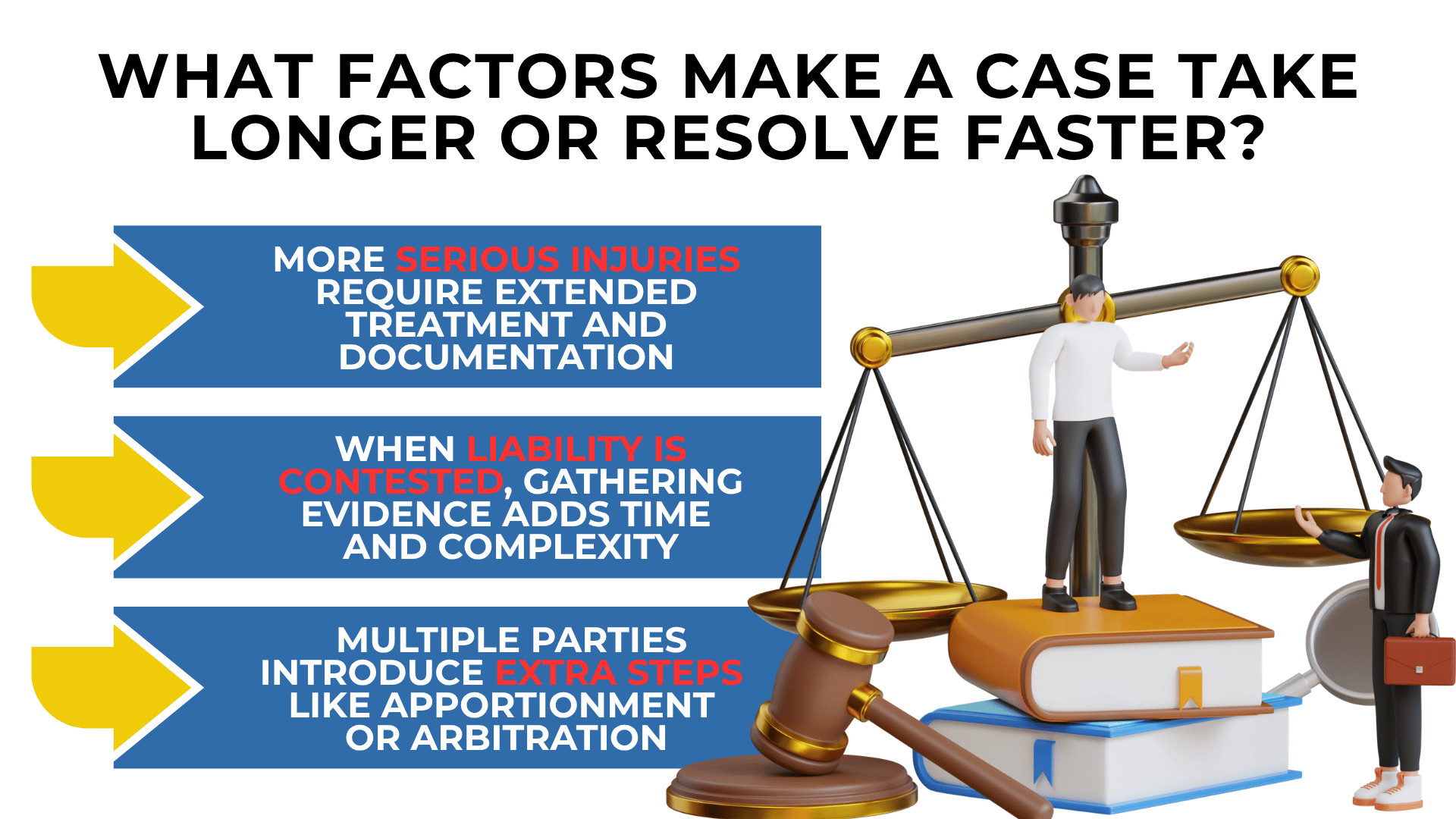
The biggest variable is injury severity. A case involving weeks of physical therapy moves faster than one requiring surgery, extended rehabilitation, or ongoing neurological monitoring. Connecticut recorded 1,285 serious injuries and 308 fatalities from motor vehicle crashes in 2023. Those numbers reflect a wide range of care needs — from a single emergency department visit to months of inpatient hospitalization and rehabilitation. The more treatment involved, the longer it takes to document the full scope of damages.
Disputed fault extends timelines significantly. Under Connecticut’s modified comparative negligence rule (Conn. Gen. Stat. § 52-572h), if your own negligence exceeds 50% of the combined negligence of all parties, recovery is completely barred. If it’s 50% or less, damages are reduced proportionally. That means neither side can afford to cut corners when fault is contested. Expect additional rounds of evidence gathering — accident reconstruction, witness depositions, surveillance footage review — each of which adds weeks or months to the process before anyone can evaluate settlement with confidence.
Multiple parties add complexity. Under Connecticut’s proportionate liability system (Conn. Gen. Stat. § 52-572h(c)), each defendant pays only their share — there is no joint and several liability to fall back on. The apportionment process under § 52-102b can bring additional defendants into the case at any time. Each new party means another round of discovery, another negotiation track, and a longer path to resolution. A three-party case doesn’t just take 50% longer than a two-party case — the interactions between parties can multiply the timeline further.
Uninsured or underinsured motorist claims add an extra phase with its own clock. When the at-fault driver’s coverage falls short, the claim shifts to your own insurer under Conn. Gen. Stat. § 38a-336 — and your insurer’s interests are now opposed to yours. That UIM process often leads to binding arbitration under § 38a-336(c), which involves selecting arbitrators, exchanging submissions, and scheduling a hearing. A straightforward liability claim against the other driver’s insurer might resolve in months; a layered UIM arbitration can add several more.
How Long Does It Take if I Settle Versus Go to Trial?
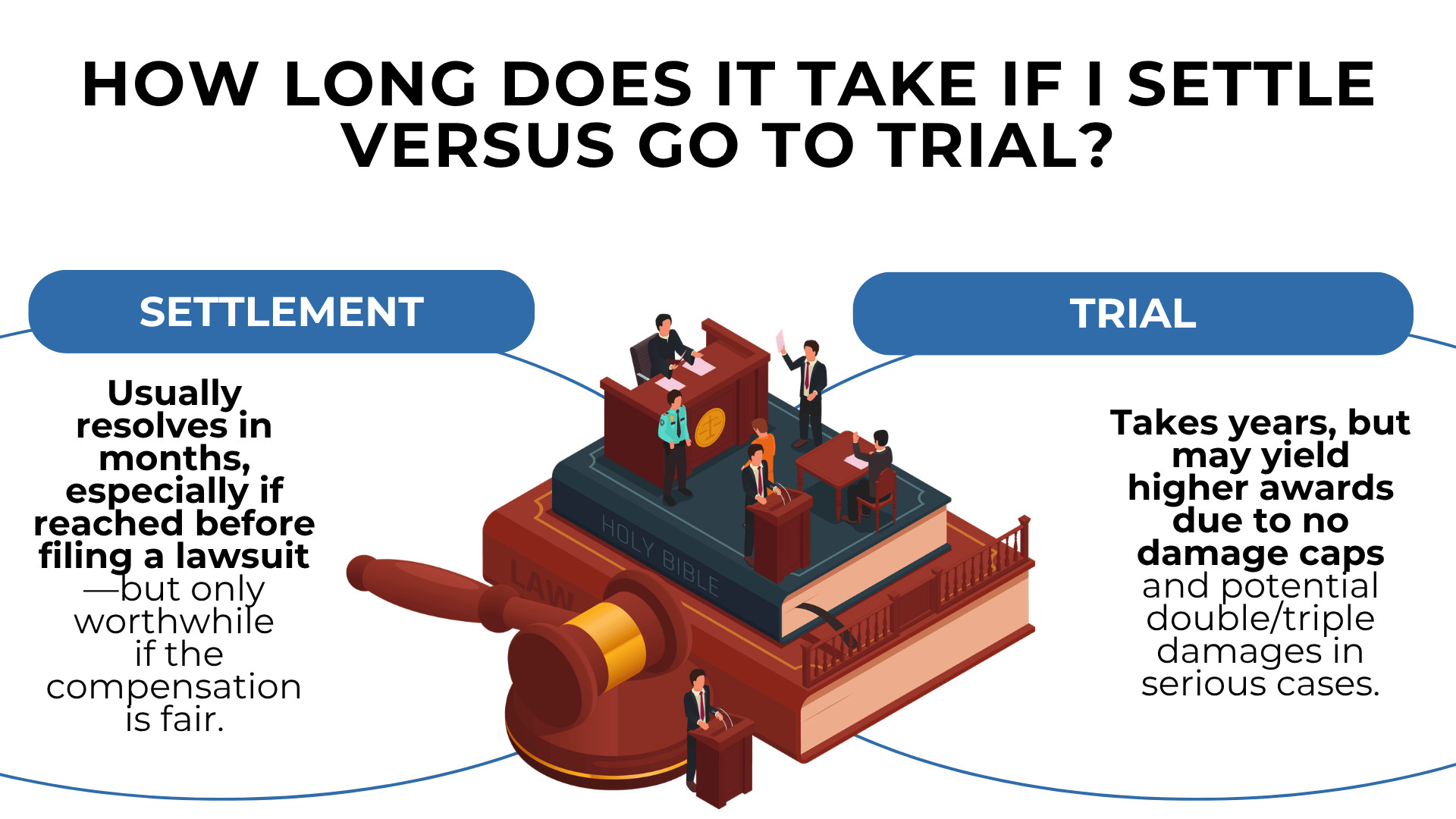
Settlement is faster. That much is straightforward. A case that resolves during the negotiation phase — before a lawsuit is filed — can wrap up in months rather than years. But faster is only better if the number is right.
Two features of Connecticut law shape how both sides approach the settlement-versus-trial decision. First, Connecticut imposes no statutory cap on compensatory damages in personal injury cases. Under Conn. Gen. Stat. § 52-572h(a), economic damages include medical expenses, lost wages, and lost earning capacity. Noneconomic damages cover pain and suffering and emotional distress. There is no ceiling on either category. That means a jury can award everything the evidence supports. This gives insurance companies a reason to take settlement negotiations seriously when the case is strong.
Second, when the at-fault driver’s conduct crosses the line from ordinary negligence into recklessness, Conn. Gen. Stat. § 14-295 permits double or triple compensatory damages for violations of specific traffic statutes. Those statutes include reckless driving under § 14-222 and operating under the influence under § 14-227a. Alcohol-impaired driving crashes accounted for 113 fatalities in Connecticut in 2023, representing 37% of all traffic deaths — well above the national average of 30%. In cases involving that kind of conduct, the potential cost at trial is high enough that insurers often prefer to resolve the case earlier, even at a higher settlement figure.
The point is that settlement and trial aren’t “easy path” and “hard path.” They’re different tools, and the timeline depends on which one the facts of the case require.
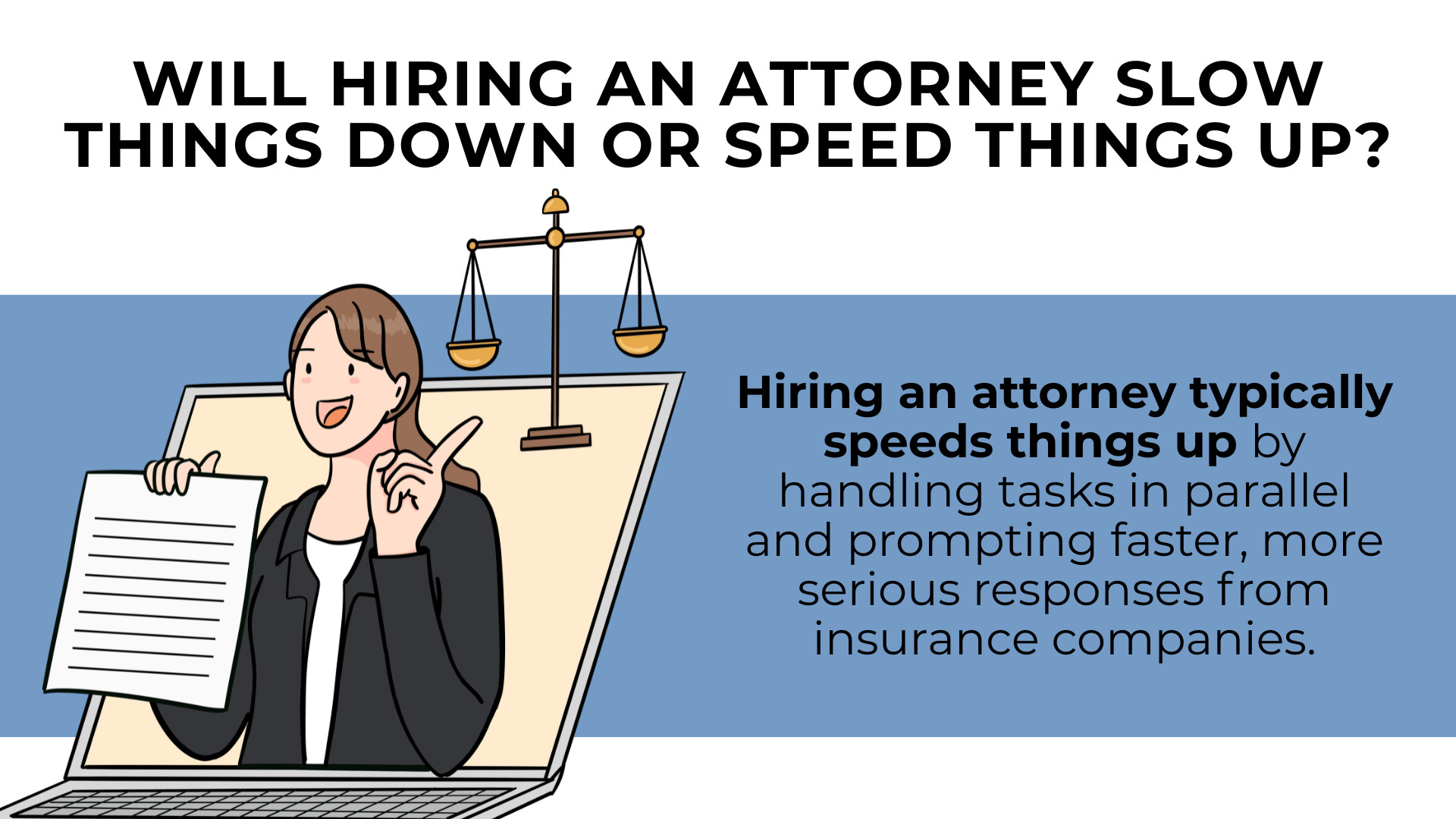
Will Hiring an Attorney Slow Things Down or Speed Things Up?
This is a reasonable concern. From the outside, involving a lawyer can look like adding a layer of complexity to something that’s already complicated. In practice, the effect is the opposite.
An attorney handles evidence preservation, medical record collection, expert coordination, and insurance communication at the same time rather than one at a time. Without legal representation, each of those tasks falls to you — and you’re also trying to recover physically, manage medical appointments, and deal with lost income. The one-at-a-time approach, where each step waits for the previous one, is what stretches timelines unnecessarily.
There’s also a dynamic that’s harder to see from the outside: insurance companies evaluate how a claim is being handled when deciding how to respond to it. A demand backed by organized medical documentation, clear liability evidence, and a credible willingness to go to trial moves through the process differently than one that isn’t.
At Etemi Law in Waterbury, Connecticut, the attorneys who handle motor vehicle accident cases bring the kind of trial experience that shapes how insurers engage with a claim from the start. Ron Etemi has tried over 100 cases to verdict. Peter Brown, who spent his first 15 years practicing as a civil defense lawyer, has 175 jury verdicts and understands how the other side evaluates risk. Lou Etemi brings strategic negotiation and persistence to drive cases toward successful resolution, while Semir Dervisi brings aggressive negotiation skills and a sharp, detail-oriented approach to case strategy. That combination of preparation and willingness to litigate doesn’t slow a case down — it removes the incentive for an insurance company to drag things out.
If you’ve been injured in a motor vehicle accident in Connecticut and want to understand the timeline for your situation, Etemi Law offers consultations where the team can evaluate the specific factors that will shape how long your case is likely to take — and what a fair resolution looks like.