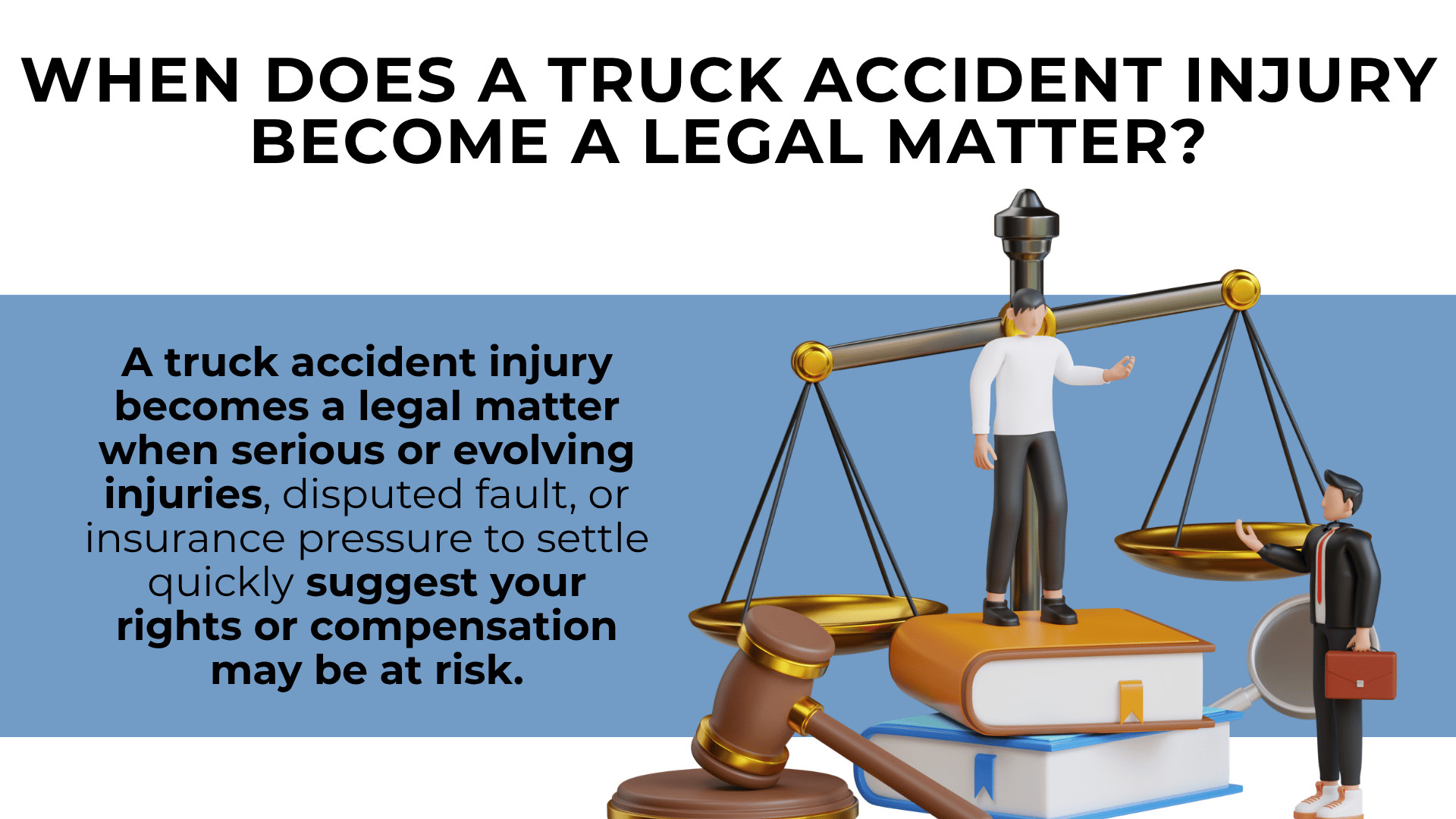
Truck Accident Injuries in Connecticut

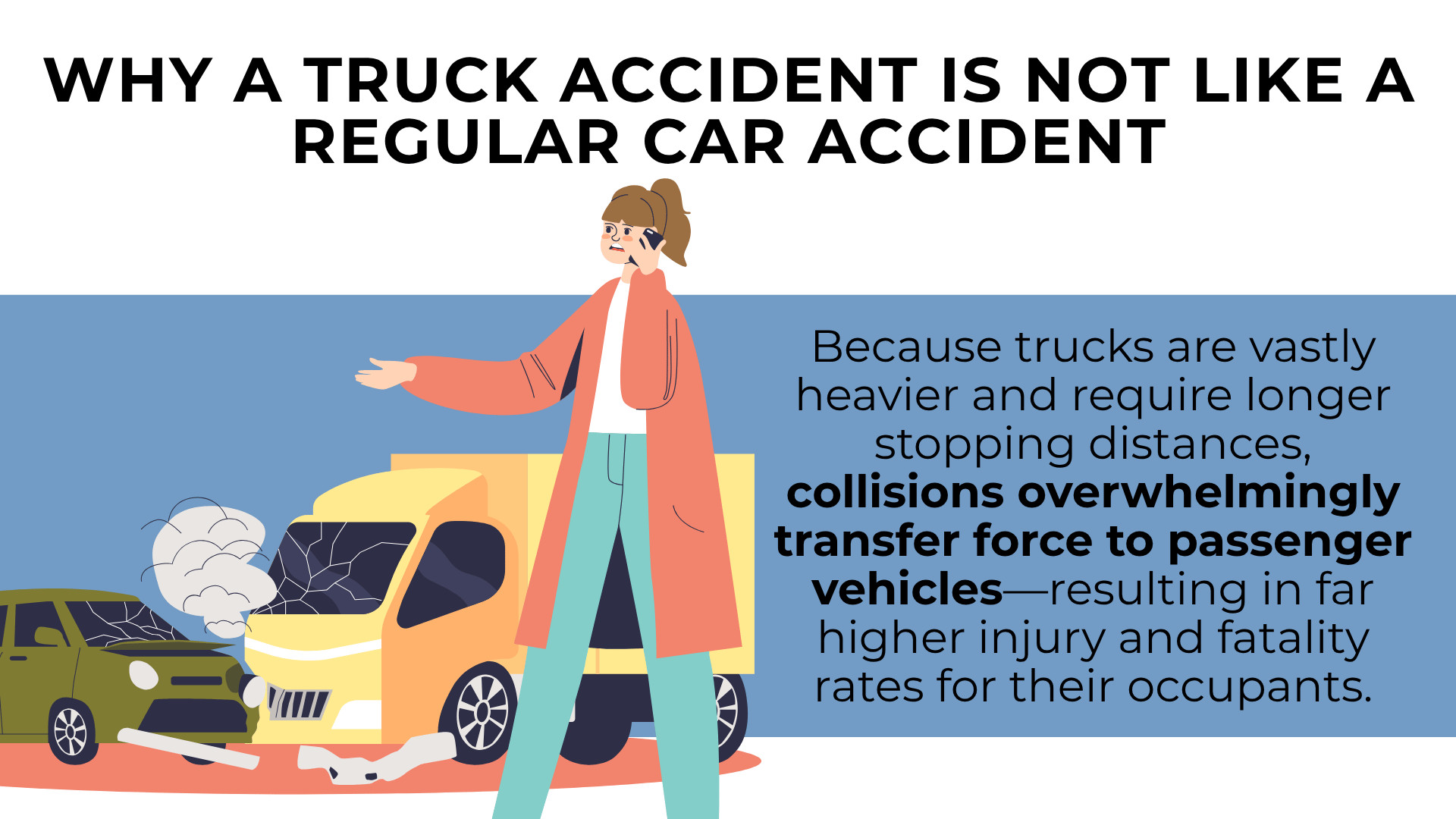
Truck accident injuries tend to be significantly more severe than injuries from a standard car collision because of the enormous weight and size difference between a commercial truck and a passenger vehicle. The most common injuries are traumatic brain injuries, spinal cord damage, internal bleeding and organ damage, crush injuries, complex fractures, and severe soft-tissue trauma. Many of them don’t fully present themselves until hours, days, or even weeks after a crash.
This article covers why truck accidents produce such serious injuries, what each of those injury types actually looks like, how the way the crash happened shapes what got hurt, why symptoms so often emerge late, what recovery tends to look like, and what to do in the hours and days after a crash to protect both your health and your options.
Why a truck accident is not like a regular car accident
The difference comes down to mass and stopping distance. A fully loaded tractor-trailer weighs roughly 20 to 30 times what a typical passenger car weighs, and needs 20 to 40% more distance to stop. When those two vehicles collide, basic physics decides where the damage goes — the smaller vehicle and the people inside it absorb almost all of the energy.
That lopsidedness shows up starkly in the fatality data. Nationally, 5,472 people were killed and an estimated 153,452 were injured in large-truck crashes in 2023. Of those fatalities, 82% were people outside the truck — occupants of other vehicles, pedestrians, and cyclists. Large trucks accounted for just 5% of all registered vehicles but 9% of all vehicles involved in fatal crashes. Connecticut recorded 37 truck-crash fatalities in 2023 and 1,607 large-truck crashes in 2024, with 723 reported injuries.
If a truck accident feels different from any car accident you’ve been in or heard about — it is different. The instinct to take it seriously is the right one.
What injuries truck accidents typically cause
The injuries below range from immediately catastrophic to the kind that look minor for 48 hours and then turn into something much bigger. A truck-crash survivor can have several of these at once.
Traumatic brain injury (TBI). The most serious category. TBI ranges from a so-called “mild” concussion to severe diffuse axonal injury, where the brain’s wiring is sheared by violent acceleration and deceleration. “Mild” is a misleading label, because mild TBI can still cause lasting cognitive and mood changes. Motor vehicle crashes account for roughly 17% of all TBI-related deaths in the United States and about a quarter of all TBI hospitalizations. Symptoms include headaches, memory problems, difficulty concentrating, light or sound sensitivity, irritability, sleep disruption, and a vague sense that “something is off” that can be hard to describe.
Spinal cord injury and spinal column damage. Motor vehicle crashes are the leading cause of traumatic spinal cord injury in the U.S., responsible for 38% of new cases since 2015. Spinal cord damage can cause paraplegia or tetraplegia. Even when the cord itself is spared, the vertebrae and discs that protect it can fracture, herniate, or become unstable — producing chronic pain, nerve damage, weakness, numbness, and, in many cases, surgery.
Internal injuries and organ damage. The seatbelt that saves a life in a truck collision can also bruise or tear the organs beneath it. Liver and spleen lacerations, kidney damage, bowel perforation, torn mesentery, and internal bleeding are common in severe impacts. These injuries can be silent at first — someone walks out of the ER and then collapses at home.
Crush injuries and traumatic amputation. When a passenger vehicle gets pinned under or against a tractor-trailer, or the trailer’s weight shifts into the car’s occupant space, the results are catastrophic. Crush injuries can destroy muscle tissue (causing rhabdomyolysis, a dangerous release of toxins into the bloodstream), shatter bones beyond reconstruction, and sever limbs.
Complex orthopedic fractures. Truck impacts produce fractures that are often worse than the ones seen in typical car crashes — comminuted (bone broken into multiple pieces), open (bone breaking through skin), and involving joints like the hip, pelvis, and ankle. Pelvic fractures in particular can come with internal bleeding and require long hospital stays and multiple surgeries.
Severe soft-tissue injuries. This is the category where truck-accident victims most often get underestimated — by insurers, and sometimes by themselves. “Whiplash” in a truck crash is not the whiplash of a parking-lot fender-bender. The forces involved can herniate cervical discs, tear spinal ligaments, and cause long-term nerve impingement. Torn rotator cuffs, meniscus tears, and torn ACLs are common. So are the kinds of deep muscular and ligament injuries that don’t show up on a standard X-ray.
Burns. Commercial trucks carry large fuel loads, and some haul flammable or hazardous cargo. Post-collision fires can produce thermal burns, inhalation injuries, and chemical burns — any of which can require specialized burn-center care and skin grafting.
Psychological trauma. Post-traumatic stress disorder, acute stress disorder, anxiety, depression, and driving phobia are injuries, not reactions. They respond to treatment, but they need to be diagnosed and treated like any other injury.
How does the way the crash happened shape what got hurt?
The geometry of a truck collision says a lot about the injury pattern.
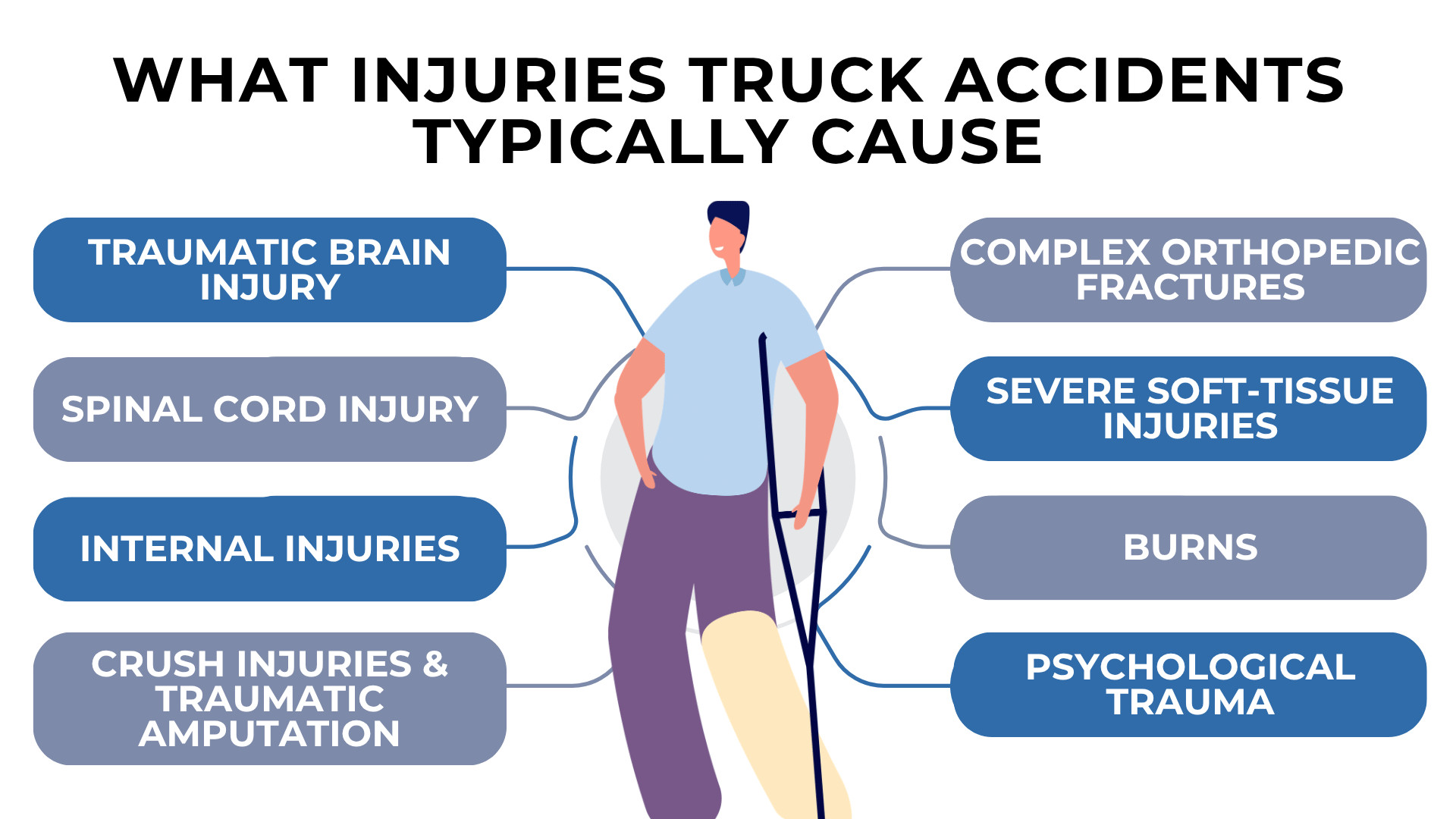
Head-on collisions are the deadliest configuration — 31% of passenger-vehicle occupant deaths in two-vehicle truck crashes come from head-on impacts. Expect severe TBI, chest and lung trauma, pelvic fractures, lower-extremity crush, and internal organ damage.
Rear-end crashes come in two forms: a passenger vehicle striking the back of a truck, or a truck rear-ending a smaller vehicle. These account for about 22% of those deaths. Underride is the main danger: when a car slides under the back of a trailer, the roof and occupant compartment can be sheared off. Survivors often have catastrophic head, face, and neck injuries.
Side-impact and side-underride crashes account for roughly 23% of passenger-vehicle occupant deaths in these collisions. Side underride — a car sliding under the side of a trailer — is particularly lethal. IIHS has estimated that side underride guards could prevent 159 to 217 passenger-vehicle occupant deaths every year. Side-impact survivors often have rib fractures, punctured lungs, spleen and liver injuries, and TBI on the struck side.
Jackknife and rollover crashes happen when the truck itself loses control. A jackknifed trailer can sweep across multiple lanes and catch vehicles broadside. Rollovers produce their own injury pattern — ejection, crush, and severe spinal compression.
Override crashes are the mirror of underride: the truck rides up onto the passenger vehicle, collapsing the roof and occupant compartment from above. Spinal cord injuries, severe TBI, and crush injuries are the most common injuries in this pattern.
Understanding which of these happened matters beyond just injury context. The way a crash unfolded often tells an attorney what the driver and the carrier were doing wrong in the moments that led up to it.
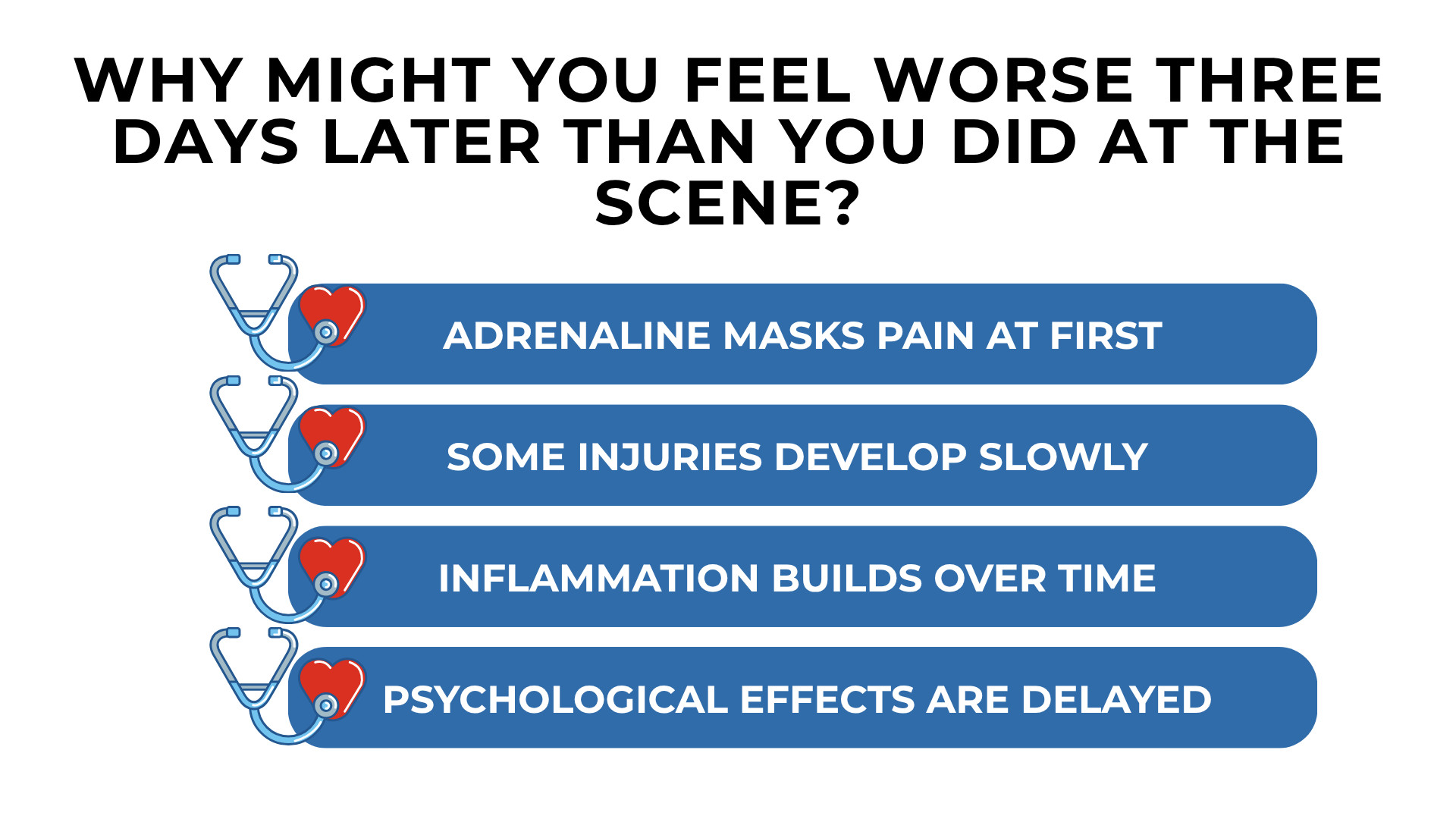
Why might you feel worse three days later than you did at the scene?
This is the section that matters most for safety.
Adrenaline and endorphins flood the body during and immediately after a crash. They can mask pain for hours. It is entirely normal to walk away from a truck collision, decline the ambulance, drive home, and wake up the next morning unable to turn your neck. That isn’t “being dramatic” — that’s the nervous system coming back online.
Several truck-accident injuries often show up late:
Traumatic brain injury symptoms often develop over days or weeks. Headaches that won’t go away, brain fog, word-finding problems, changes in mood or personality, new sensitivity to light or noise, disrupted sleep, and depression can all be signs of a TBI that wasn’t apparent at the initial ER visit. Cognitive changes can be subtle enough that family members notice before you do.
Internal bleeding can develop slowly. Abdominal pain, dizziness, pale skin, shortness of breath, weakness, or a distended belly in the hours or days after a crash is an emergency, even if the initial ER evaluation was clean.
Soft-tissue and spinal injuries typically peak 48 to 72 hours after a crash as inflammation builds. Pain, stiffness, radiating numbness into an arm or leg, and loss of range of motion often worsen before they improve — and sometimes they don’t improve on their own.
PTSD and acute stress reactions usually emerge in the weeks after a crash. Flashbacks, nightmares, avoidance of driving, hypervigilance, and emotional numbing are all signals that a psychological injury is present and needs attention.
The rule is simple: if a new symptom shows up after you leave the hospital, go back. Don’t tough it out, don’t assume it will pass, and don’t let an insurance adjuster frame it as unrelated.
What recovery actually looks like
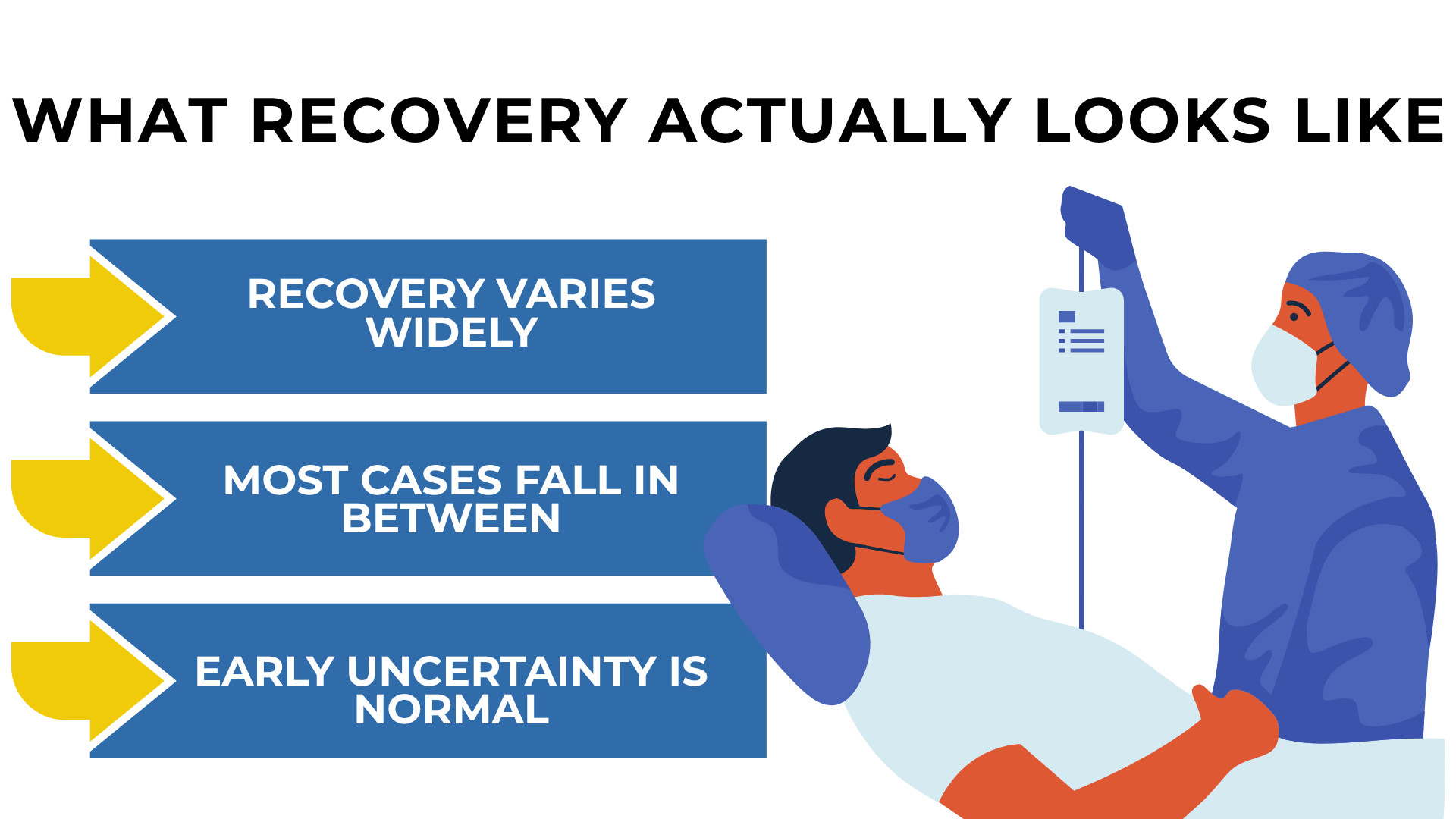
Some truck-accident injuries heal completely in weeks. Others don’t heal at all.
At the mild end — a Grade I whiplash, minor soft-tissue strain, superficial lacerations — people can be close to baseline in six to twelve weeks with physical therapy. At the severe end, the picture is different. An estimated 5.3 million Americans live with a permanent TBI-related disability. A person who suffers a high cervical spinal cord injury in their twenties faces lifetime care costs that can exceed $6 million. That number reflects decades of medical care, attendant care, home modifications, equipment, lost earning capacity, and the reality that the injury shapes every year that follows.
Most truck-accident injuries sit somewhere between those two ends. A herniated disc may need surgery and may limit someone’s ability to sit, lift, or work for the rest of their life. A TBI may be subtle enough that the person still functions, but can’t quite do the job they used to. Chronic pain from a pelvic or shoulder injury can be permanent even after the bones have healed.
The honest version is this: in the first days after a truck crash, no one yet knows which category they’re in. That isn’t a reason to panic. It’s a reason to treat the weeks and months ahead as consequential — because they are.
What to do in the days after a truck accident
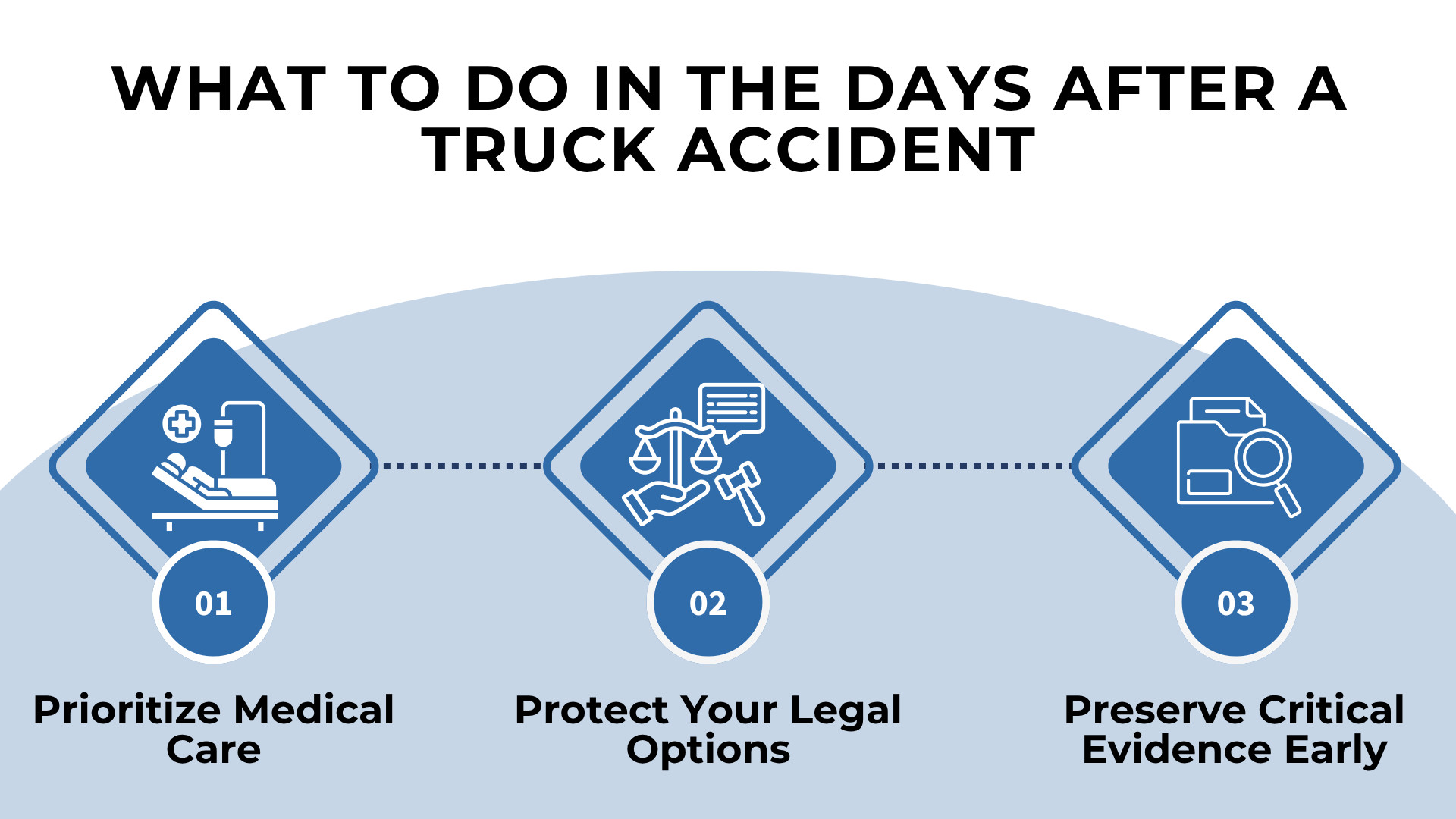
Two things happen in parallel after a truck crash, and they’re really the same problem: taking care of the body, and not closing off options before anyone understands what happened to it.
On the medical side: keep every follow-up appointment, and schedule one if the ER didn’t set one. Tell every provider about every symptom, even the ones that feel minor or embarrassing — mood changes, sleep problems, memory lapses, sexual dysfunction, bladder or bowel changes. Keep a dated symptom journal. TBI and soft-tissue injuries are evaluated partly on how symptoms change over time. Nobody remembers accurately six months later. Photograph visible injuries as they evolve — bruising often looks worse on day three than on day one. Follow every referral: if the ER recommended a neurologist, an orthopedic surgeon, or another specialist, go.
On the protective side: consider carefully before giving a recorded statement to the trucking company’s insurance adjuster. They may call soon after the crash, and they will be pleasant. Their job, though, is to document the file in a way that serves the company, not you. Consider carefully before signing a blanket medical authorization from them, which can give access to a broader medical history than the crash-related claim requires. And consider carefully before accepting a quick settlement offer. Early offers made before the full extent of injuries is understood are generally irreversible once signed.
Evidence on the injured person’s side can also have a short shelf life. Federal regulations require motor carriers to retain electronic logging device records of duty status for only six months from the date of receipt. Once litigation is reasonably anticipated, the common-law duty to preserve evidence can extend beyond that window. Other categories of evidence — including event data recorder (black box) data, dashcam footage, GPS records, and dispatch communications — also fall within that preservation duty.
When does a truck accident injury become a legal matter?
Not every crash becomes a lawsuit, and not every injured person needs a lawyer. The question is usually whether the situation has one or more of these signs. The injuries are serious, permanent, or still being diagnosed. The insurance company is pushing for a statement, an authorization, or a fast settlement. Fault is being disputed, or the trucking company is trying to place blame on the other driver. Symptoms have emerged or worsened since the ER visit. Or there are signs the trucking carrier is moving quickly to build its own case.
Any of those is a reason to at least have a conversation with a truck-accident attorney, and to have it sooner rather than later. Evidence can disappear on timelines you don’t control. Connecticut also sets deadlines for filing these claims that generally run from the date the injury is sustained or reasonably should have been discovered — not from when treatment ends.
Etemi Law is based in Waterbury, Connecticut, and handles commercial trucking cases in the state. If you’d like to talk through what happened and what your options look like, we’re available for a conversation.