Truck Weight Limits: What They Are and Why They Matter After a Crash

If you’re trying to figure out whether a truck that caused a crash was over the legal weight limit — and whether that matters for your injury claim — the short answer is that truck weight is heavily regulated under both federal and Connecticut law, and a weight violation can significantly strengthen a personal injury case. This article covers how Connecticut regulates commercial truck weight, why heavy trucks are more dangerous than passenger vehicles, how overloading makes that danger worse, how to prove a truck was overweight after a crash, and how a weight violation affects a personal injury claim under Connecticut law.
What governs the legal weight of a commercial truck?
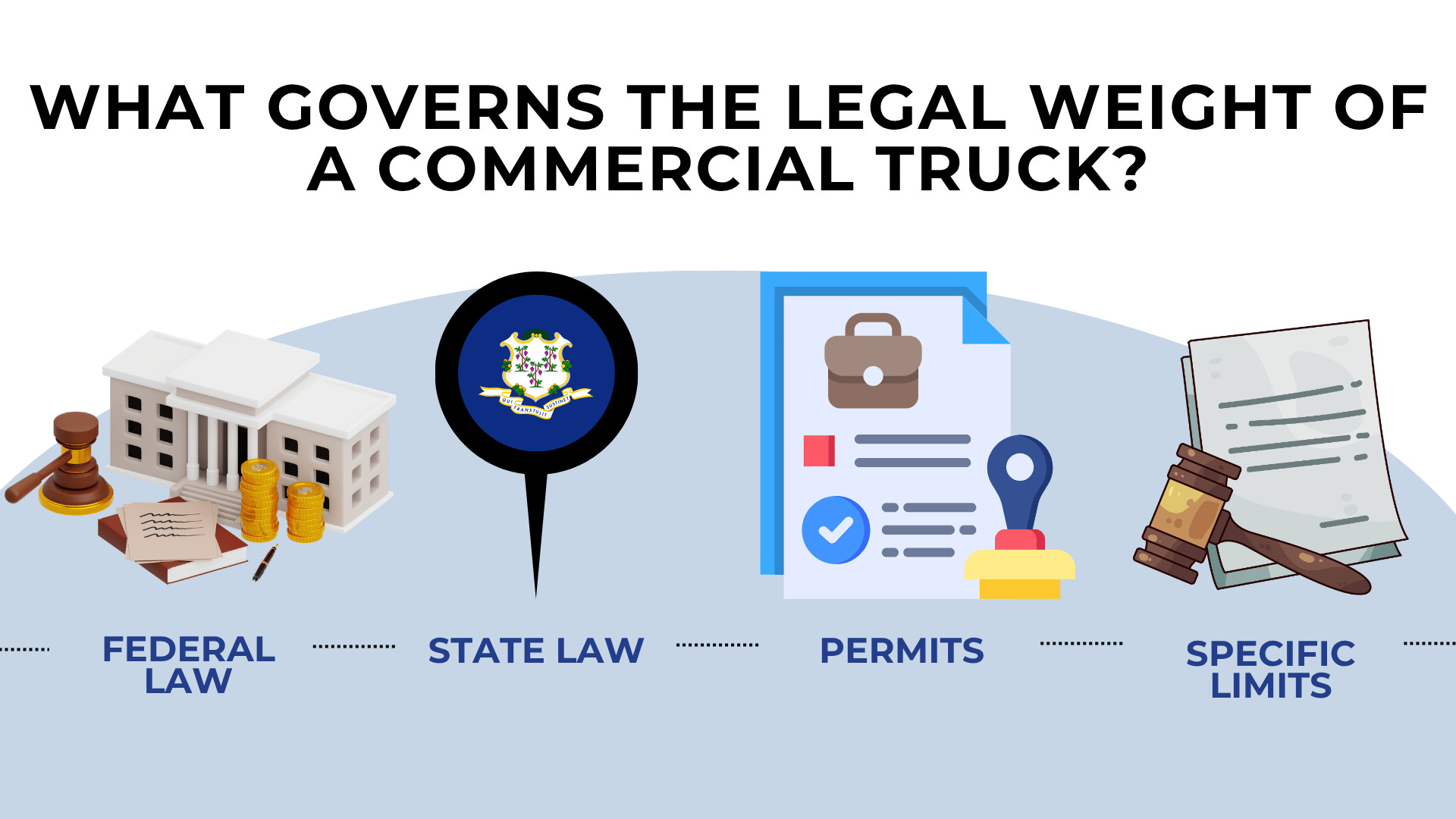
Commercial truck weight in the United States is regulated through a combination of federal law and state law. Federal weight limits apply on the Interstate Highway System. Each state sets its own rules for non-Interstate roads, along with the enforcement structure for weight violations within its borders. Trucks carrying loads above the legal limit require a special overweight permit from the state agency that issues them. Without one, the load is illegal on any public road.
The specific numbers that apply to a particular truck and route include gross vehicle weight, axle weight, and bridge formula requirements. A truck accident attorney investigating a crash will look to the federal weight statutes and the Connecticut rules that carry them out, applied to the specific highway and vehicle configuration involved.
How does Connecticut regulate commercial trucks?
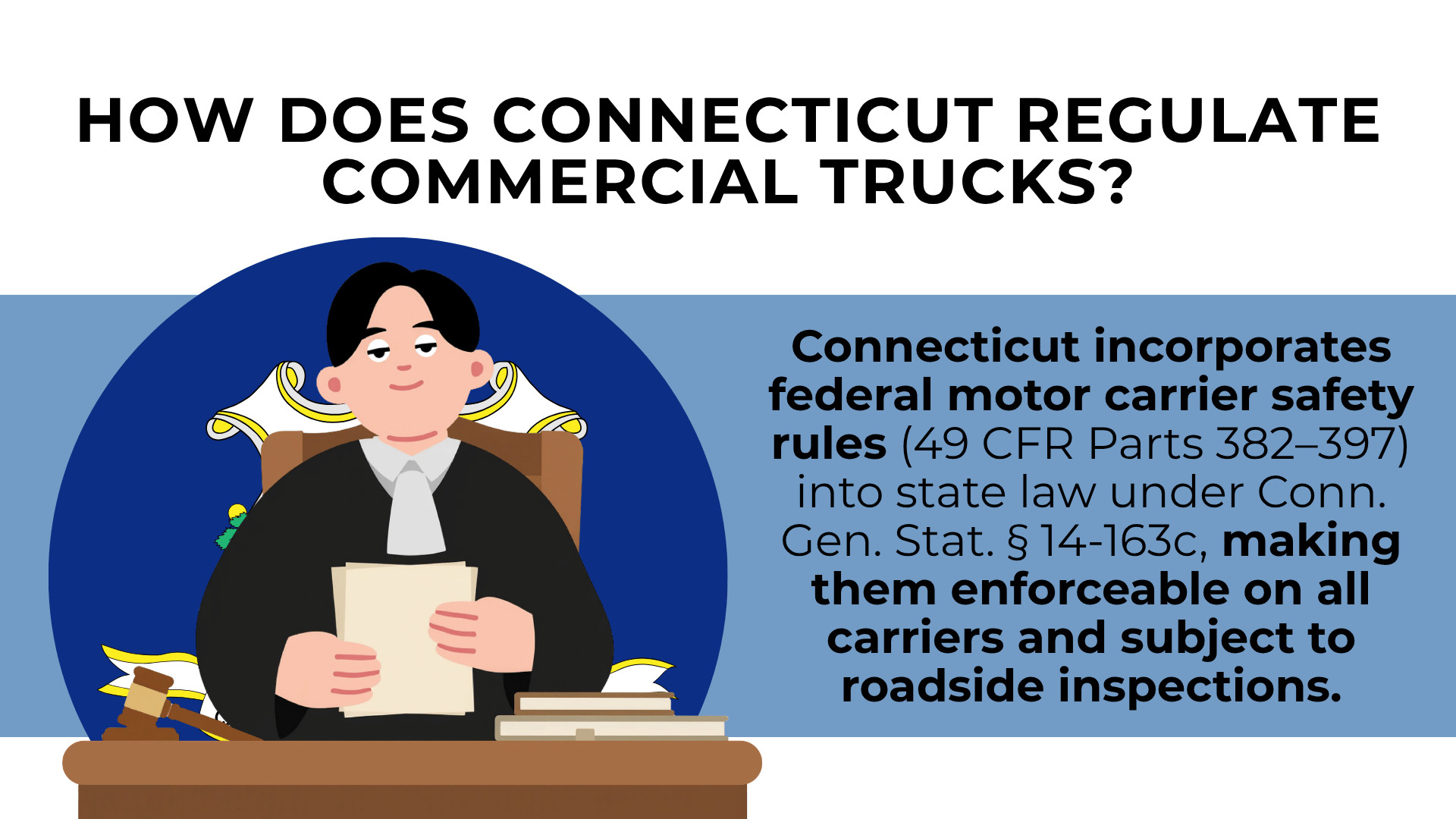
Connecticut has adopted the Federal Motor Carrier Safety Regulations directly into state law. Under Conn. Gen. Stat. § 14-163c, the Commissioner of Motor Vehicles is authorized to incorporate 49 CFR Parts 382–397 by reference. That makes federal commercial vehicle safety rules apply to both interstate and intrastate carriers operating in Connecticut. What that means in practice: the equipment, operational, and safety standards that apply to a truck coming through Waterbury on I-84 are enforceable as Connecticut state law, not just federal regulation.
Commercial trucks in Connecticut are subject to roadside inspection under this framework. During the 2024 International Roadcheck, 23.2% of inspected vehicles in the U.S. were placed out of service for safety violations. Roadcheck is a multi-day enforcement event coordinated by the Commercial Vehicle Safety Alliance, and that figure means roughly one in four trucks pulled over that week had defects serious enough to keep the truck off the road until they were fixed.
Why is a heavy truck more dangerous than a passenger vehicle?
Even within legal limits, the weight gap between a commercial truck and a passenger vehicle is the single most important fact about these crashes. A fully loaded tractor-trailer weighs approximately 20–30 times as much as a typical passenger car, and requires 20–40% more stopping distance. When a truck is overloaded beyond its designed weight, each of those numbers gets worse.
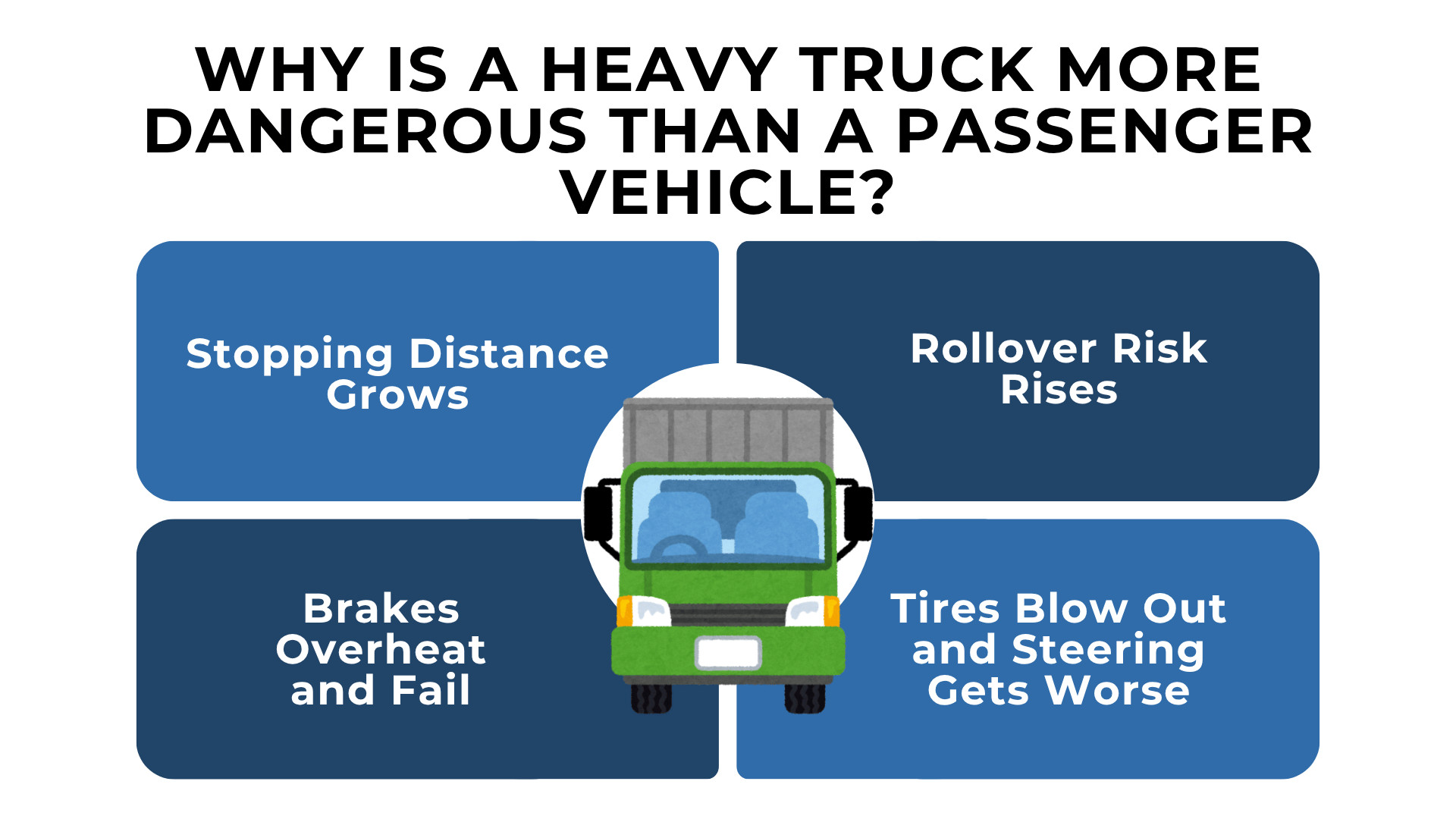
Overloading reduces safety in several concrete, mechanical ways:
Stopping distance grows. A truck’s brake system is engineered around a maximum weight. More mass behind the same brakes means more feet — often many more — between the moment the driver hits the pedal and the moment the truck actually stops.
Brakes overheat and fail. Heavy loads force brakes to work harder, especially on downgrades. Overheated brakes lose stopping power (brake fade) and can fail outright. This is not a hypothetical. In the federal Large Truck Crash Causation Study, 29.4% of large trucks in crashes had brake failure, out-of-adjustment brakes, or other brake problems as a contributing factor. That was the most common vehicle defect identified.
Rollover risk rises. A higher or heavier load raises the truck’s center of gravity. On curves, highway ramps, and emergency maneuvers, the truck becomes more likely to tip.
Tires blow out and steering gets worse. Tires rated for a specific load fail faster when overloaded. Steering becomes less responsive.
The outcome of that physics is brutally one-sided. Of the 5,472 people killed in large truck crashes nationally in 2023, 70% were occupants of other vehicles — not the truck. Large trucks made up just 5% of registered vehicles but 9% of all vehicles involved in fatal crashes.
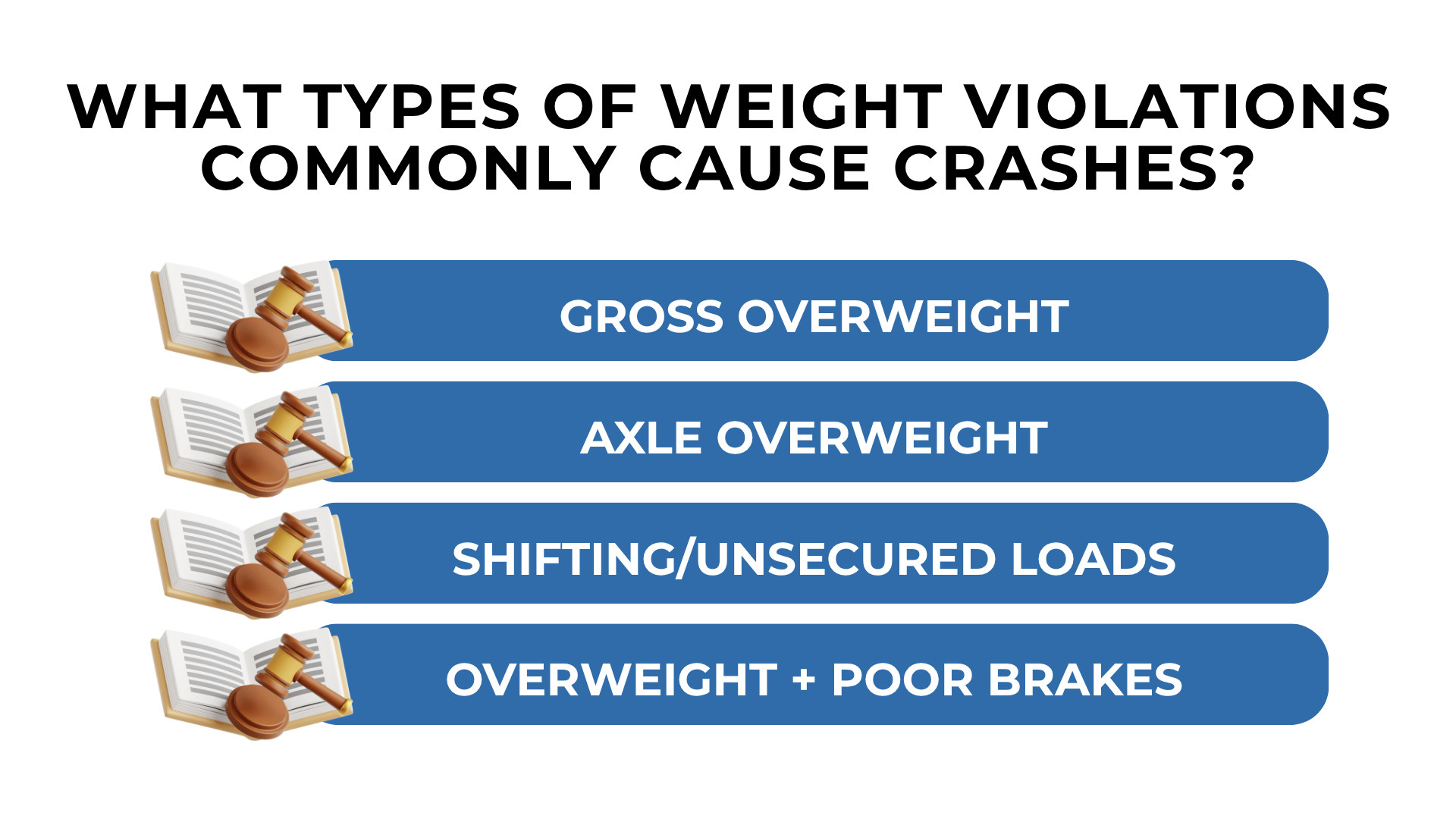
What types of weight violations commonly cause crashes?
Not every weight violation looks the same, and the category matters when it comes to figuring out what happened and who is responsible.
Gross overweight. The total weight of the truck, trailer, fuel, and cargo exceeds the legal maximum for that vehicle on that road. This often reflects a carrier or shipper decision to move more freight on fewer runs.
Axle overweight. The truck’s total weight may be legal, but a single axle or tandem set carries too much because the load was placed incorrectly in the trailer. Axle overloads put too much force on one part of the truck’s brake and tire system.
Improperly secured or shifting loads. Cargo that is not properly secured can shift during the drive, suddenly changing the truck’s weight distribution mid-drive. A load that slides forward during braking can overwhelm the front axles and cause loss of control.
Weight plus brake condition. Overloading becomes especially dangerous when combined with existing brake wear. A truck with worn brakes that might stop fine at a lighter load may not stop in time when overloaded. This interaction is why investigators look at weight and maintenance together, not separately.
How do you prove a truck was overloaded after a crash?
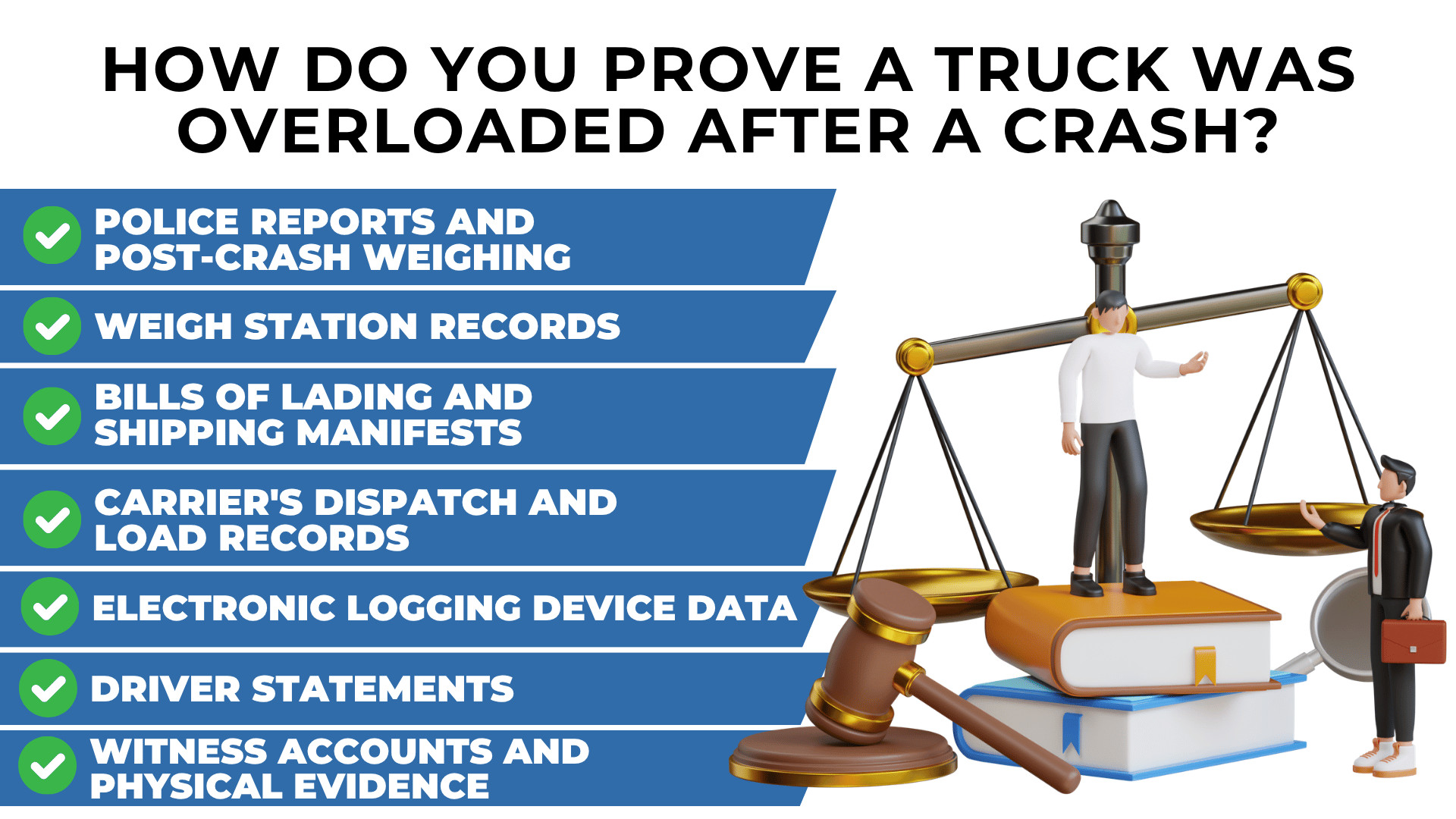
Weight evidence exists — but it exists in documents and data that are controlled by the trucking company and its shipper, and some of it disappears quickly. Proving an overload typically comes from a combination of the following:
- Police reports and post-crash weighing. Responding officers will sometimes request that the truck be weighed after the crash, especially in serious or fatal crashes.
- Weigh station records. If the truck passed through a weigh station earlier in its route, that record exists.
- Bills of lading and shipping manifests. These documents state what the shipper loaded onto the truck and how much it weighed.
- The carrier’s dispatch and load records. Internal records often show what the carrier knew about the load.
- Electronic logging device (ELD) data. ELDs record driving hours and can confirm route, timing, and loading information.
- Driver statements. What the driver told responding officers, the shipper, or dispatch can be compared against the documentation.
- Witness accounts and physical evidence. A visibly sagging trailer, blown tires, or scorched brakes on the scene all support an overload claim.
The urgency is real. Under federal rules, carriers are required to retain ELD records for only six months from the date of receipt (49 CFR § 395.8(k)). Bills of lading, dispatch communications, and maintenance records can be overwritten, discarded, or “lost” as a matter of routine. Once a trucking company knows a crash happened, the countdown on preserving this evidence starts — and without a formal preservation demand, critical records can be gone before a claim is filed.
How does a weight violation strengthen a personal injury claim?
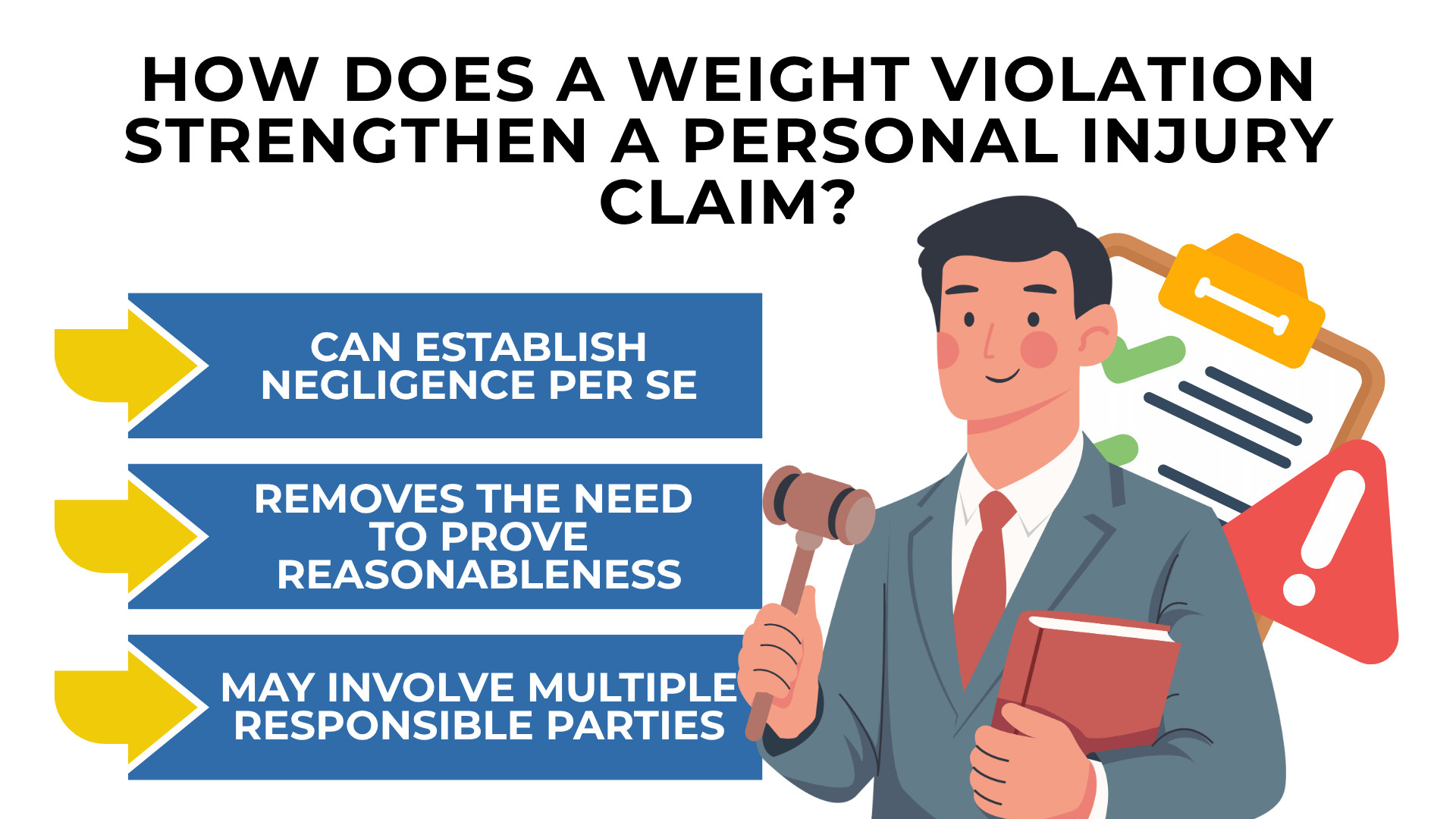
This is where the weight question stops being a traffic issue and starts being the core of a legal case. In Connecticut, a truck safety regulation violation can transform a negligence claim through a doctrine called negligence per se.
Under Connecticut’s negligence per se framework, a violation of a statute or regulation counts as negligence as a matter of law if two conditions are met:
- The plaintiff was within the class of persons the regulation was designed to protect, and
- The harm suffered was of the type the regulation was designed to prevent.
Commercial truck safety regulations — including weight rules — generally exist to protect other road users from the consequences of oversized or improperly operated vehicles. When those two conditions are satisfied, the jury need only determine whether the violation of the statute or regulation occurred; if so, the defendant was negligent as a matter of law.
The practical effect is significant. In an ordinary negligence case, a jury has to decide whether the defendant behaved reasonably under the circumstances — a fact question that both sides argue. When negligence per se applies, the jury does not weigh reasonableness. Even where negligence per se is established, however, the plaintiff must still prove proximate causation — that the violation actually caused the harm — and must still prove damages.
A weight violation also rarely involves only the driver. Overloads often reflect decisions made above the driver’s head — by the shipper that loaded the trailer, by the dispatcher who scheduled the run, or by the carrier whose business model depends on moving more freight per trip. Whether and how a specific case can reach those parties depends on the facts and is something an attorney will evaluate.
One important note: Connecticut’s modified comparative negligence rule under Conn. Gen. Stat. § 52-572h still applies. If the plaintiff’s fault exceeds 50%, recovery is completely barred. If the plaintiff’s negligence was not greater than the combined negligence of all persons against whom recovery is sought, the plaintiff can recover damages, which may be reduced proportionally. Even with negligence per se established against the trucker, the defense may still try to assign some fault to you.
What should you do if you think the truck that hit you was overweight?
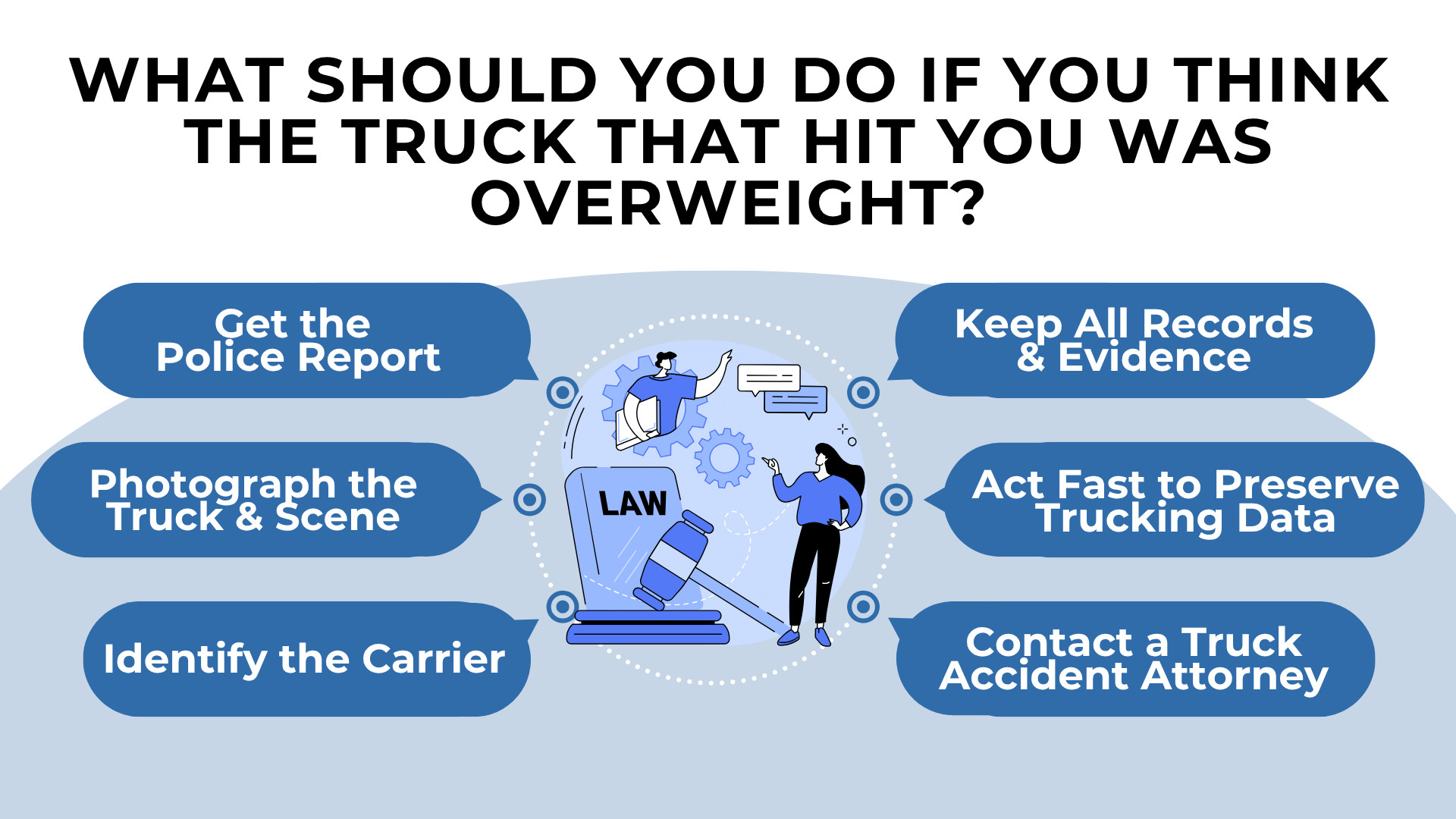
If you suspect the truck involved in your crash was overloaded, a few steps protect your ability to prove it later:
- Get a copy of the police report and note whether responding officers mentioned weighing the truck or cited the driver for a weight violation.
- Photograph the scene before the truck is moved. Sagging trailers, shifted loads, blown tires, and damage patterns all matter.
- Identify the carrier and shipper. The DOT number on the cab, the markings on the trailer, and the name of the company whose freight was being hauled are all important.
- Preserve your own records. Medical records, photos, and any communications from the trucking company or its insurer should be kept.
- Contact a truck accident attorney quickly. Bills of lading, ELD data, dispatch logs, and maintenance records are only kept for a short time. A formal preservation letter sent early can prevent critical evidence from being destroyed as a matter of routine.
At Etemi Law in Waterbury, we handle commercial trucking accident cases throughout Connecticut. If you or someone in your family was hit by a commercial truck and you have reason to believe the truck was overloaded, call us for a free consultation. The sooner the investigation starts, the more of the record survives.