What Is an Underride Guard, and Why Am I Hearing About It After This Crash?
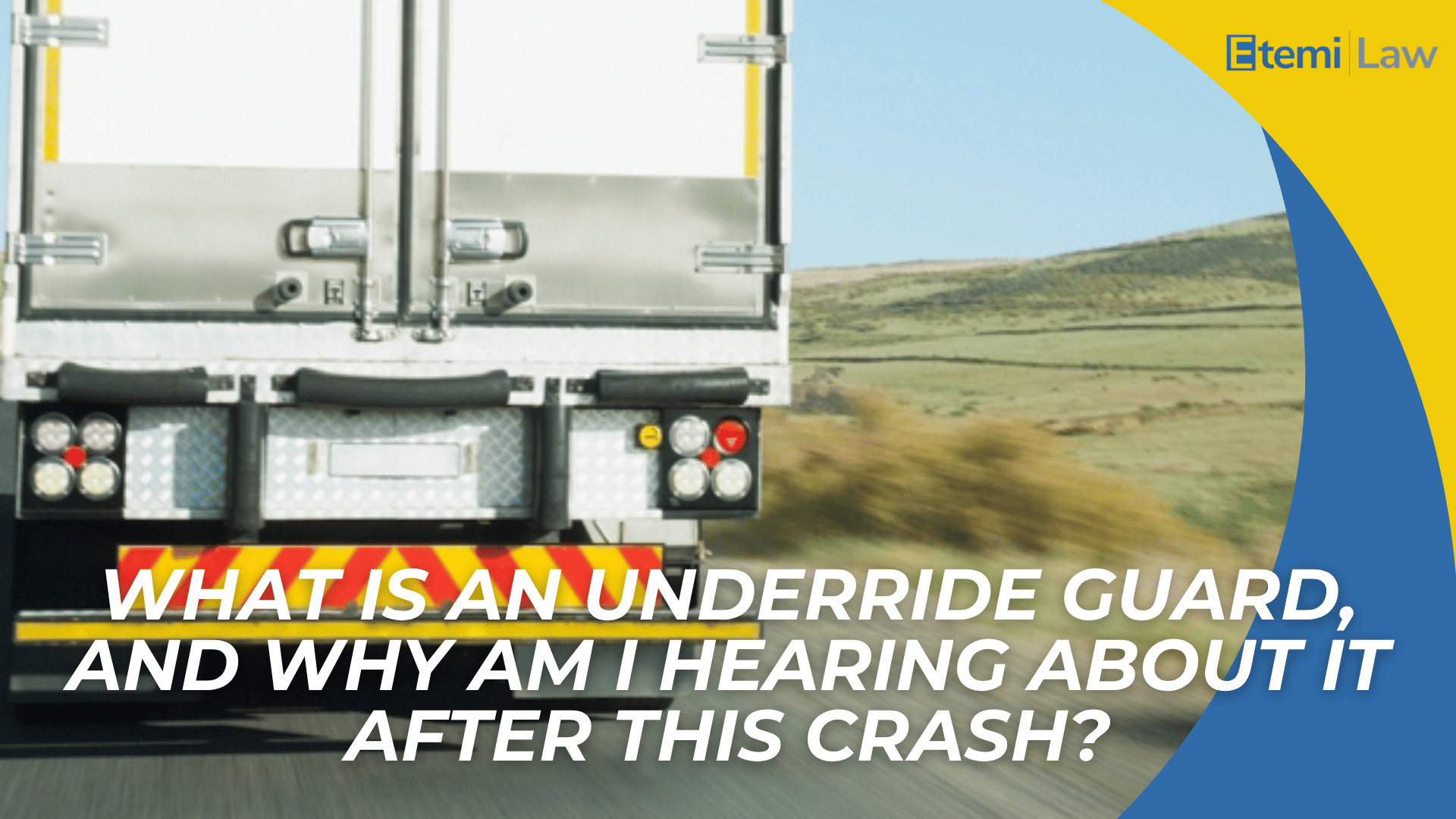
An underride guard is the steel bar that hangs off the back — and sometimes the sides — of a tractor-trailer, designed to stop a passenger vehicle from sliding underneath the truck during a collision. If you’ve typed this term into a search engine, it’s likely because someone — a police report, a news article, an investigator, a family member — has mentioned it in connection with a crash, and you’re trying to understand what it means and whether it matters.
It matters a great deal. Underride crashes are among the deadliest collisions on American roads, and when an underride guard fails, the question of who is responsible often extends well beyond the truck driver. This article walks through what these guards are supposed to do, how they fail, who can be held accountable under Connecticut law, and what evidence matters in building a case.
What Actually Happens When a Car Goes Under a Truck?
To understand why an underride guard matters, it helps to understand what happens without one — or when one fails.
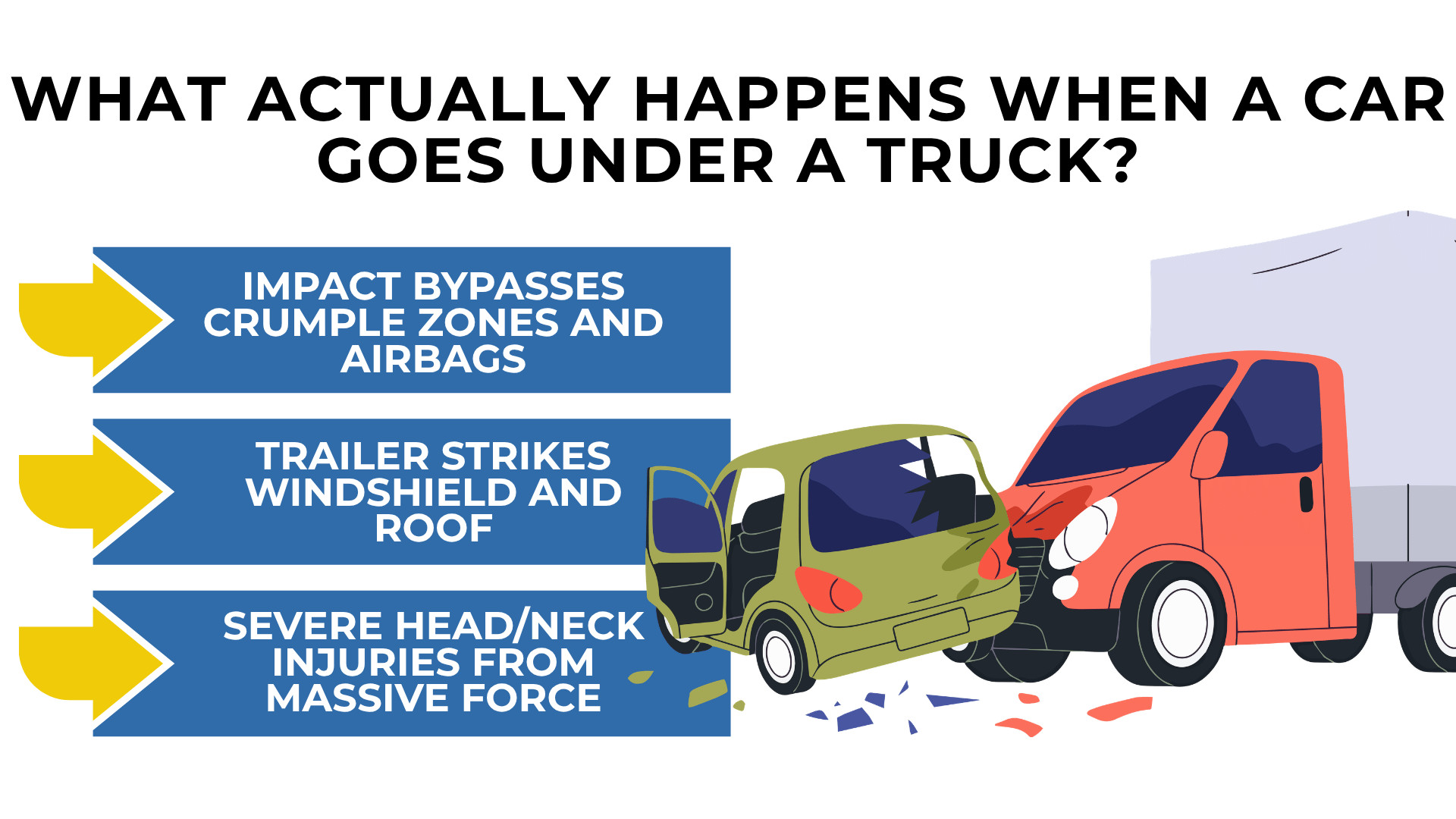
Passenger vehicles are engineered around the assumption that, in a crash, the front or rear of the car will absorb the impact. Crumple zones compress. Airbags deploy. Seatbelts restrain occupants within a protected survival space. Every one of these systems is built to work at roughly bumper height.
An underride crash defeats all of it. When a car slides underneath a trailer, the impact doesn’t hit the bumper or the hood — it hits the windshield, the A-pillars, and the roofline. The passenger compartment itself takes the collision. The airbags, which are designed to deploy on frontal impact, often don’t engage properly. The occupants are struck at head and neck level by the underside of a trailer that can weigh 20 to 30 times as much as the car.
This is why underride collisions produce such catastrophic injuries — traumatic brain injuries, spinal cord damage, decapitation — and why they are so often fatal. The underride guard exists because, without it, a passenger car hitting the back or side of a trailer at highway speed has almost no chance of protecting the people inside.
What Kinds of Underride Guards Are Trucks Supposed to Have?
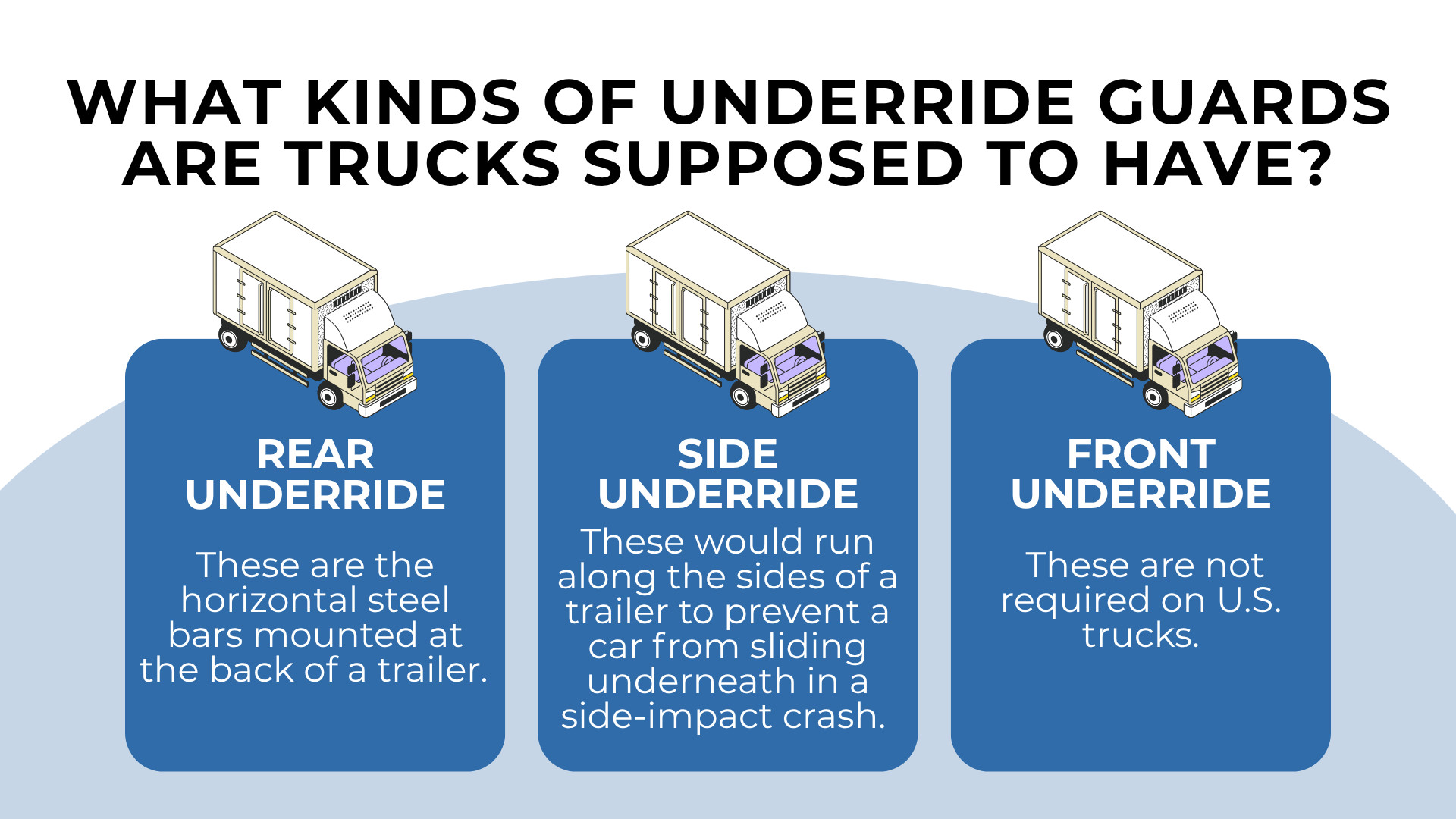
There are three categories of underride guard, and knowing which one is at issue in a particular crash shapes everything that follows.
Rear underride guards. These are the horizontal steel bars mounted at the back of a trailer. They are the guard most people have seen on the road, even without knowing what it was called.
Side underride guards. These would run along the sides of a trailer to prevent a car from sliding underneath in a side-impact crash. They are not currently required by federal law. The Insurance Institute for Highway Safety estimates that mandatory side underride guards could prevent between 159 and 217 passenger vehicle occupant deaths every year — more than ten times the figure NHTSA has used in its own cost-benefit analyses.
Front underride guards. These are not required on U.S. trucks.
If a passenger car slid under a trailer in the crash you’re investigating, the relevant question is which type of guard was or should have been involved — and whether it did its job.
Why Do Underride Guards Fail?
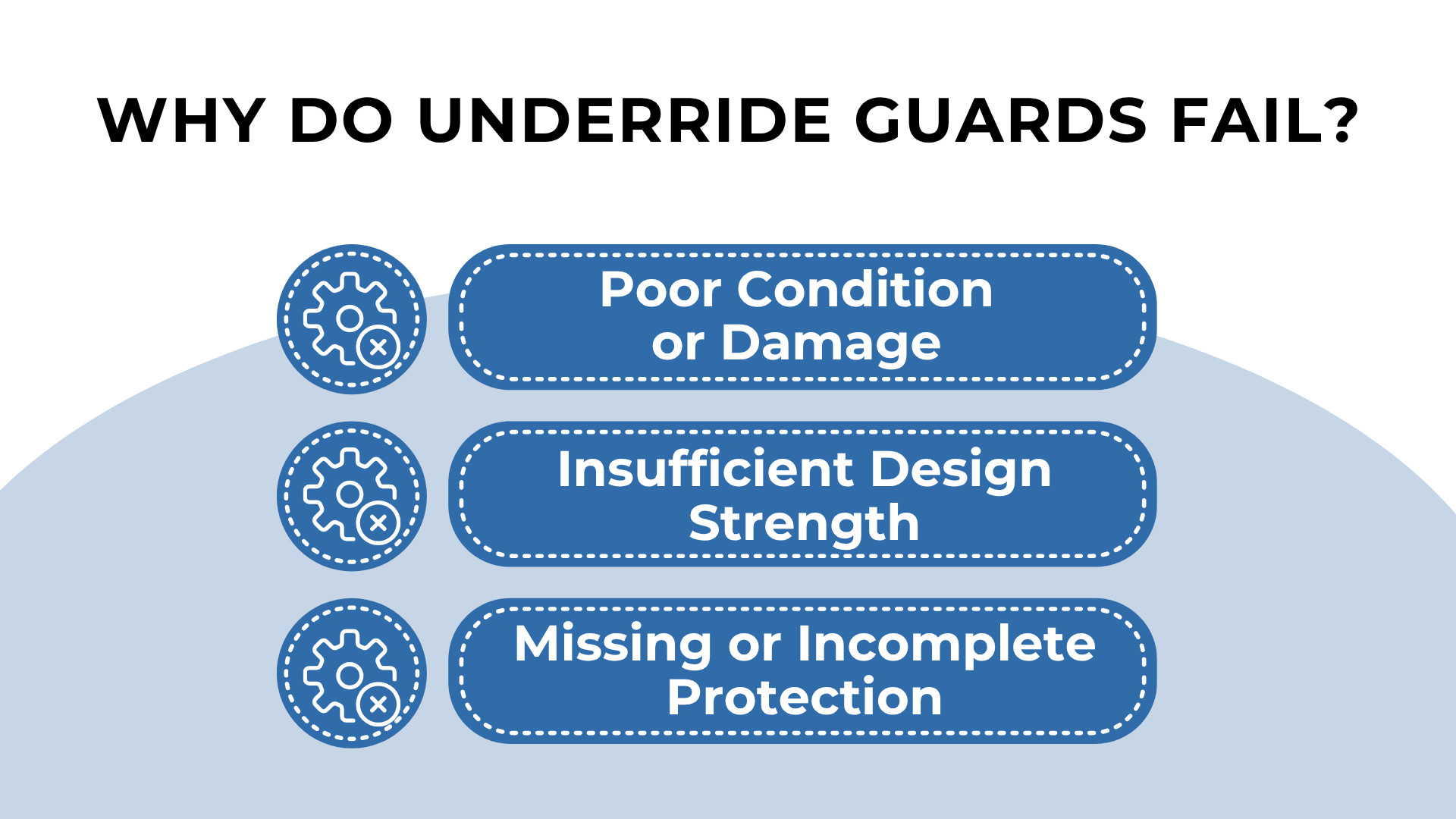
When a car ends up under a trailer, one of a few things is usually true, and none of them are accidents in the ordinary sense:
- The rear guard was there, but it was corroded, rusted through, or structurally weakened by age and poor maintenance, and it sheared or bent on impact instead of stopping the vehicle.
- The guard had been damaged in a prior incident — a loading dock strike, a minor collision, a bent mount — and was never properly repaired or replaced.
- The guard technically met the minimum standard but couldn’t withstand a real-world impact at highway speed.
- The guard was missing entirely, which still occurs on older trailers and trailers that have been modified.
- It was a side-impact crash, and there was no side underride guard — because federal law doesn’t require one, even though the technology exists and has been shown to save lives.
Each of these is the result of a decision someone made, or failed to make. A trailer with a rusted-through guard didn’t get that way overnight. A trucking company that keeps an older trailer with a damaged guard on the road has chosen not to repair it. A manufacturer that built a guard to the minimum standard when a stronger design was available made a cost decision. These are the kinds of choices that personal injury and product liability law is designed to examine.
Who Is Responsible When an Underride Guard Fails?
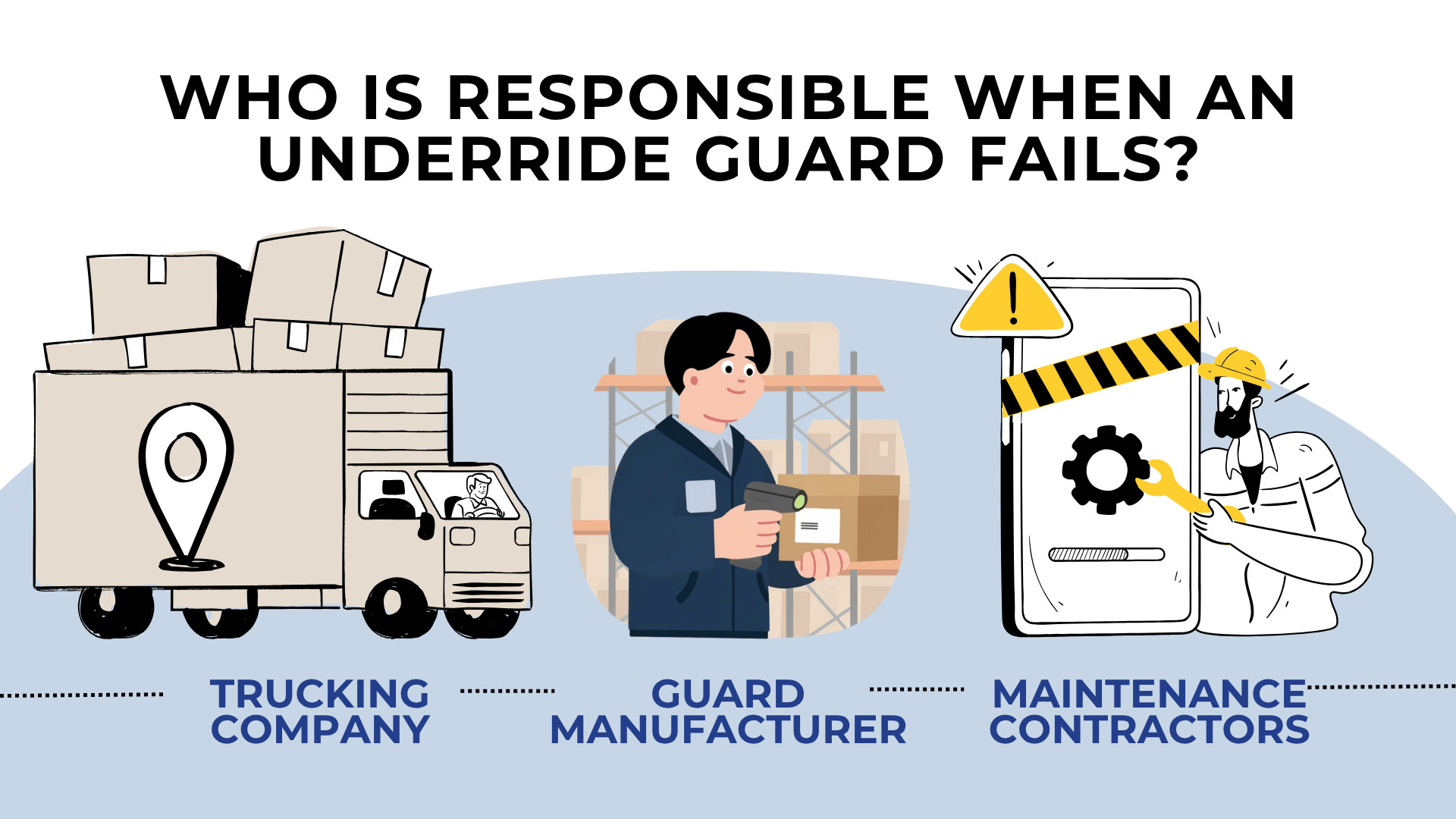
This is the part of the answer that often surprises people. A crash involving a failed underride guard is rarely a case against just the truck driver. Several parties may share responsibility:
The trucking company. Trucking companies can be held responsible under the doctrine of respondeat superior for the driver’s negligent acts while on the job. Connecticut law also creates a rebuttable presumption under Conn. Gen. Stat. § 52-183 that the driver of a company vehicle is acting as the company’s agent. Connecticut has adopted the Federal Motor Carrier Safety Regulations by statute under Conn. Gen. Stat. § 14-163c. That means violations of the federal regulations that apply — including inspection and maintenance provisions — can establish negligence as a matter of law under Connecticut’s negligence per se doctrine.
The trailer or guard manufacturer. If the underride guard was defectively designed or manufactured — if it failed under conditions it should have withstood, or if a workable alternative design would have prevented the injuries — the manufacturer may be liable under the Connecticut Product Liability Act. The CPLA consolidates strict liability, negligence, warranty, and misrepresentation claims into a single statutory cause of action. It applies broadly to manufacturers, wholesalers, distributors, retailers, bailors, and lessors engaged in the business of selling, leasing, or bailing products — including truck manufacturers, component part makers, and parts distributors. Connecticut courts apply a modified consumer expectation test that weighs the product’s usefulness, the likelihood and severity of the danger, the feasibility of a safer alternative design, and the cost of making that improvement.
Maintenance contractors. If the trucking company hired an outside company to inspect and maintain the trailer, claims against a third-party maintenance provider that missed or ignored the guard’s condition proceed under ordinary negligence law rather than the CPLA.
Untangling which party is responsible for which piece of the failure is a large part of what a commercial trucking investigation does. It’s also why these cases look very different from an ordinary car accident claim.
What Evidence Will Make or Break the Case — and Why Does It Disappear So Fast?
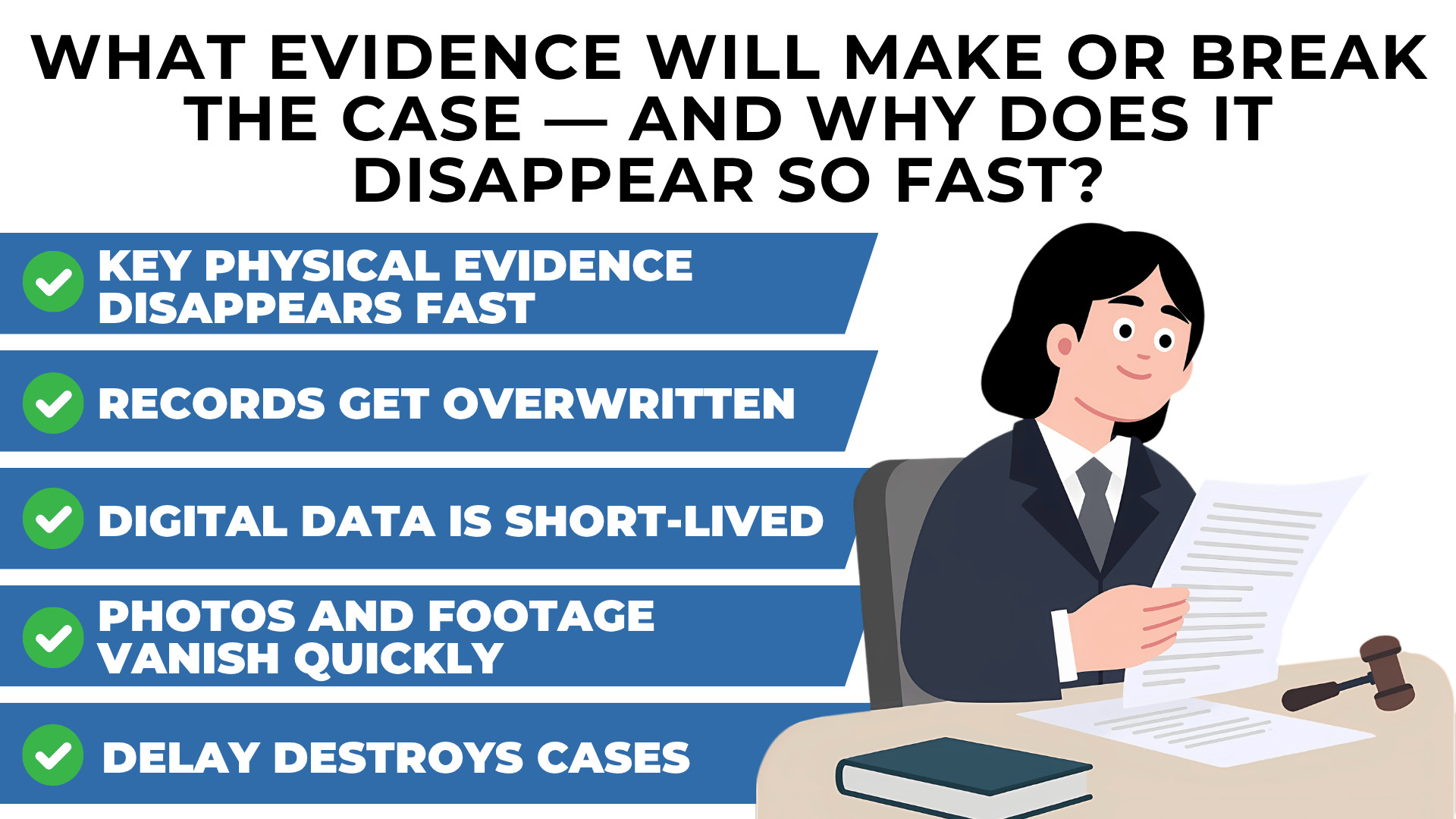
The evidence that determines an underride case is physical, documentary, and perishable.
The most important piece is the equipment itself: the underride guard, its mounting points, and the trailer it was attached to. Metallurgical analysis can show whether the guard was corroded, whether it had been damaged previously, whether it was welded or repaired improperly, and whether it failed at a load it should have withstood. Once that trailer is repaired, repainted, returned to service, sold, or scrapped, that evidence is gone.
Other evidence that matters:
- Maintenance and inspection records for the trailer
- The trucking company’s internal records on fleet condition, driver hours, and prior incidents
- Data from the truck’s electronic logging device and event data recorder
- Photos of the crash scene, especially of the guard and the point of impact
- The police report and any DOT or FMCSA post-crash inspection findings
- Dashcam footage from the truck or from nearby vehicles
Connecticut law imposes a common-law duty on the trucking company and other parties to preserve evidence once a lawsuit can reasonably be expected. Connecticut is also one of the few states that recognizes an independent tort for the intentional destruction of evidence. But federal regulations require trucking companies to retain electronic logging device records for only six months. Routine maintenance records can be overwritten. Trailers get repaired or sold. Getting counsel involved quickly — so that formal preservation letters go out and physical evidence is secured — is often the difference between a provable case and an unprovable one.
What Can Families Recover in an Underride Crash Case in Connecticut?
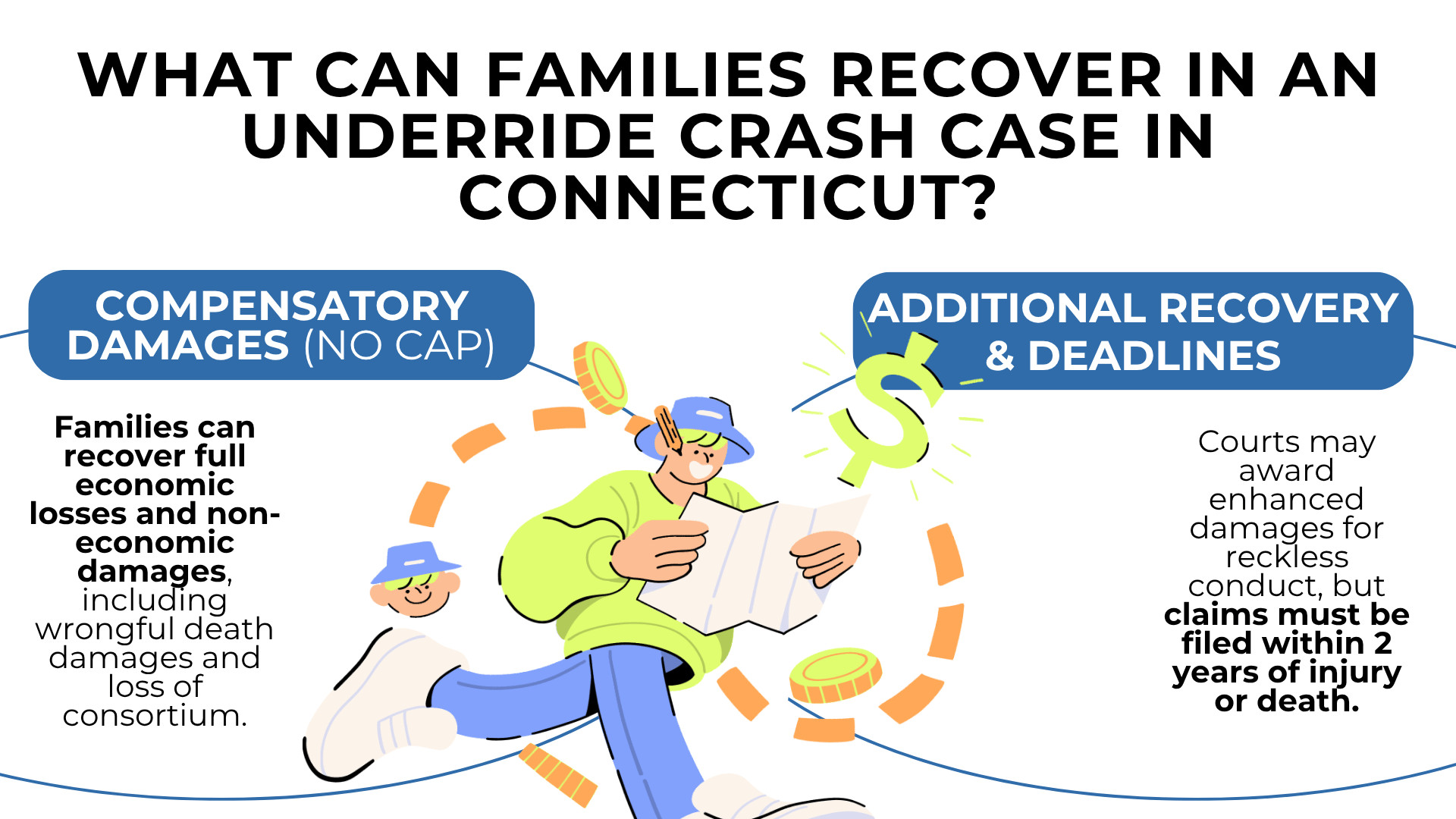
Connecticut imposes no statutory cap on damages in personal injury or wrongful death cases, which matters here because underride crashes tend to produce some of the most catastrophic injuries in the personal injury field.
Economic damages. These cover medical care, rehabilitative services, custodial care, and lost earning capacity. The injuries underride crashes produce — severe TBI, high cervical spinal cord damage, traumatic amputation — are among the most expensive in the personal injury field. In an individual case, the lifetime cost projection for these injuries drives a substantial portion of the economic damages calculation.
Non-economic damages. Pain, suffering, and the loss of the life you or your loved one was supposed to have.
Wrongful death damages. Under Conn. Gen. Stat. § 52-555, the executor or administrator of the estate can recover “just damages” plus medical, hospital, nursing, and funeral expenses. Spouses and minor children can also bring separate loss-of-consortium claims.
Enhanced damages. If a truck driver operated the vehicle with reckless disregard of traffic safety statutes, Conn. Gen. Stat. § 14-295 permits double or treble damages. If a product seller showed reckless disregard for safety, the CPLA permits punitive damages up to twice the compensatory award under Conn. Gen. Stat. § 52-240b.
Filing deadlines apply. Connecticut’s statute of limitations for motor vehicle negligence is two years from the date of injury under Conn. Gen. Stat. § 52-584. Wrongful death claims must be brought within two years of the date of death under Conn. Gen. Stat. § 52-555. Connecticut is the only state that does not toll this deadline for minors.
What You Should Do Now
If you believe an underride guard was involved in a crash — whether you’re recovering from injuries, supporting an injured family member, or trying to understand what happened to someone you lost — the practical steps are fairly short:
- Preserve everything you already have: photos from the scene, the police report, medical records, the name of the trucking company and its insurer, and any correspondence you’ve received.
- Do not give a recorded statement to the trucking company or its insurer before speaking with your own attorney. Their adjusters are trained to minimize company exposure, and anything you say will be used to do exactly that.
- Talk to a lawyer who handles commercial trucking cases — not a general-practice lawyer — and do it before the trailer, the records, and the data disappear.
At Etemi Law in Waterbury, our partners have spent careers litigating serious injury and commercial trucking cases against trucking companies, corporate defendants, and their insurers throughout Connecticut. We investigate these cases the way they need to be investigated: quickly, with preservation letters out the door, with accident reconstructionists and engineers engaged early, and with a clear plan for identifying every party whose decisions contributed to what happened.
If you have questions about a crash involving a truck, call our office for a conversation. There is no cost to talk, and the sooner we get involved, the more of the evidence that actually decides these cases can be preserved.