What to Do After a Car Accident That Wasn’t Your Fault in Connecticut
If you were hit by another driver in Connecticut, the single most important thing you can do is start protecting your claim right now — before you talk to anyone’s insurance company, before you assume the other driver’s insurer will handle things fairly, and before the adrenaline wears off and the details start to blur. What you do in the hours and days after the crash will determine whether your version of events holds up or falls apart.
This page walks through each step in order: what to do at the scene, what evidence to collect, why medical records matter even if you feel okay, how to handle the other driver’s insurance company, and when it makes sense to bring in an attorney.
I was just hit by someone — what do I do right now?
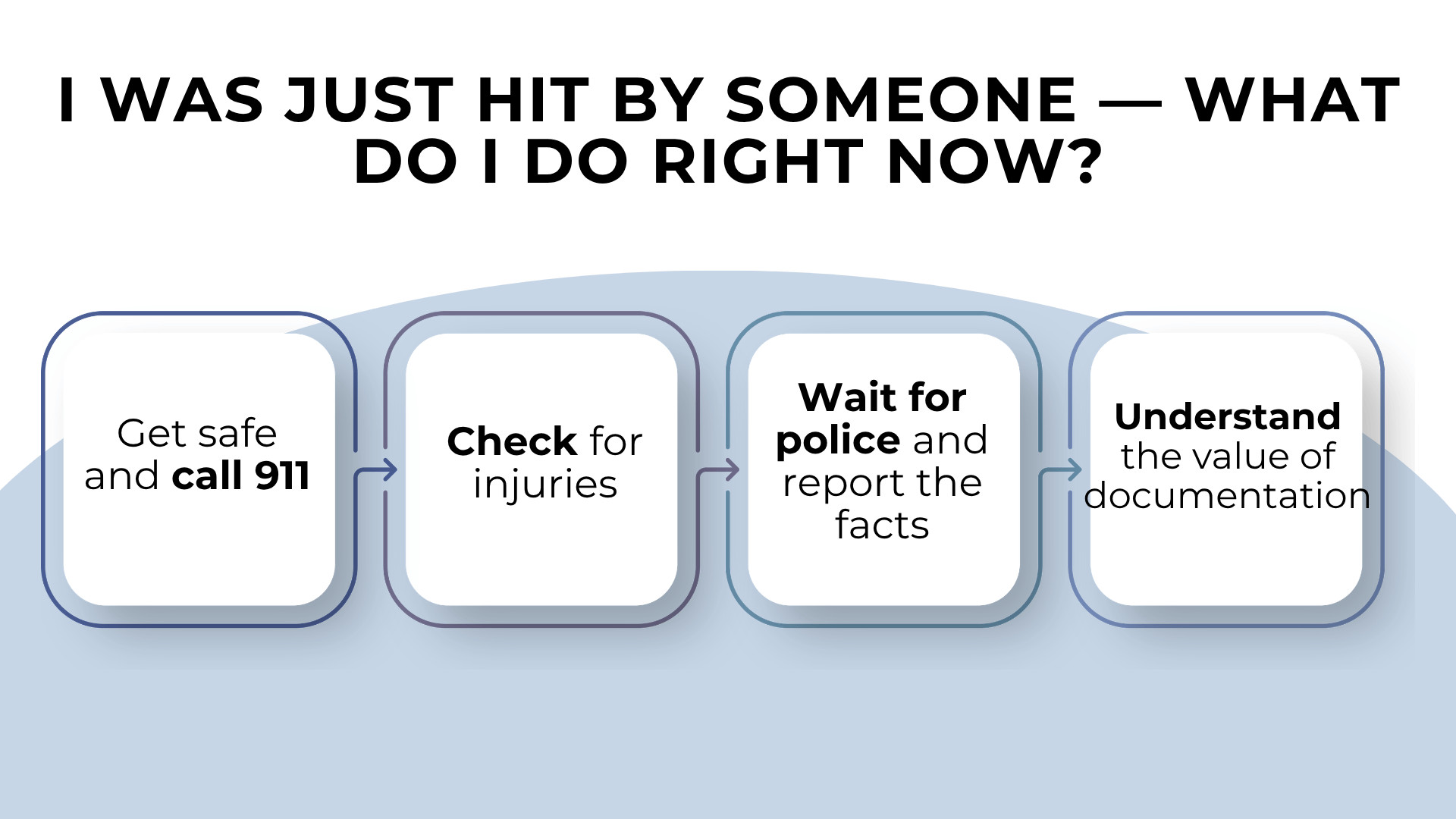
The first few minutes after a crash are disorienting, but they follow a simple sequence. Start with safety: move out of the flow of traffic if you can do so without making injuries worse, turn on your hazard lights, and call 911. Even if the damage looks minor, a police response creates an official crash report — a document that becomes one of the most important pieces of evidence in any claim that follows.
Connecticut sees a high volume of collisions. The Connecticut Crash Data Repository recorded approximately 104,260 total reported crashes in 2024. That volume means police departments, insurers, and the court system all have established processes for handling these cases. Your situation isn’t unusual, and there’s a well-worn path forward — but it only works if you take the right steps early.
While you wait for police, check yourself and your passengers for injuries. If anyone is hurt, say so when you call 911 so the dispatcher can send medical responders. Don’t try to move anyone who may have a neck or back injury. When the officer arrives, give an honest, factual account of what happened — but stick to what you observed. You don’t need to guess about speed, estimate distances, or offer theories. If you’re unsure about something, it’s fine to say so.
What evidence do I need to collect at the scene?
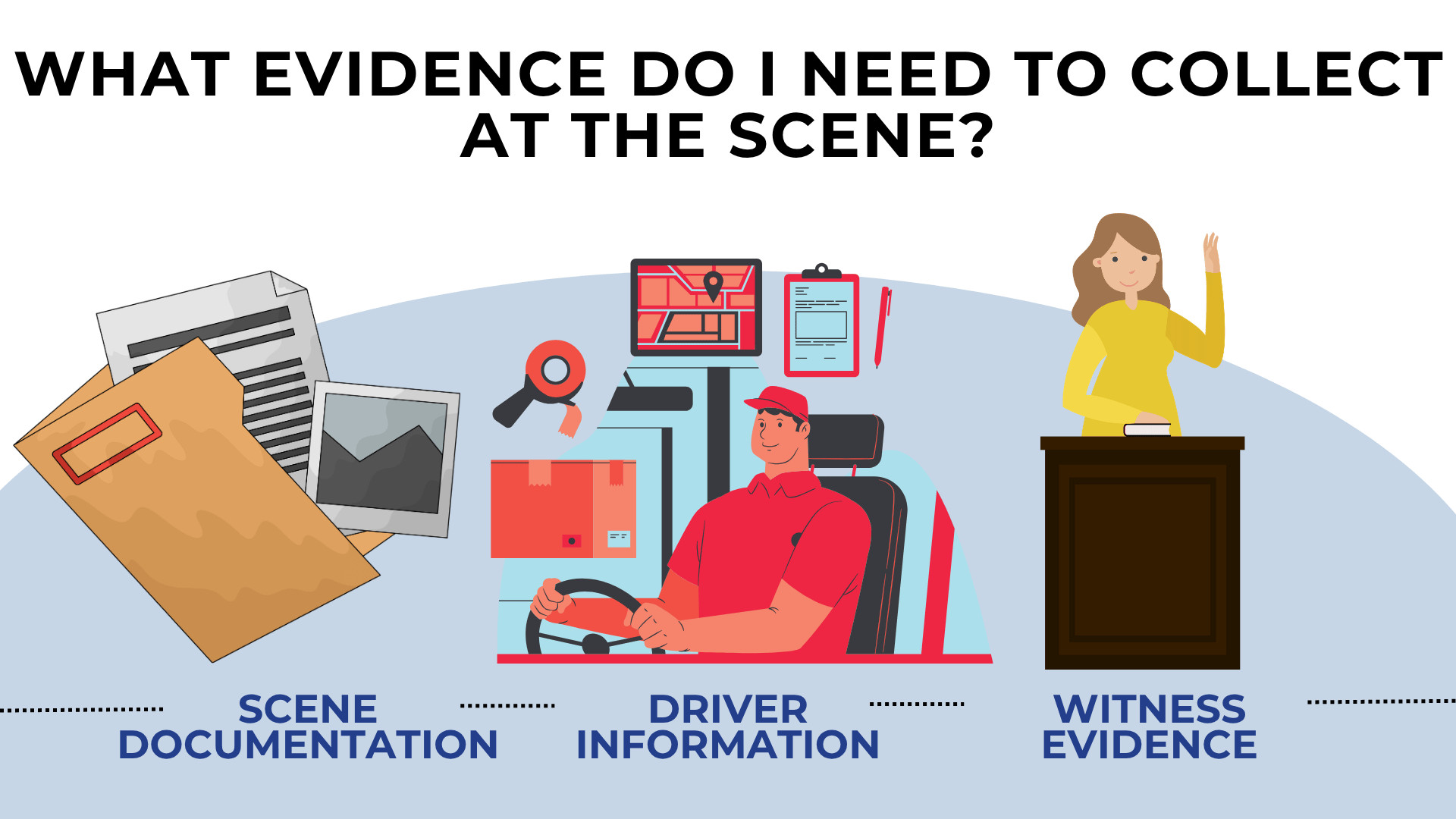
A police report establishes the official record, but it won’t capture everything your claim may need later. Your phone is the best tool you have. Photograph the damage to both vehicles from multiple angles, the position of the cars in the road, any skid marks or debris, traffic signals or signs near the point of impact, and the other driver’s license plate. If you have visible injuries — bruises, cuts, swelling — photograph those too.
Exchange insurance information with the other driver: their name, phone number, insurance carrier, and policy number. If there are witnesses — other drivers who stopped, pedestrians, people in nearby businesses — ask for their names and phone numbers before they leave. Witness accounts that back up your version of events can make the difference when fault is disputed.
One thing worth noting: Connecticut law establishes a presumption that the injured person was exercising reasonable care at the time of the accident under Conn. Gen. Stat. § 52-114. That presumption helps you, but it’s much stronger when you have physical evidence and witness testimony backing it up. The gap between “I know this wasn’t my fault” and “I can prove this wasn’t my fault” is closed by what you collect at the scene.
Should I see a doctor even if I feel fine?
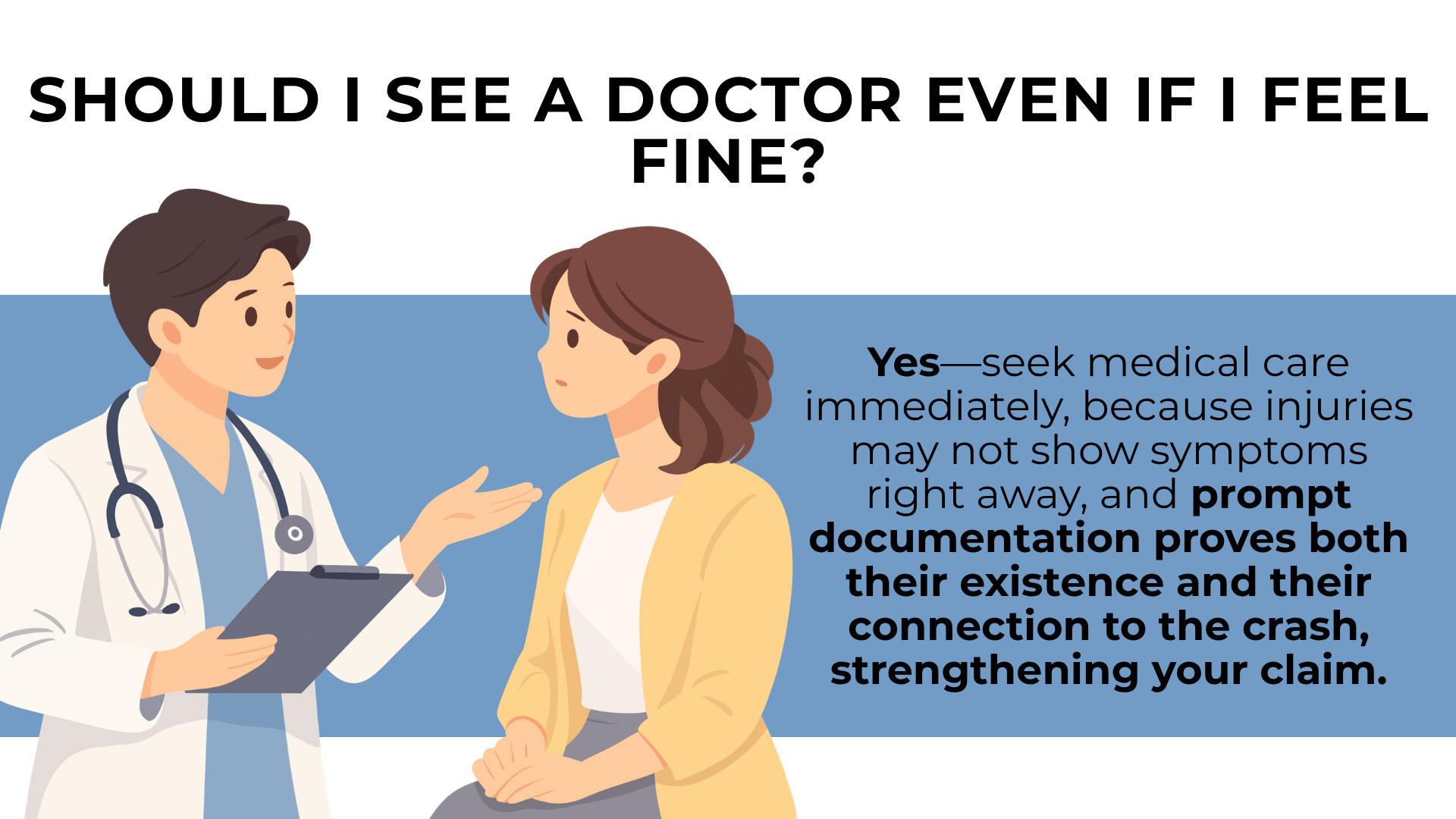
Yes. This is one of the most important steps people skip. Adrenaline masks pain. Soft tissue injuries — whiplash, herniated discs, ligament tears — often don’t produce symptoms for hours or days after impact. Traumatic brain injuries can be subtle at first. Nationally, motor vehicle crashes account for roughly 20% of all TBI-related hospitalizations and remain one of the most common causes of moderate and severe TBI according to the CDC.
Legally, a medical record you create close to the date of the accident shows two things an insurer will challenge: that your injuries exist and that they were caused by the crash. If you wait weeks to seek treatment, the other driver’s insurer will argue the injuries happened some other way or aren’t as serious as you claim. The Connecticut Department of Public Health documented 33,975 emergency department visits and 942 hospital admissions from motor vehicle crashes in 2023 alone, with hospitals billing nearly $1.7 billion for crash-related treatment. These injuries are real, they’re expensive, and they need to be documented from the start.
Follow through on every referral your doctor makes — physical therapy, imaging, specialist consultations. Gaps in treatment become gaps in your claim.
What should I say — and not say — to the other driver’s insurance company?
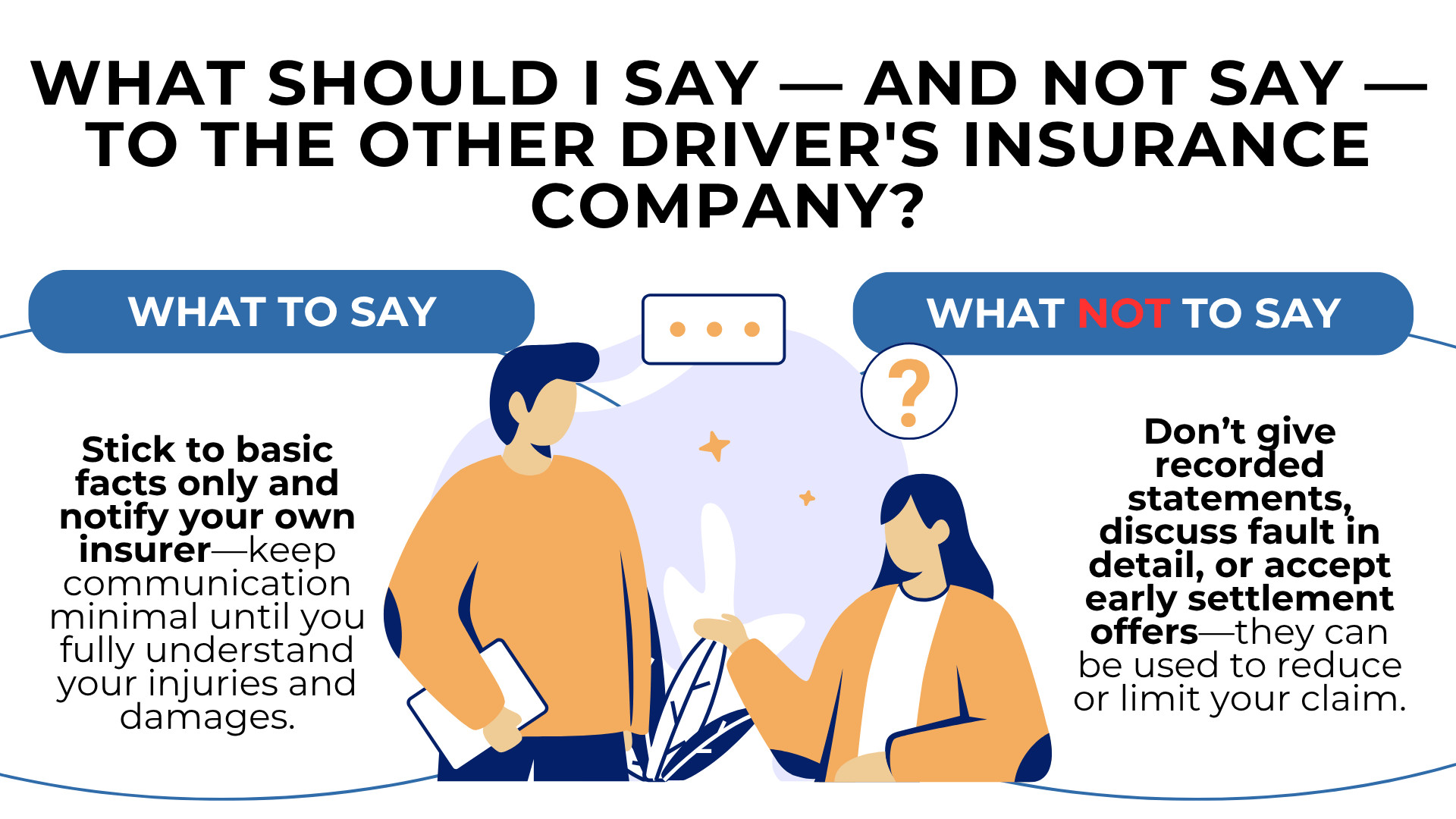
The other driver’s insurance company will likely contact you quickly, sometimes within a day or two of the crash. It’s important to understand what that call is: it’s an investigation, not a courtesy. The adjuster’s job is to resolve your claim for as little as possible. They are not on your side, even if they’re polite and sympathetic.
A few things to be cautious about. First, the recorded statement. You’re under no legal obligation to give one to the other driver’s insurer. Anything you say can be used to minimize your claim — an offhand “I’m feeling okay” becomes evidence that your injuries aren’t serious. Second, the early settlement offer. Insurers sometimes extend a fast offer before you know the full extent of your injuries. If you accept and sign a release, you generally cannot come back for more money when the medical bills keep coming. Third, be careful about discussing fault in any detail beyond the basics. Let the evidence — the police report, the photographs, the witness statements — speak for itself.
You should notify your own insurance company about the accident. Your policy likely requires it. But with the at-fault driver’s insurer, less is more until you understand the full picture.
When should I call a car accident lawyer?
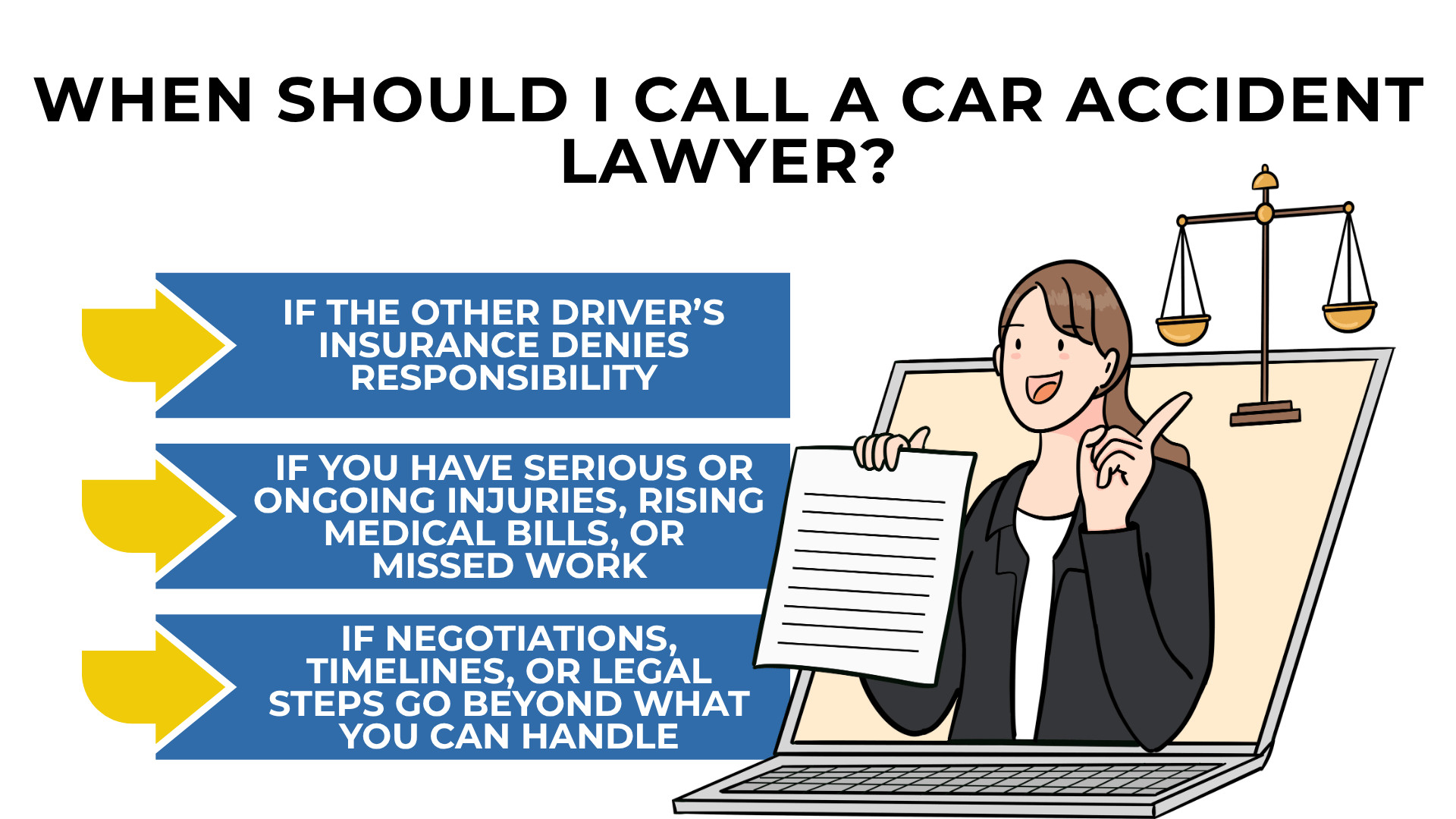
Not every fender-bender requires a lawyer. But certain signals suggest your case has complications that an attorney can handle more effectively than you can alone. These include: the other driver’s insurer is disputing fault, your injuries are serious or still developing, you’re being pressured into a quick settlement, medical bills are mounting, or you’ve missed time from work with no clear return date.
Etemi Law is a personal injury firm based in Waterbury, Connecticut, with attorneys who focus specifically on motor vehicle accident cases. Lead litigator Ron Etemi has tried over 100 cases to verdict, and the firm’s team — including Lou Etemi, Semir Dervisi, and Peter Brown, who brings over three decades of trial experience including 175 jury verdicts — is built around the principle that trial readiness drives better outcomes, whether a case settles or goes to court. When an insurance company knows the attorney across the table is prepared to try the case, the settlement offer reflects it.
If you were hurt in a car accident that wasn’t your fault in Connecticut, Etemi Law can review your case, explain what your claim is worth, and handle the insurance companies so you don’t have to. The consultation costs nothing, and there’s no fee unless they recover compensation for you.