
What to Do After a Truck Accident in Connecticut: A Step-by-Step Commercial Truck Crash Checklist
Estimated reading time: 12 minutes

Key Takeaways
- Safety first. Your immediate priority is life and avoiding further harm.
- Police reports matter. A properly documented PR-1 crash report is critical for later claims.
- Preserve evidence quickly. Truck data, dash cams, and logs can be overwritten—act fast.
- Get medical care. Adrenaline can hide serious injuries; document symptoms from the start.
- Be cautious with insurers. Avoid recorded statements and signing releases without understanding consequences.
Table of contents
- Title
- Key Takeaways
- Immediate Safety Steps: The First 1–10 Minutes
- Call 911 and Stay Safe
- Call Police and Understand Connecticut Crash Reporting
- Commercial Truck Crash Checklist: Evidence to Collect Before Vehicles Move
- Medical Steps: Same Day and Following Days
- Notify Insurance Carefully
- Preserve Truck-Specific Evidence Quickly
- When to Talk to a Truck Accident Lawyer in Waterbury
- Quick Recap: Your Printable Checklist
- Conclusion
- FAQ
Immediate Safety Steps: The First 1–10 Minutes
Your first priority is staying alive and keeping others safe. Everything else—evidence, insurance, fault—comes second to life safety.
Check Yourself and Passengers
Take a breath. Assess whether you or anyone in your vehicle is injured. Some injuries, like internal bleeding or spinal damage, aren’t immediately obvious. If you feel any pain, numbness, or confusion, stay still and wait for emergency responders.
If you’re physically able, check on your passengers. Don’t move anyone who may have a neck or back injury unless there’s an immediate danger like fire.
Call 911
Request emergency medical services if anyone is hurt. When describing the situation, mention that the crash involves a commercial truck. If there are hazards like fuel leaks or spilled cargo, tell the dispatcher. This information helps responders bring the right equipment. For a more detailed 911-focused protocol, read the linked resource.
Move to Safety If Possible
If your vehicle is drivable and you’re not seriously injured, try to move it to the shoulder or another safe location away from traffic. Turn on your hazard lights. If you have road flares or reflective triangles, set them out—but only if you can do so without putting yourself in danger.
Do not leave the accident scene. Connecticut law treats leaving the scene of a crash that causes injury or death very seriously. Under state law, failing to remain at the scene or render reasonable assistance is considered “evading responsibility” and can result in criminal charges.
Truck-Specific Hazards to Watch For
Commercial trucks present dangers that regular cars don’t. Be aware of:
- Fuel leaks and fire risk. Large trucks carry substantial fuel. If you smell diesel or see liquid pooling, move away.
- Cargo spills. Loose freight can create road hazards. If cargo has spilled, keep your distance. If a semi-truck lost its load, liability can get complicated—see: what if a semi-truck loses its load and causes a crash
- Hazardous materials. Look for diamond-shaped placards on the truck. These indicate chemicals or dangerous goods. If you see one, move uphill and upwind to avoid fumes.
- Blind spots and secondary collisions. Other drivers may not see the wreck in time. Stay visible and alert.
Stay Calm and Say Little
It’s natural to want to talk through what happened, but this isn’t the time. Don’t argue with the truck driver. Don’t apologize or say anything that could be interpreted as accepting fault. A simple “Are you okay?” is fine. Beyond that, let the police and insurance companies sort out the details later.
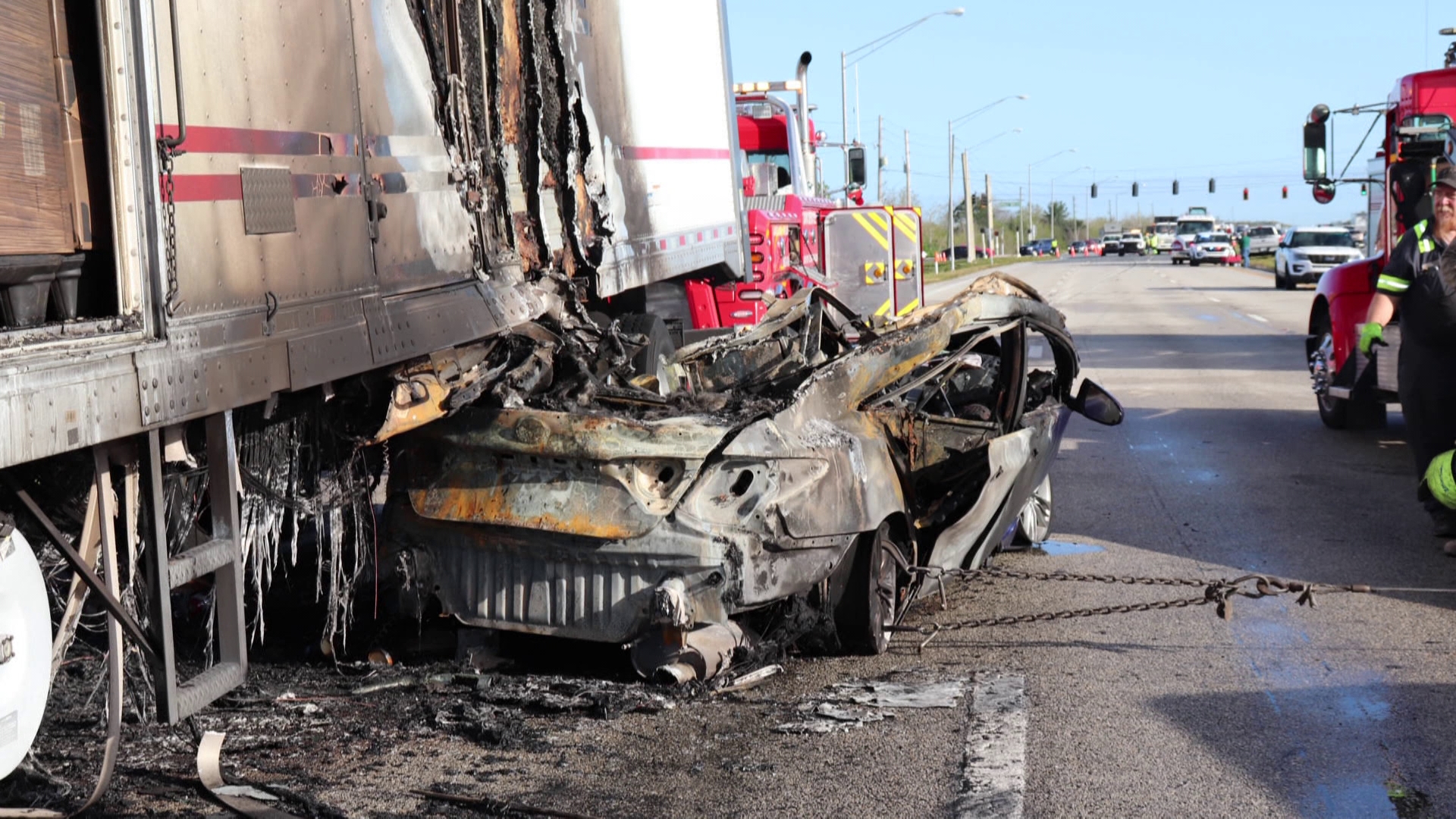
Call Police and Understand Connecticut Crash Reporting
After addressing immediate safety concerns, the next step is ensuring police respond to the scene. This is especially important in truck crashes.
Why Police Involvement Matters
An official police response creates an independent record of what happened. The responding officer will document the vehicles involved, the positions on the road, the identities of the drivers, and any visible injuries or damage. This information becomes critical if there’s a dispute about fault later.
In crashes involving commercial trucks, the police report will typically note the truck’s identifying information—company name, USDOT number, and vehicle details. This documentation can be essential when multiple parties may share responsibility.
What Is a “DOT Report” in Connecticut?
When people refer to a “DOT report” in Connecticut, they usually mean the Connecticut Uniform Police Crash Report, also known as Form PR-1. This is the official form police use statewide to document motor-vehicle collisions.
Under Connecticut law, police investigating a crash involving death, injury, or property damage exceeding $1,000 must complete this uniform crash report and file it with the Transportation Commissioner within five days.
What to Do at the Scene
When the officer arrives:
- Provide your license, registration, and insurance information.
- Describe what happened factually. Stick to what you observed, not what you assume.
- Make sure the officer knows you’re injured, even if symptoms seem minor.
- Confirm that the truck is being documented as a commercial vehicle.
Before the officer leaves, ask how to obtain a copy of the crash report later. Get the report number, the officer’s name, and the department or troop handling the investigation. You’ll need this for insurance claims and any legal proceedings.
Commercial Truck Crash Checklist: Evidence to Collect Before Vehicles Move
If you’re physically able, gathering evidence at the scene can make a significant difference in your case. This commercial truck crash checklist covers what to document and why.
Photos and Video
Use your phone to capture:
- All vehicles involved. Get multiple angles, including damage, final positions, and any debris.
- The roadway. Photograph skid marks, gouges in the pavement, and the layout of lanes.
- Traffic controls. Capture stop signs, traffic lights, lane markings, and posted speed limits.
- Environmental conditions. Document weather, lighting, and road surface conditions.
- Visible injuries. If you have cuts, bruises, or other visible harm, photograph them.
- Spilled cargo. If freight has scattered, capture what you can from a safe distance.
Take wide shots to establish context and close-ups for detail. Include landmarks like mile markers, exit signs, or nearby businesses to prove the location.
Truck Identifiers
Commercial trucks are required to display specific information. Look for:
- USDOT number. This is usually on the cab door. It identifies the carrier.
- Company name and logo.
- License plate and state.
- Trailer number and unit number.
Write these down or photograph them. This information helps trace the trucking company and their insurance coverage.
Driver Information
Politely ask the truck driver for:
- Name and contact number
- Employer or trucking company name
- Insurance information
- CDL (Commercial Driver’s License) details if visible
If the driver refuses to share information, don’t argue. The police will document what’s needed.
Witnesses
If bystanders saw the crash, ask for their names and phone numbers. If they’re willing, have them briefly describe what they observed. You can record audio on your phone if they consent.
Nearby Cameras
Look around for surveillance cameras—on businesses, traffic signals, or nearby properties. Write down the addresses. This footage can be requested later, but it often gets overwritten within days.
Your Own Notes
As soon as you’re able, write down your recollection of events:
- Time of the crash
- Lane positions before impact
- What you observed about the truck driver’s behavior (Did they seem fatigued? Were they looking at a phone?)
- Any statements the driver made
These notes can refresh your memory later and may become useful in legal proceedings.
A Word of Caution
Do not climb on the truck or trailer. Do not touch spilled cargo, especially if you suspect hazardous materials. Do not obstruct emergency responders. Your safety remains the priority.
Medical Steps: Same Day and Following Days
Even if you feel fine immediately after the crash, seek medical evaluation. Adrenaline masks pain. Symptoms of serious injuries—concussions, internal bleeding, soft tissue damage—often emerge hours or days later. For a deeper dive into truck-crash brain injury issues and next steps, see the linked resource.
Get Evaluated Promptly
Accept evaluation from EMS at the scene if offered. If you decline transport to the hospital, go to an urgent care clinic or emergency room as soon as possible—ideally the same day.
Tell the medical provider that you were in a truck accident. Describe all symptoms, even ones that seem minor. This creates a medical record linking your condition to the crash.
Follow Through on Treatment
If the doctor recommends follow-up care, imaging, or specialist consultations, follow through. Gaps in treatment can create problems later—insurance companies may argue your injuries weren’t serious if you didn’t seek consistent care.
Keep Records of Everything
Start a file for:
- Discharge papers and doctor’s notes
- Imaging results (X-rays, MRIs, CT scans)
- Prescriptions and pharmacy receipts
- Bills from hospitals, clinics, and specialists
Also keep a symptom diary. Note your pain levels, sleep disruptions, mobility issues, and how your injuries affect daily activities. This documentation supports claims for both medical expenses and pain and suffering.
Notify Insurance Carefully
You’ll need to report the crash to your own insurance company. However, be cautious—especially when dealing with the trucking company’s insurer. To understand common insurer tactics that can hurt your claim, read the linked resource.
What to Share With Your Insurer
Report the basic facts:
- Date, time, and location of the crash
- Vehicles involved
- That a police report was filed
- That you’re seeking medical treatment
Provide the police report number and claim number once you have them.
What to Avoid
- Don’t guess. If you’re unsure about speeds, distances, or exact sequences, say so. Speculation can be used against you.
- Don’t accept blame. Even if you think you might have contributed, fault is a legal determination. Don’t make the adjuster’s job easier at your expense.
- Don’t minimize injuries. Saying “I’m fine” when you haven’t been fully evaluated can undermine your claim.
- Don’t sign releases prematurely. Trucking insurers may push for quick settlements. Don’t sign anything without understanding the full scope of your injuries.
If the trucking company’s insurance contacts you directly, you’re not obligated to give a recorded statement. You can politely decline and refer them to your attorney if you have one.
Keep Copies of Everything
Document every interaction. Save emails, letters, and claim numbers. Write down the names of adjusters and the dates of phone calls. This paper trail protects you if disputes arise later.
Preserve Truck-Specific Evidence Quickly
Commercial truck crashes differ from car accidents in one critical way: there’s often more evidence available, but it can disappear fast.
What Evidence May Exist
Large trucks frequently carry:
- Electronic Control Modules (ECMs). Sometimes called the truck’s “black box,” these record data like speed, braking, and engine performance before a crash. Learn how black box data can help win your truck accident case.
- Dash cam footage. Many trucking companies install cameras that record the road and the cab interior.
- Driver logs. Federal regulations require commercial drivers to track hours of service. Logs can show whether a driver exceeded legal limits or was fatigued. See the electronic logging device data download resource.
- Maintenance and inspection records. These documents reveal whether the truck was properly serviced and whether known problems went unaddressed.
- Cargo and loading documents. Improper loading can cause rollovers or loss of control.
Time Sensitivity
Some ECM data gets overwritten after a set number of engine hours. Dash cam footage may be recorded over within days. Trucking companies aren’t required to preserve this evidence indefinitely unless they receive proper legal notice.
This is one area where acting quickly matters. If you’re seriously injured or suspect the truck driver was at fault, consulting an attorney promptly can help ensure this evidence is preserved before it’s lost. If you want to understand how preservation letters work, start with the linked guide.
Multiple Responsible Parties
In truck crashes, liability isn’t always straightforward. Potentially responsible parties may include:
- The truck driver
- The trucking company
- A maintenance contractor
- The shipper or company that loaded the cargo
- A parts manufacturer, if mechanical failure contributed
Sorting out who bears responsibility requires investigation—and access to records that aren’t publicly available. For a deeper explanation of liability in commercial truck crashes, see: determining liability in a commercial truck crash.
When to Talk to a Truck Accident Lawyer in Waterbury
Not every truck crash requires an attorney. But many do, especially when injuries are serious, fault is disputed, or the trucking company’s insurer is being aggressive.
Signs You Should Consult a Lawyer
Consider speaking with a truck accident lawyer in Waterbury if:
- You or a passenger suffered significant injuries
- You’re facing substantial property damage
- The trucking company’s insurer has already contacted you
- Fault is unclear or being disputed
- The crash involved hazardous materials or cargo spills
- You’re unsure how to value your claim
What an Attorney Can Do
An attorney can:
- Handle insurer communications. This protects you from making statements that could harm your claim.
- Investigate liability. Attorneys can subpoena records, hire accident reconstruction experts, and identify all responsible parties.
- Send preservation letters. These formal notices require the trucking company to retain evidence like ECM data, logs, and maintenance records.
- Evaluate damages. Beyond current medical bills, an attorney considers future care, lost income, diminished earning capacity, and non-economic damages like pain and suffering.
What to Bring to a Consultation
If you decide to meet with a lawyer, bring:
- Photos and videos from the scene
- Witness names and contact information
- Medical records and bills
- Insurance policy information
- The police report number or PR-1 details
- Towing and repair estimates
- Your notes about what happened
Most personal injury attorneys offer free initial consultations and work on contingency, meaning you don’t pay unless you recover compensation. If you’re specifically looking for local representation options, see: truck accident lawyer in Waterbury.
Quick Recap: Your Printable Checklist
Here’s a condensed version of the steps covered above:
- Ensure safety. Check for injuries, call 911, move to a safe location if possible.
- Stay at the scene. Render aid if you can safely do so. Leaving can result in criminal charges under Connecticut law.
- Request police response. Make sure a crash report (PR-1) is filed. Get the report number.
- Document everything. Photograph vehicles, damage, truck identifiers, road conditions, and visible injuries.
- Get medical evaluation. Go to the ER or urgent care the same day, even if pain seems minor.
- Notify your insurer. Share basic facts, but be cautious with recorded statements.
- Consider legal help. For serious injuries or complex liability, an attorney can preserve evidence and protect your interests.
Conclusion
Truck accidents are high-stakes events. The vehicles are bigger, the injuries are often worse, and the legal landscape is more complicated than a typical fender-bender. Knowing what to do after a truck accident in Connecticut—and acting on that knowledge—protects both your health and your legal rights.
Save or bookmark this checklist. If you’ve been injured and the situation feels overwhelming, consider reaching out to a truck accident lawyer in Waterbury who can help you navigate the process. The first consultation is usually free, and having an experienced advocate can make a meaningful difference in how your case unfolds.
This article is provided for informational purposes only and does not constitute legal advice. Every case is different. If you have questions about your specific situation, please consult a qualified attorney licensed in Connecticut.
About the Author
Ron Etemi is a Connecticut trial lawyer and co-founder of Etemi Law who represents individuals and families in serious personal injury, wrongful death, and catastrophic motor-vehicle cases. With more than 15 years of experience in Connecticut state and federal courts, Ron has litigated hundreds of cases and recovered millions of dollars in settlements and verdicts. A former insurance-defense attorney and appellate law clerk to a Connecticut Supreme Court Chief Justice, Ron brings a trial-first mindset, deep medical-legal analysis, and an insider understanding of insurance tactics to every case.
FAQ
Do I have to stay at the scene after a truck accident in Connecticut?
Yes. Connecticut law requires you to remain at the scene of a crash that causes injury, death, or significant property damage and to render reasonable assistance. Leaving can result in criminal charges.
What is a PR-1 crash report and why does it matter?
The PR-1 is the Connecticut Uniform Police Crash Report. It provides an official, independent record of the crash and often includes details about commercial trucks—USDOT numbers, company names, and observed damage—that are important for insurance and legal claims.
Should I speak to the trucking company’s insurer?
You should notify your own insurer, but be cautious dealing directly with the trucking company’s insurer. You are not required to give a recorded statement; you may refer them to your attorney. Avoid admitting fault or minimizing injuries.
How quickly can truck evidence be lost?
Very quickly. ECM data, dashcam footage, and ELD logs can be overwritten or deleted within days. If evidence preservation is necessary, consult an attorney promptly so they can send preservation letters and take steps to secure records.
When should I contact a lawyer?
If you suffered serious injuries, fault is disputed, the trucking company or insurer is aggressive, or evidence needs fast preservation—consult an experienced truck accident attorney as soon as possible. Many offer free initial consultations and work on contingency.