What to Do After a Minor Car Accident in Connecticut
After a minor car accident in Connecticut, the first thing to do is check whether anyone is injured, move to a safe location if you can, and call 911. Everything else — documenting the scene, getting a police report, seeing a doctor — follows from there, and the order you handle it in matters.
Connecticut is a fault-based state, not a no-fault state, which means the person responsible for causing the accident is responsible for paying the other driver. That single fact shapes every decision covered below — from whether to call police when the damage looks cosmetic, to whether to see a doctor when you feel fine. With approximately 104,260 reported crashes in Connecticut in 2024 alone, this is one of the most common stressful situations you can face. And the wrong move in the first few hours can cost you months later.
Here is what you need to know, in the order you need to know it.
I just got into a fender bender — what do I do right now?
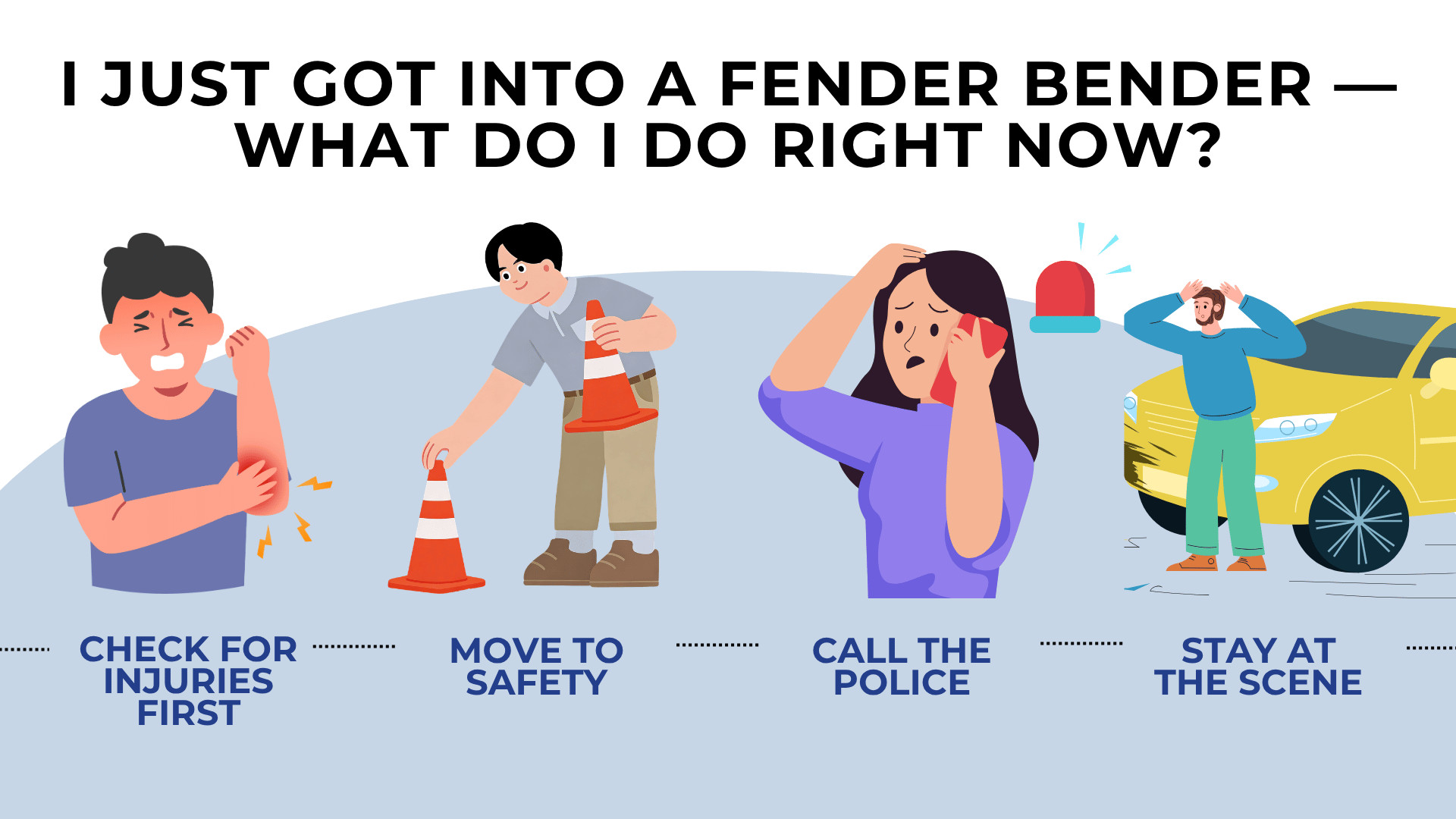
Before anything else, check yourself and your passengers for injuries. Then check on the people in the other car. If anyone is hurt or you are unsure, call 911 immediately.
If the vehicles are drivable and you are blocking traffic, move them to the shoulder or a nearby parking lot. Turn on your hazard lights. If you cannot move your vehicle safely, stay inside with your seatbelt on until help arrives.
Once you are in a safe position, call the police. Even if the damage looks minor, a police report creates an official record of what happened — who was involved, where the vehicles were, what conditions were present, and what each driver said. That record becomes difficult to dispute later.
Do not leave the scene before you have spoken with the other driver and, if officers are on the way, waited for them to arrive.
Do I have to call the police for a minor accident in Connecticut?
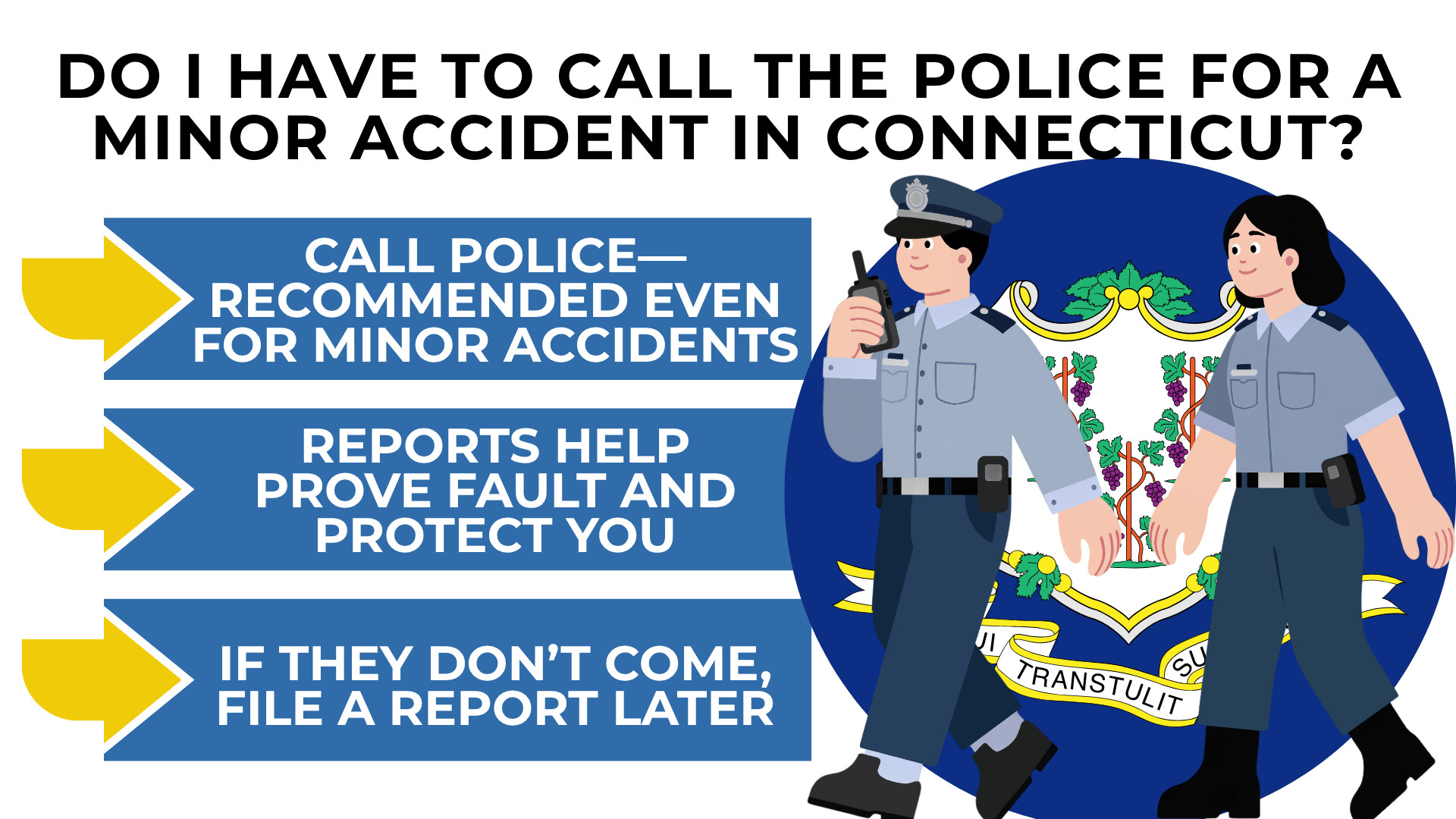
Connecticut generally requires drivers to report crashes, and the safest move is to call the police for any accident — even one that looks cosmetic. Insurance companies and attorneys rely heavily on police reports when deciding who was at fault. If the other driver later changes their account of what happened, a report filed at the scene is far more believable than a he-said-she-said dispute weeks after the fact.
If the police do not come to the scene, you can still file a report at the local police department. What matters is that a record exists.
Do I need to see a doctor if I feel fine?
Yes. See a doctor as soon as possible after the accident, even if you feel no pain.
After a collision, adrenaline can mask pain and make injuries feel less severe than they are. Injuries like whiplash, concussions, and soft tissue damage do not always cause immediate symptoms — they can take hours or days to fully show up. A car that looks barely dented can still produce enough force to cause real injury.
The numbers bear this out. In 2023, Connecticut recorded 1,285 serious injuries and 308 fatalities from motor vehicle crashes. The National Safety Council estimates each nonfatal disabling injury carries an economic cost of $174,000. Even crashes that appear minor can produce injuries — like concussions and soft tissue tears — that do not cause obvious symptoms at the scene.
A medical evaluation creates a documented link between the accident and any injuries discovered. Without it, an insurance company can argue that your symptoms came from something else — a prior condition, a later incident, or normal wear and tear. The gap between “I feel fine” and “I have a diagnosis” is the gap that costs you the most.

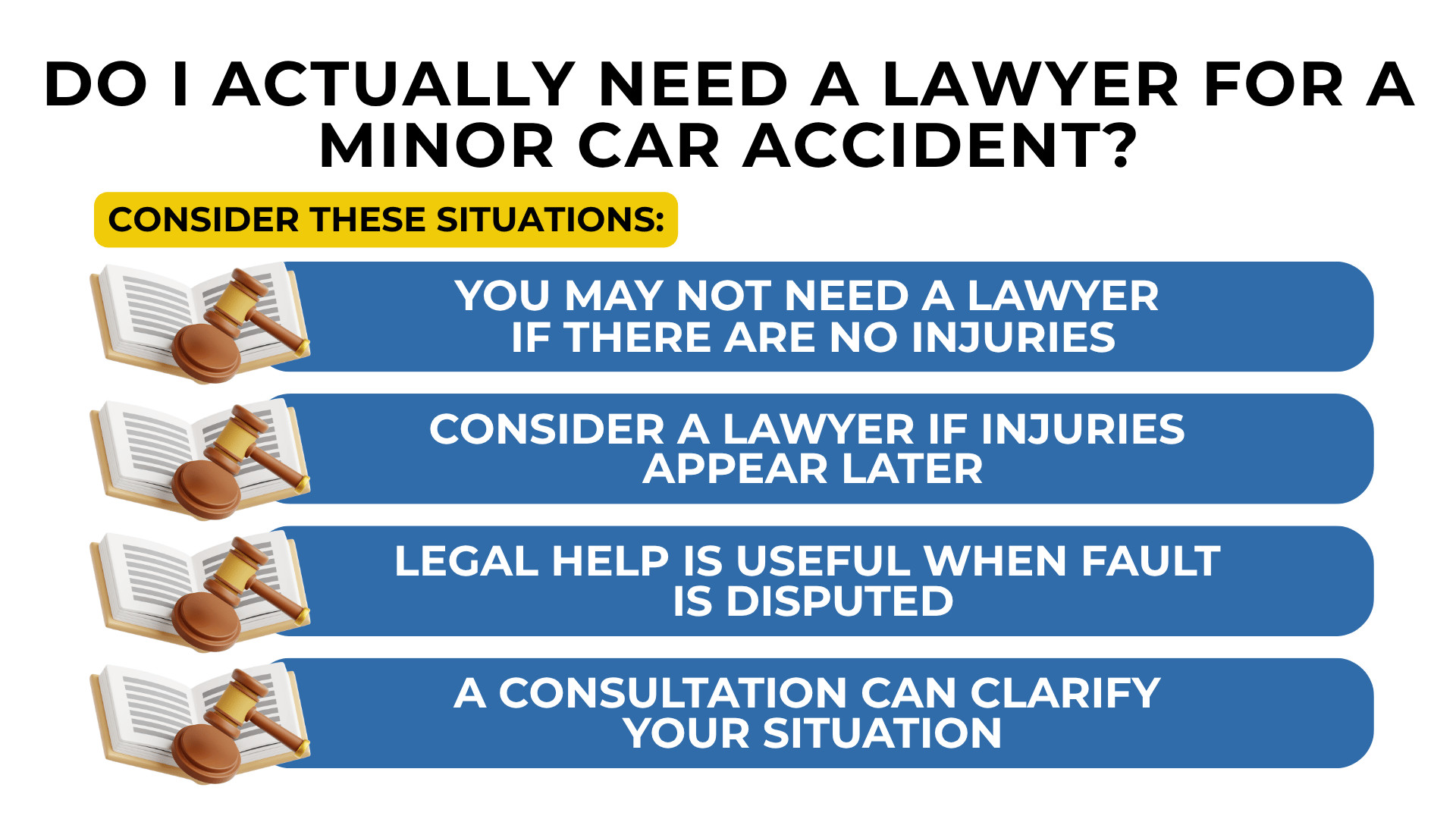
Do I actually need a lawyer for a minor car accident?
Not every minor car accident requires an attorney. If there are no injuries, fault is clear, and the insurance process is straightforward, you may be able to handle the claim on your own.
But certain situations change things. You may need legal help if your symptoms appeared hours or days after the accident, if your injuries require ongoing medical treatment, or if the other driver is disputing what happened and the police report does not clearly show who was at fault. These are situations where having legal representation can make a real difference in what you recover.
At Etemi Law in Waterbury, Connecticut, the attorneys handle motor vehicle accident cases across the state. Ron Etemi has tried over 100 cases to verdict and received the Top Verdict Award. Peter Brown has 175 jury verdicts and spent his first 15 years practicing as a civil defense lawyer — meaning he knows how the other side builds its case. Lou Etemi and Semir Dervisi bring additional depth in negotiation, arbitration, and trial preparation. Ron, Lou, and Semir are graduates of the University of Connecticut School of Law; Peter Brown is a graduate of Western New England College School of Law.
A consultation can tell you whether your situation calls for legal involvement. If it does, acting early gives you the most options.