Truck Rollover Accidents in Connecticut: What You Need to Know After a Crash
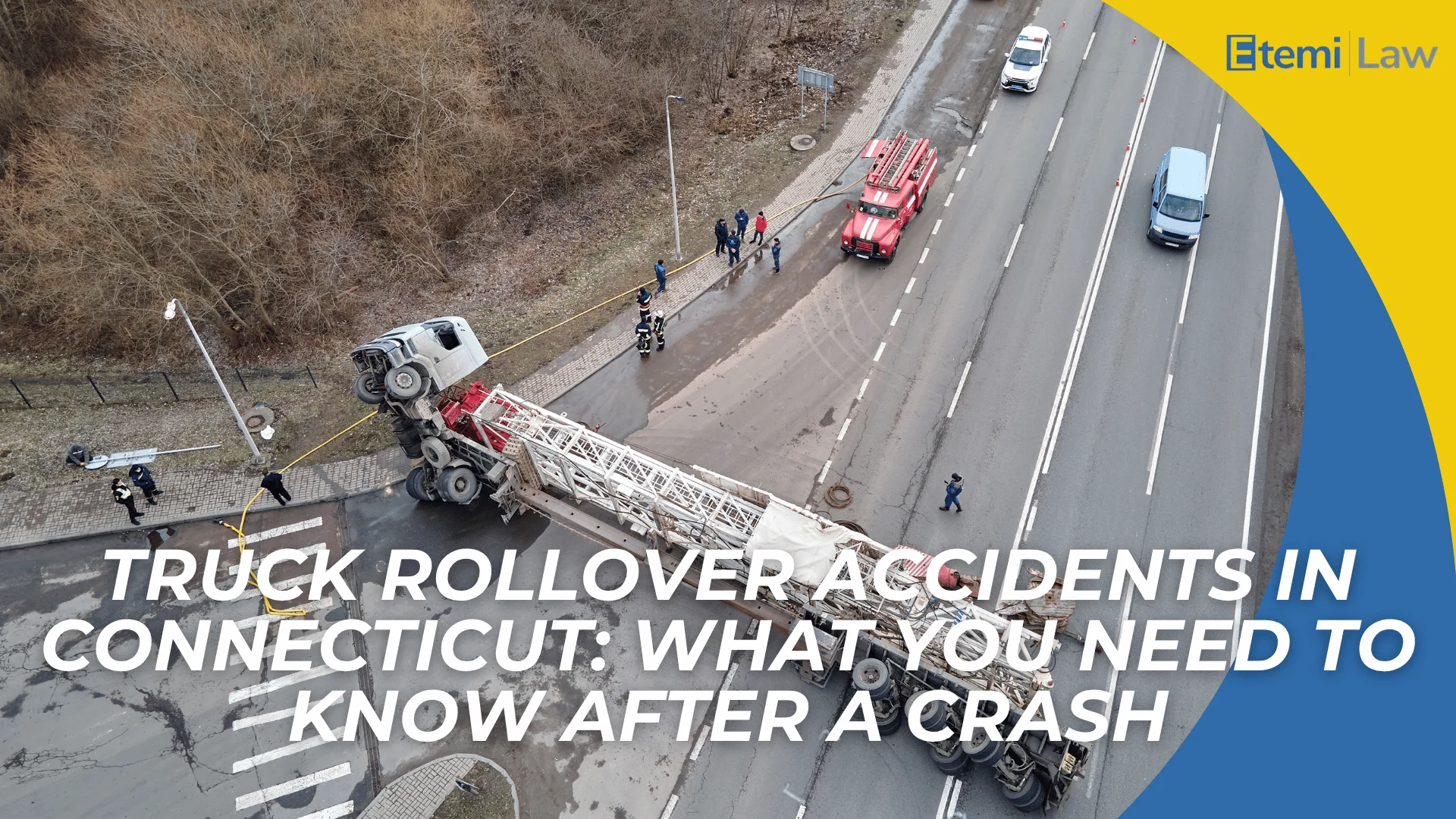
A truck rollover is one of the most violent types of collisions on the road. If you’re searching this term, you probably need answers about why it happened and what caused it. The short version: truck rollovers are rarely random. They result from identifiable failures — by drivers, trucking companies, cargo loaders, or maintenance providers. Each of those failures points to a liable party.
Why Do Trucks Roll Over in the First Place?
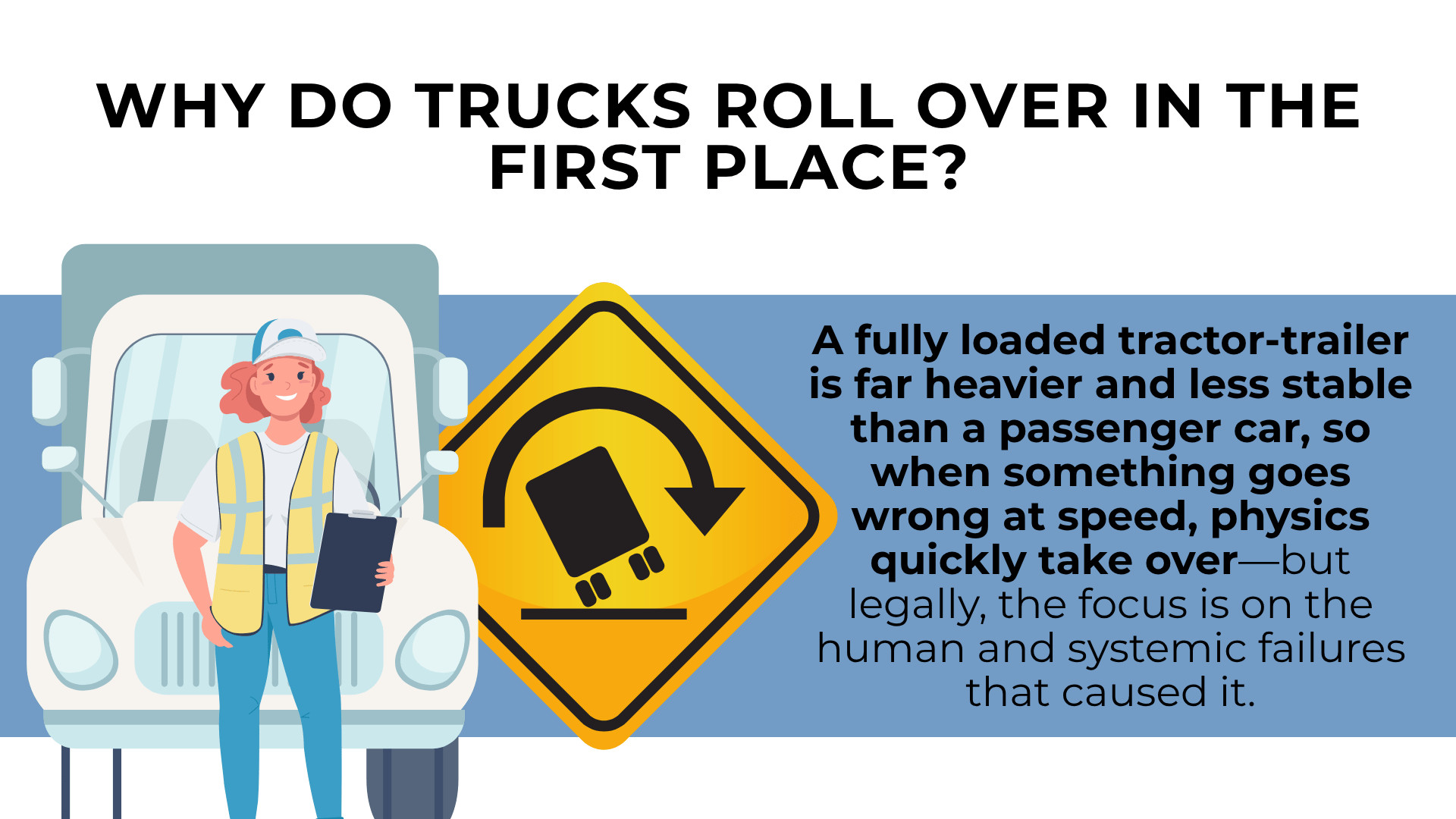
A fully loaded tractor-trailer can weigh 20 to 30 times as much as a typical passenger car. That mass sits high off the ground, creating a center of gravity that makes these vehicles fundamentally unstable compared to anything else on the highway. When something goes wrong at speed — a sharp correction, a curve taken too fast, a load that shifts — the physics take over quickly.
But the physics only explain how it happens. The causes that matter for a legal claim are the human and system-wide failures that set the rollover in motion.
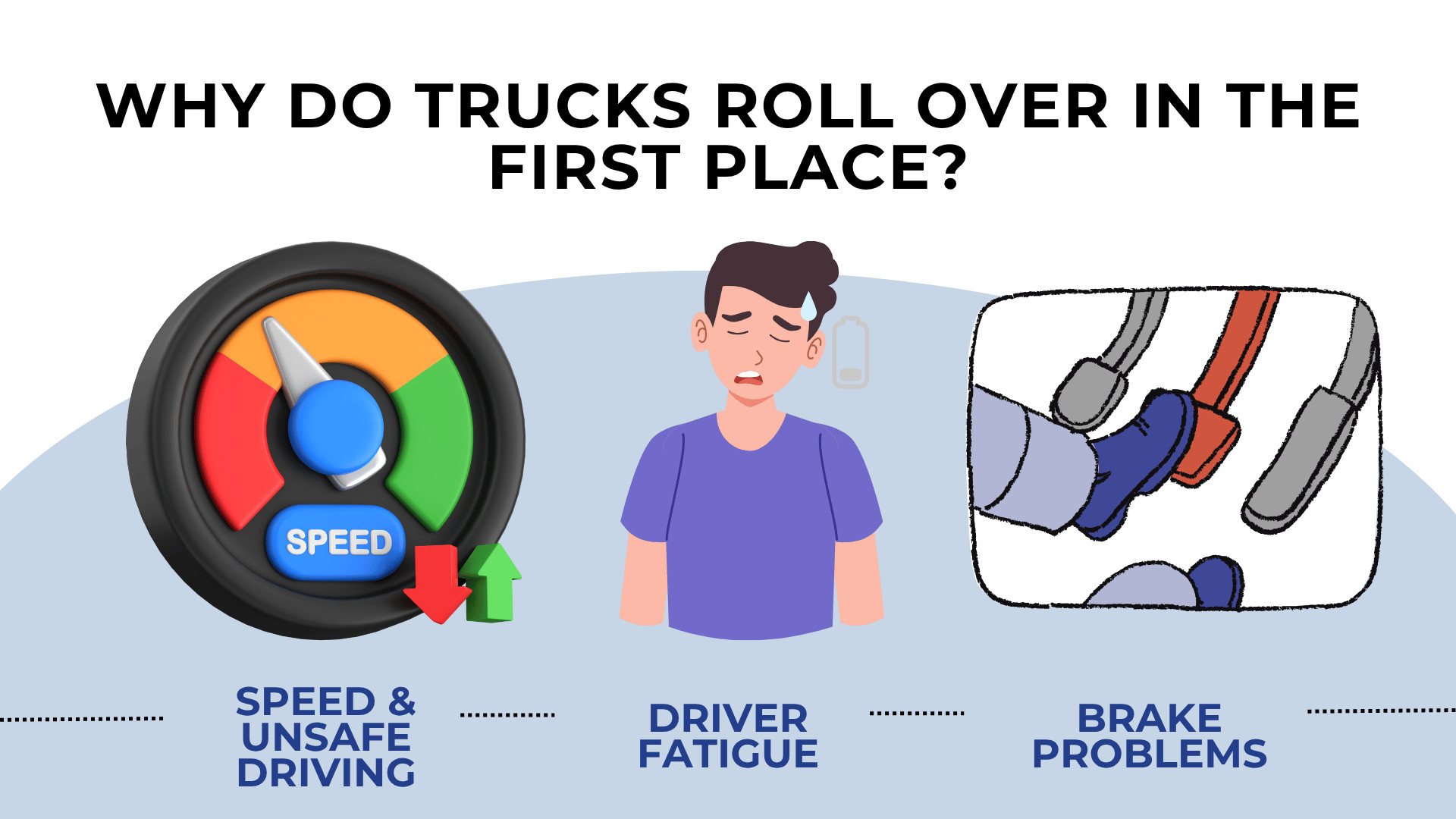
Speed and unsafe driving. Nearly 23% of large trucks involved in studied crashes were traveling too fast for conditions, making it the second most commonly cited driver factor in the federal Large Truck Crash Causation Study. On highway ramps, curved stretches of road, and in poor weather, even modest speed becomes dangerous for a vehicle with a high center of gravity. What might be a manageable speed for a passenger car can push a top-heavy tractor-trailer past its tipping point — particularly on banked curves, highway exit ramps, and road segments where slope changes combine with turning forces.
Driver fatigue. Roughly 13% of truck drivers in crashes studied by federal researchers were found to be fatigued at the time of the crash. A drowsy driver who drifts onto a shoulder and overcorrects is one of the most common rollover scenarios. The sudden steering input at highway speed creates exactly the kind of sideways force that tips a high-center-of-gravity vehicle. Federal hours-of-service rules exist specifically to prevent this, but violations remain widespread. Hours-of-service infractions accounted for 32.1% of all driver violations found during the 2024 national enforcement blitz.
Brake problems. Nearly 30% of large trucks in crashes had brake failure, out-of-adjustment brakes, or other brake defects — the single most common vehicle defect found. When brakes can’t slow 80,000 pounds approaching a curve or a downgrade, the driver is left choosing between overbraking — which can lock axles unevenly and destabilize the trailer — or carrying too much speed into the turn. Either option raises the risk of a rollover.
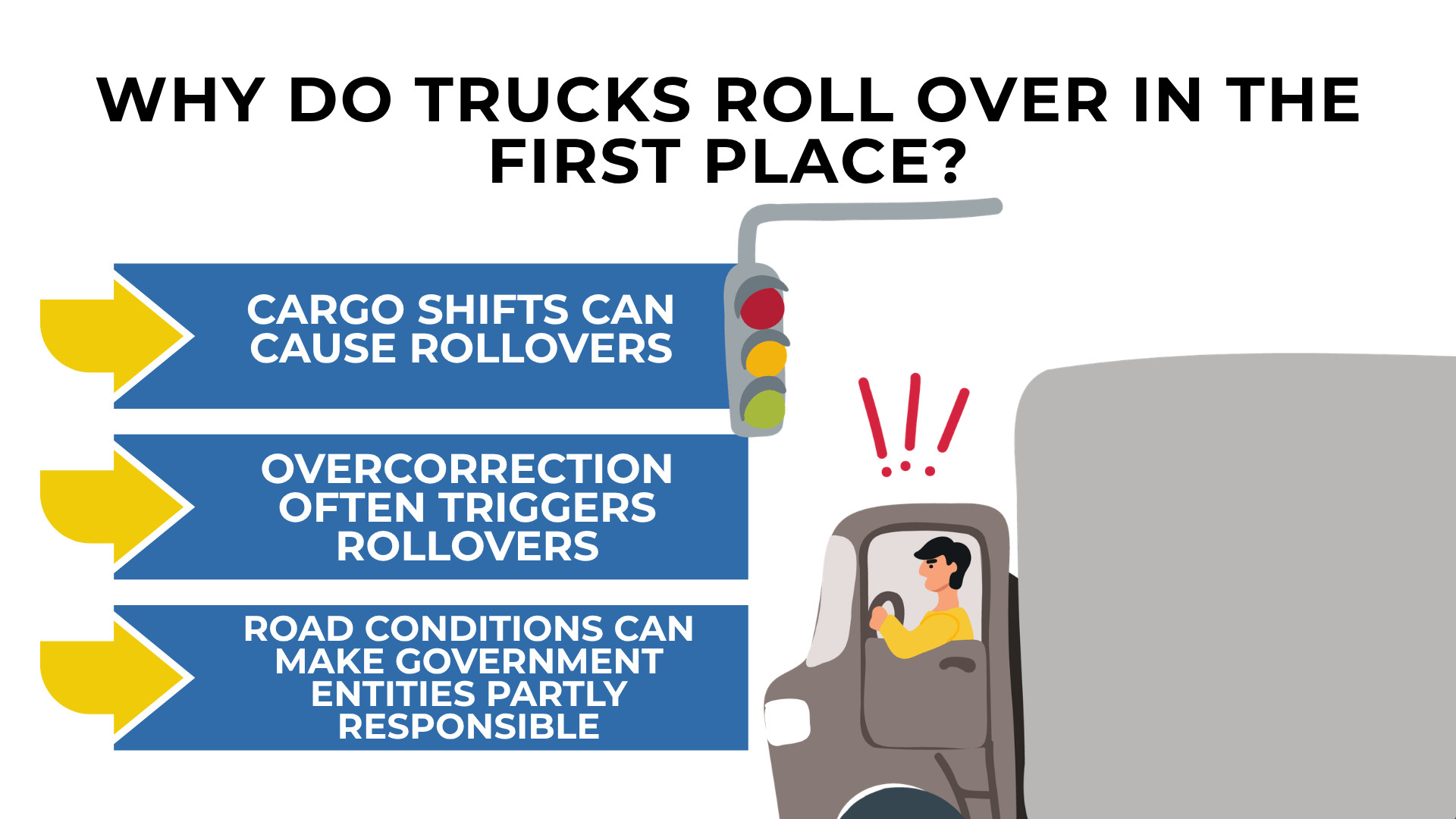
What happens when cargo shifts? When freight inside a trailer shifts during transit — because it was loaded unevenly, not properly secured, or exceeds weight limits — the truck’s center of gravity moves unpredictably. A sudden sideways shift on a turn can tip the trailer past its tipping point in seconds. Liquid loads like fuel or chemicals are especially dangerous because the fluid’s momentum continues moving after the truck begins to turn, creating a sloshing force that increases the rollover risk. The company that loaded or secured the cargo may be independently liable when a load shift causes or contributes to a rollover.
What if the driver overcorrected? Rollover-specific crash patterns often involve a sequence rather than a single error. A truck drifts — from distraction, drowsiness, or a tire blowout — and the driver steers sharply back onto the road. That abrupt input, combined with the trailer’s high center of gravity, starts a roll. Rollovers punish driver errors more severely than most other crash types, which is why these driver-related factors are overrepresented in rollover events.
Can the road itself be at fault? Not every rollover is caused solely by the driver or the truck. Inadequate curve banking, missing or misleading advisory speed signs, poorly maintained shoulders that create a drop-off edge (increasing overcorrection risk), and construction zones that narrow lanes for wide trailers can all contribute. When road design or maintenance plays a role, municipal or state entities responsible for the roadway may share liability.
Each of these causes generates its own trail of evidence — electronic logging device records for fatigue, loading dock records and weight tickets for cargo issues, brake inspection histories for maintenance failures, road design specifications for road defects. A truck rollover investigation that stops at the police report misses most of this. If you were hurt in a truck rollover in Connecticut, the attorneys at Etemi Law in Waterbury can help you identify what caused the crash and who is liable. Ron Etemi has tried over 100 cases to verdict, and Peter Brown brings over three decades of courtroom experience, including 175 jury verdicts and 15 years as one of Connecticut’s most respected civil defense trial lawyers — meaning we understand the strategies trucking companies and their insurers use because we’ve seen them from the inside.
The consultation costs you nothing. The evidence won’t wait.